8:46in productionCh. 1 · Sun Protection/ 8:46 · ceiling 15 min
Society · Movements & scenes
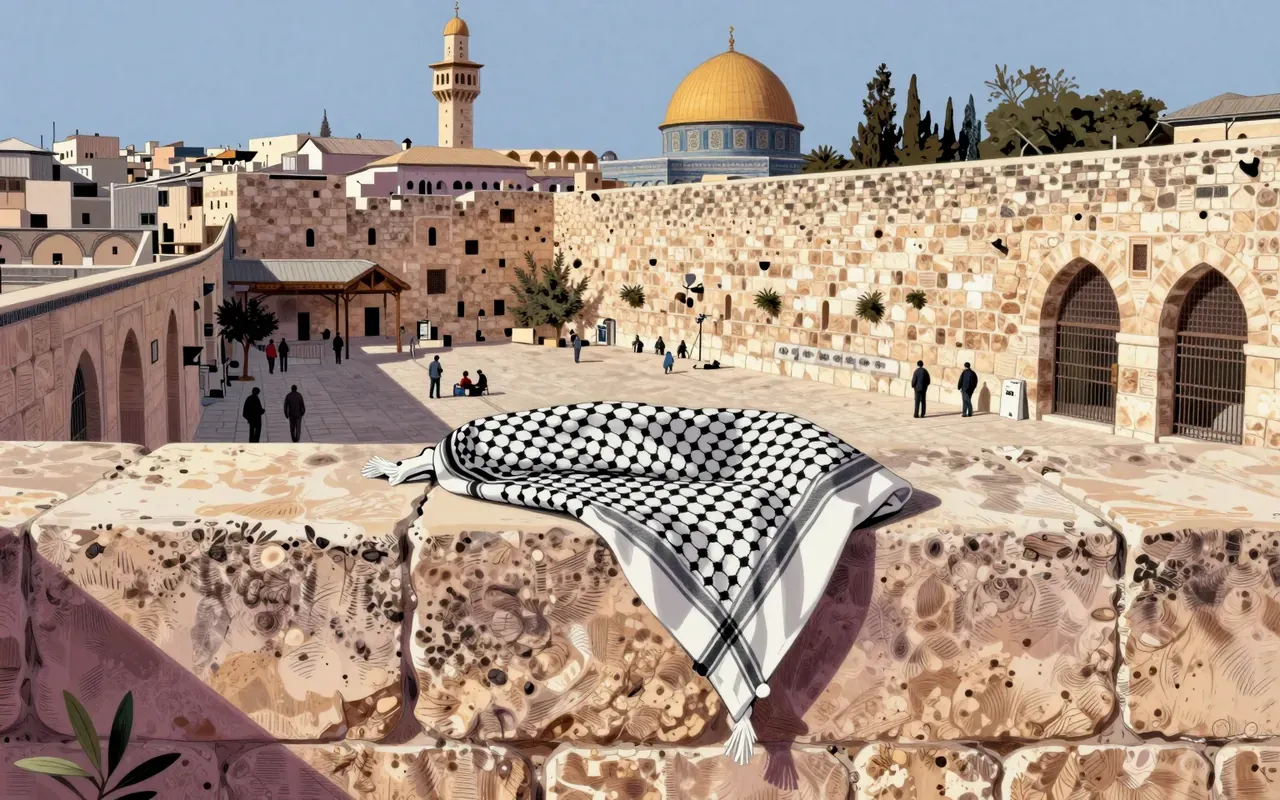
Keffiyeh
A sun shield turned political weapon by decree—not culture.
The keffiyeh is a functional textile that became a national symbol through two top-down political interventions: first, an Arab rebel order during the 1936–1939 revolt; second, a British military directive in the 1950s. Its meaning is not emergent—it is assigned, enforced, and contested.
In 1938, eight out of ten tarbushes vanished overnight—replaced by keffiyeh on command.
3:23
British-Made Symbol
The black-and-white pattern was invented in the 1950s by a British officer to tell Palestinian soldiers from Jordanians.
4:59
National Identity Tool
It functions as a politicised symbol—not a folk tradition.
Worth your time?
Yes. Study the whole thing.
4.5/ 5
What works
as-a-case-study-in-symbolic-coercion
as-evidence-of-mandatory-cultural-shift
What does not
art
fashion
design
Study it if
students-of-political-symbolism
readers-tracking-colonial-administration
Skip it if
fashion-historians-seeking-aesthetic-lineage
textile-artisans-studying-weave-techniques
The written brief1 min read
What the thing is
A square cotton or wool headscarf, folded and draped over the head or shoulders.
Where it came from
Bedouin sun protection—designed for arid regions to block sunburn, dust, and sand.
What it gets right
It signals collective identity under occupation. The 1936–1939 revolt order turned it into a mass uniform. The 1950s black-and-white variant cemented its distinction as Palestinian—not Arab, not Jordanian.
What it gets wrong
It implies universality. It was never worn by all Arabs before the 1930s. Villagers wore white; city elites wore tarbushes. Its symbolism was imposed, not inherited.
Why it matters now
Because its meaning is legally policed: banned in some countries, criminalised on campus, weaponised in discourse—yet its origins are purely practical, not ideological.
Is it worth your time
Yes—if you need to understand how a functional object becomes a contested national symbol through deliberate political acts, not organic cultural drift.