culturebriefs
9:29in productionCh. 1 · Structure/ 9:29 · ceiling 15 min
Fashion · Society

Hanbok

Hanbok is not ancient tradition—it’s a 19th-century label applied to a much older structure.

Hanbok is a structural constant dressed in a late-arriving name. Its form predates the term by over a millennium. Its modern meaning was built in response—not inheritance.

Chapters & takeaways5
  1. 0:52
    Structure

    Four pieces define it: jeogori, baji, chima, and po.

  2. 1:52
    Antiquity

    Its visual form dates to the Three Kingdoms—and its core shape was fixed by the Goguryeo period.

  3. 3:10
    Name

    The word 'hanbok' first appeared in 1881—not in antiquity, but in late Joseon resistance to foreign dress.

  4. 4:19
    Division

    North and South versions diverged only after 1945—not from ancient difference, but enforced separation.

  5. 5:46
    Use

    Today it is ceremonial: worn at weddings and festivals, not daily life.

Worth your time?

Yes. Study the whole thing.

4/ 5
What works
  • as a precise counterweight to vague claims about 'timeless dress'
  • as evidence that national symbols often emerge late—and retroactively claim deep roots
What does not
  • culture/arts
  • culture/literature
  • culture/movements-and-scenes
Study it if
  • students of material culture
  • designers researching historical garments
  • readers tracking how nationalism reshapes tradition
Skip it if
  • those seeking origin myths
  • viewers expecting streetwear evolution
  • anyone assuming 'traditional' means unbroken usage
The written brief1 min read

What the thing is

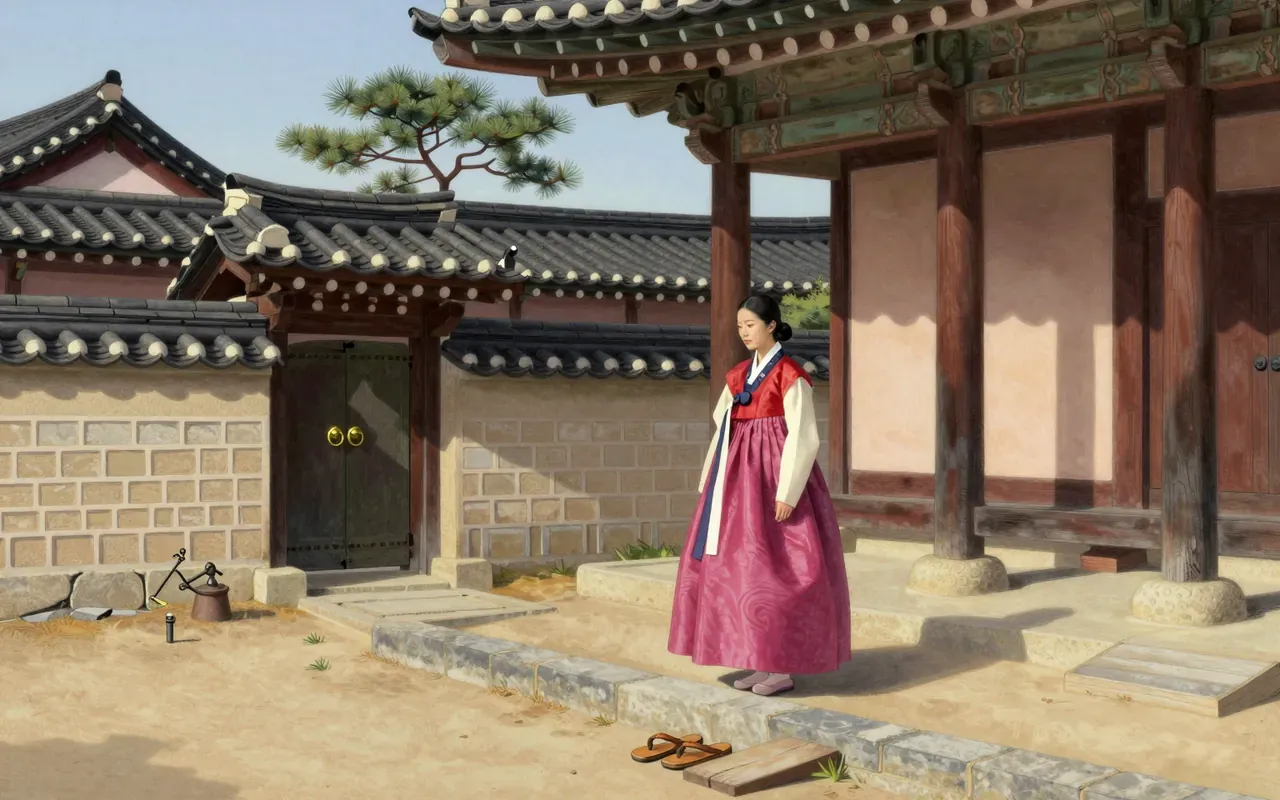
Hanbok is the traditional clothing of the Korean people, composed of jeogori, baji, chima, and po.

Where it came from

Its earliest visual forms appear in Three Kingdoms period (57 BCE–668 CE) tomb art, rooted among ancestors in northern Korea and Manchuria.

What it gets right

It preserves structural continuity across two millennia. The jeogori, baji, chima, and po remain recognisable from Goguryeo tomb murals to today’s wedding ceremonies.

What it gets wrong

It implies unity where there was divergence. The term ‘hanbok’ did not exist until 1881—and regional variation between North and South Korea emerged only after 1945 isolation.

Why it matters now

It functions as ceremonial shorthand—worn for weddings, festivals, and ceremonies—but its modern identity was forged in reaction to Japanese and Western dress, not inherited intact.

Is it worth your time

Yes—if you want to understand how a garment becomes a national symbol without ever being everyday wear.


Same beat · Fashion4 of 113
11:00
CosplayCosplay is a materially grounded, globally dispersed performance practice rooted in two separate histories—one in US sci-fi fandom, one in Japanese anime culture. Its significance lies in how it turns representation into labour, and character into conduct.
8:18
Grunge (fashion)1980Grunge fashion was an anti-fashion statement rooted in mid-1980s Seattle’s music scene. It used durable, thrift-store clothing worn loosely and androgynously—especially flannel shirts and Doc Martens—to reject 1980s flash. Kurt Cobain’s blend of lumberjack workwear and vintage feminine dresses helped define it. By the mid-1990s, it had been commodified globally—most notably by Marc Jacobs for Perry Ellis in 1993. Its legacy is not authenticity, but the speed with which resistance becomes product.
8:50
GyaruGyaru is a Japanese fashion subculture rooted in the transliteration of 'gal'. It emerged as nonconformist resistance to traditional Japanese gender roles and beauty standards—particularly the expectation that women be housewives with pale skin and dark hair. Early associations included juvenile delinquency and frivolousness among teenage girls. Kogal culture, a defining variant, rose prominently in the Heisei era (1989–2019), peaking in the 1990s and early 2000s. It is currently experiencing a revival in the Reiwa era. The subculture includes a male counterpart, gyaruo. Its core visual ingredients are consistently cited as gaudy fashion, extreme makeup, and dyed hair.
10:21
Levi Strauss & Co.Levi Strauss · 1853Levi Strauss & Co. is a pragmatic infrastructure project disguised as clothing. It began as immigrant commerce, not craft. Its innovations were patents, lot numbers, trademarks — administrative tools that made reproducible, durable workwear. It did not define youth culture, nor did it seek cultural status. It solved problems for people who needed pants to last — and kept doing so, even when the problem changed.
Up next in Culture

Invisible hand

· 9:34

Smith wrote 'an invisible hand' twice — not as doctrine, but as irony. Everything after is a misquotation.

9:34