The written brief1 min read
What the thing is
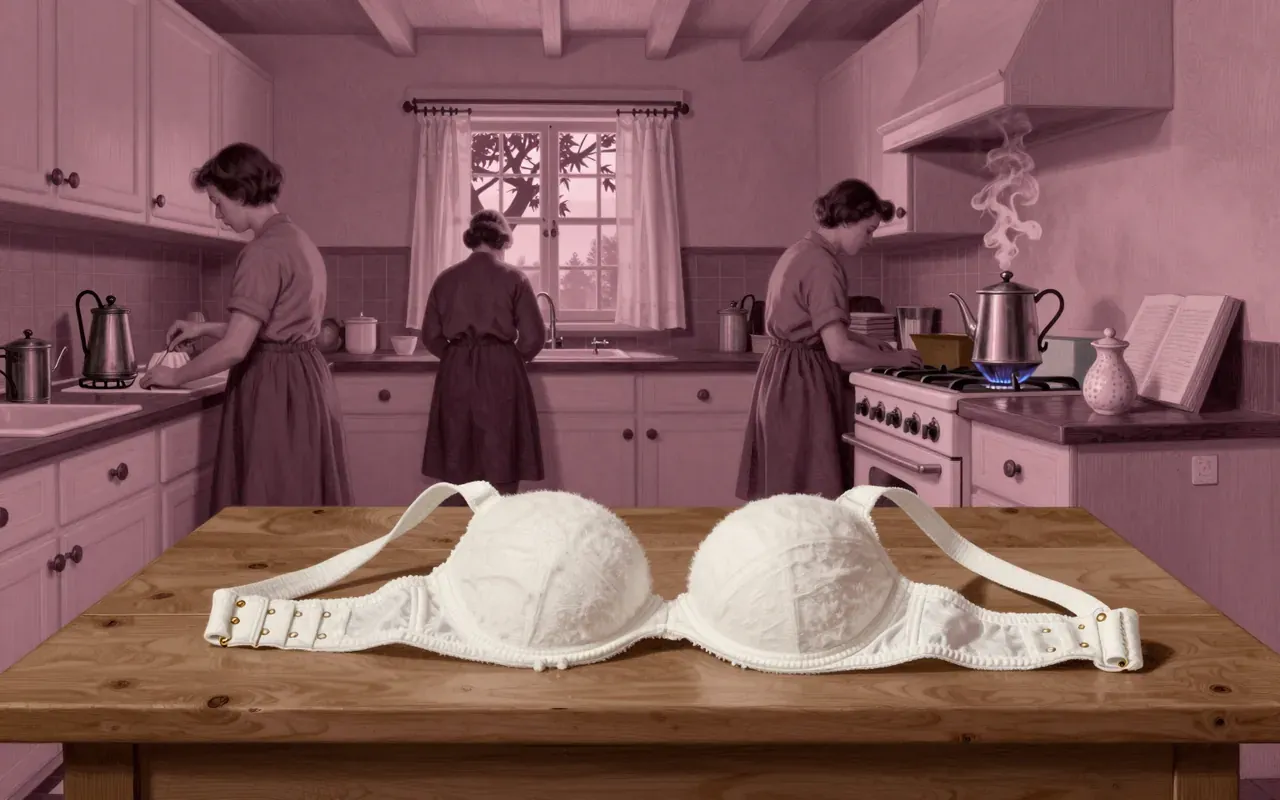
A form-fitting undergarment. Chest band. Two cups. Shoulder straps. Usually back-fastening.
Where it came from
- Mary Phelps Jacob—later Caresse Crosby—made it in New York from two handkerchiefs and ribbon to hide a whale bone corset under a party dress.
What it gets right
It supports and covers breasts with minimal rigidity. It allows movement the corset forbids. It separates support from posture control.
What it gets wrong
It assumes uniform anatomy. It enforces a binary cup-size logic that ignores tissue distribution, density, and mobility. It displaces breath, circulation, and comfort when ill-fitted.
Why it matters now
Because its design logic still governs how women’s bodies are measured, marketed to, and medicalised—and because its origin story reveals how domestic improvisation becomes industrial property.
Is it worth your time
Yes—if you want to understand how a simple garment redefined bodily autonomy, labour, and commerce in the twentieth century.