8:29in productionCh. 1 · What it is/ 8:29 · ceiling 15 min
Food
Tempura
A Catholic Lenten dish became Japan’s most exported symbol of lightness—by forgetting it was ever about restraint.
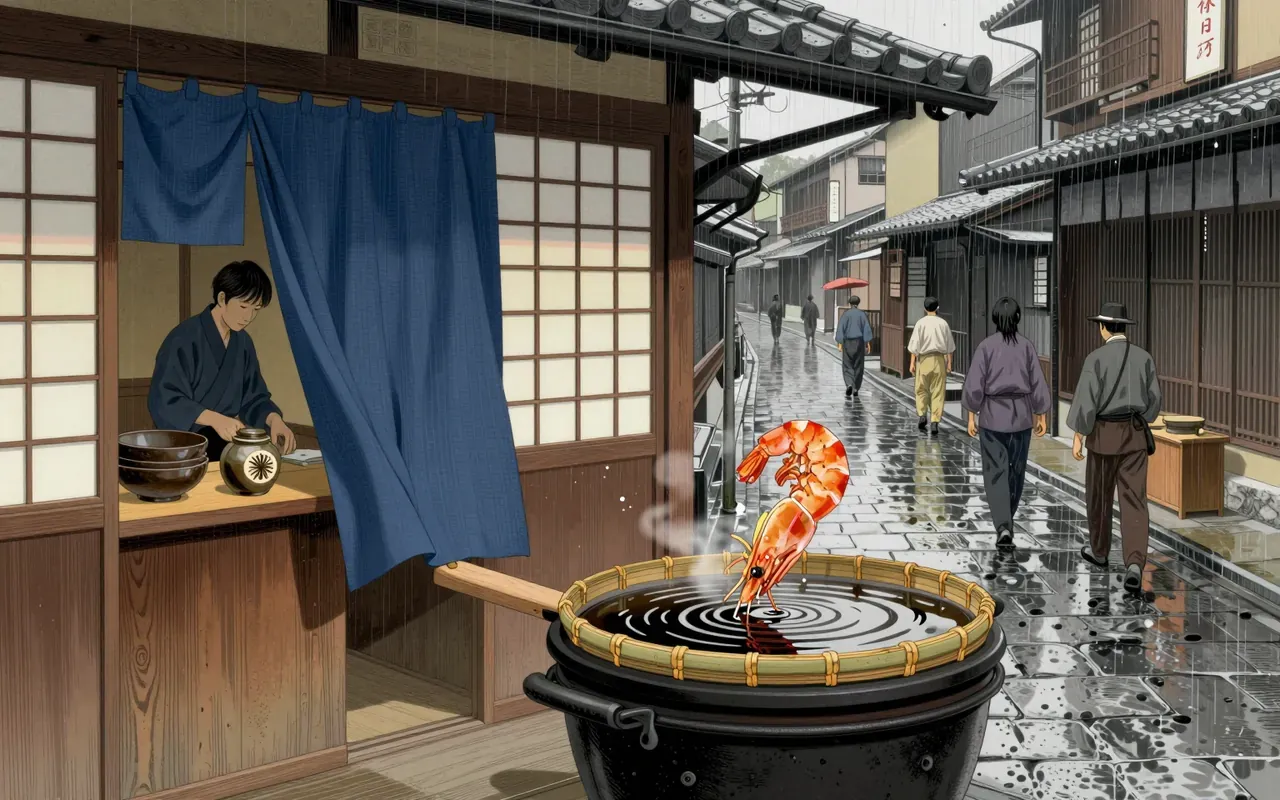
Tempura is a Japanese dish of seafood and vegetables coated in a thin batter and deep-fried. It originated in the 16th century through Portuguese Jesuits via Nanban trade. The batter-of-flour-and-eggs technique was acquired in Nagasaki from Portuguese missionaries toward the end of the 16th century. The word 'tempura' originates from the Latin word 'tempora', referring to fasting times. In the early 17th century, tempura ingredients and preparation changed with the rise of yatai culture around Tokyo Bay. Edo-period tempura used only flour, eggs, and water, with unflavoured batter. Earlier Japanese deep-fried food used no batter or used rice flour. Peixinhos da horta was eaten during Lent or Ember days to fulfill Catholic fasting and abstinence rules.
Tempura is defined by thin-batter frying—not grilling, not steaming, not rice-flour coating.
2:20
Where it came from
It arrived via Portuguese missionaries in Nagasaki, carrying the Latin word 'tempora'—not as exoticism, but as liturgical necessity.
3:34
How it settled
Edo-period yatai culture fixed tempura’s minimalism: flour, eggs, water, no flavouring—designed for Tokyo Bay seafood, not spectacle.
4:27
What it displaced
It replaced older Japanese frying methods—and imported a Catholic dietary rule that no longer applies to its modern form.
Worth your time?
Yes. Study the whole thing.
4/ 5
What works
as historical evidence
as culinary constraint
as exportable format
What does not
influence
define
start
represent
Study it if
chefs
historians of trade
people who eat street food without knowing why it exists
Skip it if
those seeking spiritual meaning in dinner
anyone expecting authenticity claims
The written brief1 min read
What the thing is
Tempura is a Japanese dish of seafood and vegetables coated in a thin batter and deep-fried.
Where it came from
It originated in 16th-century Japan through Portuguese Jesuits via Nanban trade. The batter-of-flour-and-eggs technique came from Nagasaki missionaries. Its name derives from the Latin ‘tempora’, meaning fasting times.
What it gets right
It preserves delicate seafood taste with minimal intervention. The unflavoured batter—flour, eggs, water—lets ingredients speak. It prioritises freshness over seasoning.
What it gets wrong
It obscures its Catholic Lenten logic. ‘Tempura’ names a fasting practice, yet modern versions rarely signal abstinence or ritual constraint.
Why it matters now
It reveals how culinary adaptation depends on displacement: a Catholic Lenten dish repurposed as secular street food, then globalised as ‘light’ Japanese cuisine—stripped of both its religious grammar and its Edo-period austerity.
Is it worth your time
Yes—if you care how food technologies travel, adapt, and erase their origins.