culturebriefs
8:57in productionCh. 1 · A pot, not a plate/ 8:57 · ceiling 15 min
Food

Sukiyaki

Sukiyaki isn’t one dish—it’s two warring methods disguised as tradition.

Sukiyaki is a Meiji-era Japanese nabemono, regionally divided between Kanto (simmer-all-together) and Kansai (sear-then-season-then-add) methods. It relies on soy, sugar, mirin, thinly sliced meat (historically pork where beef was costly), vegetables, tofu, mushrooms, and noodles—and mandates dipping cooked ingredients in raw beaten eggs. Its global image suppresses these structural and material tensions.

Chapters & takeaways4
  1. 1:00
    A pot, not a plate

    Sukiyaki is defined by its apparatus and method—not its ingredients alone.

  2. 2:31
    Two Japans, one name

    It emerged in the Meiji era and split instantly between Kanto and Kansai.

  3. 4:08
    Order is doctrine

    Kanto simmers everything together. Kansai cooks meat first—then seasonings—then vegetables.

  4. 5:31
    What’s left out matters

    Raw egg is mandatory. Pork was common where beef was too expensive.

Worth your time?

Yes. Study the whole thing.

4/ 5
What works
  • it clarifies method over mystique
  • it names what’s omitted (pork, regional conflict, contested etymology)
What does not
  • no
Study it if
  • people who eat Japanese food without knowing how it’s made
  • people who assume 'Japanese cuisine' is monolithic
Skip it if
  • people who need a recipe
  • people looking for fusion ideas
The written brief1 min read

What the thing is

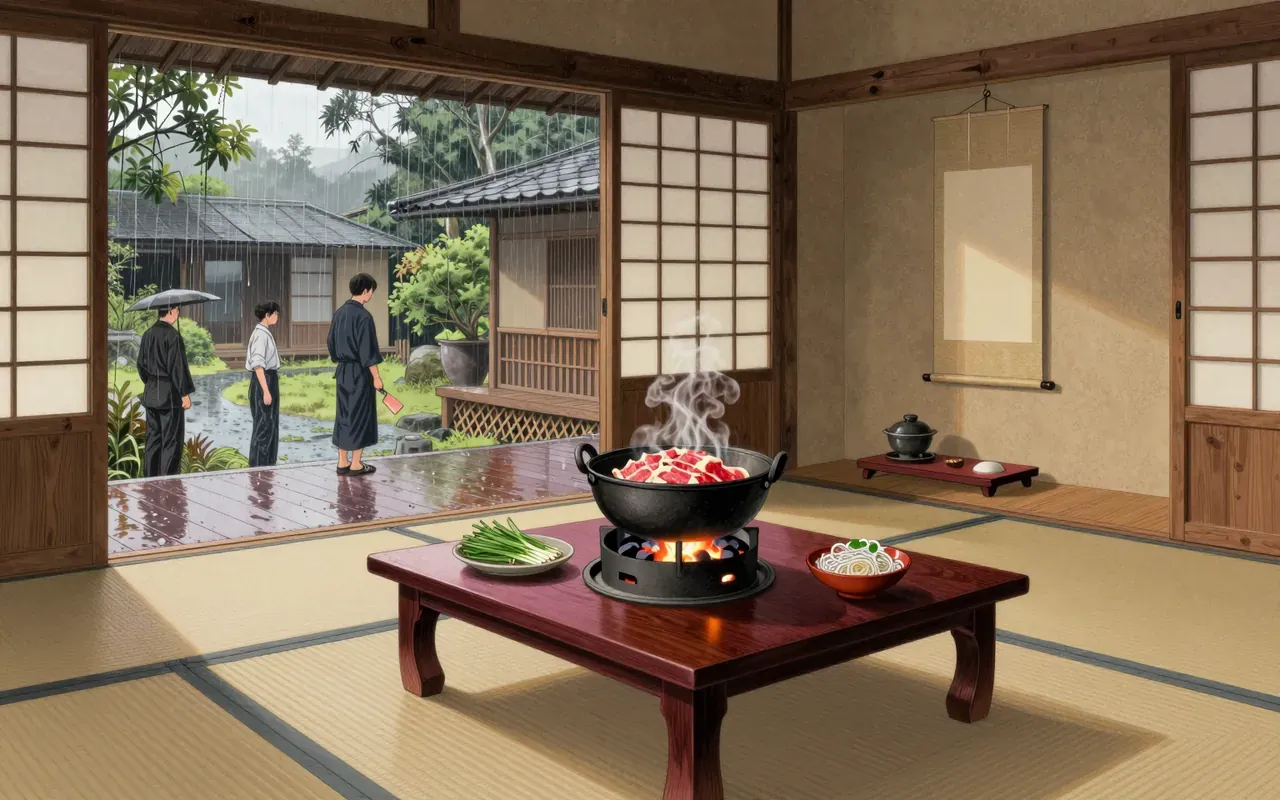
Sukiyaki is a nabemono: a Japanese hot pot dish cooked at the table in a shallow iron pot. It is not stew, not stir-fry, not soup. It is simmered or grilled in sequence, then dipped in raw egg before eating.

Where it came from

It was developed during the Meiji era. It first became popular in the Kansai region. Its name may derive from ‘suki’ (spade) and ‘yaki’ (grill), though that etymology is contested.

What it gets right

It establishes beef, soy, sugar, and mirin as a resonant flavour triad. It demands communal, live cooking. It insists on the raw egg dip as non-negotiable texture and temperature counterpoint.

What it gets wrong

It pretends unity where there is division: Kanto and Kansai styles are structurally opposed—not variations but rival protocols. It erases pork’s historical role in northern and eastern regions, flattening class and geography into ‘beef-only’ nostalgia.

Why it matters now

Because it reveals how food becomes legible abroad by shedding its internal contradictions—regional method, ingredient substitution, seasonal ritual—leaving only a branded silhouette that fits Western expectations of ‘Japanese’.

Is it worth your time

Yes—if you want to understand how a regional Japanese hot pot became a global shorthand for ‘Japan’, and why that simplification obscures its real culinary logic.
Same beat · Food4 of 210
Up next in Culture

Sunday roast

· 9:42

The Sunday roast isn’t tradition—it’s industrial timekeeping disguised as comfort food.

9:42