9:52in productionCh. 1 · The Name Is the First Lie/ 9:52 · ceiling 15 min
Food · Ideas
Sake
Sake isn’t rice wine—it’s a linguistic trap and a biochemical anomaly that Japan legally locked into place.
Sake is a technically distinct fermented rice beverage rooted in the Nara period, defined by simultaneous starch and sugar conversion, legally codified as seishu, and routinely misrepresented by its English name and 'rice wine' label.
In Japanese, 'sake' means all alcohol—so calling the drink 'sake' in English erases its specificity.
2:03
Not Ancient, Not Mythic—Nara Period
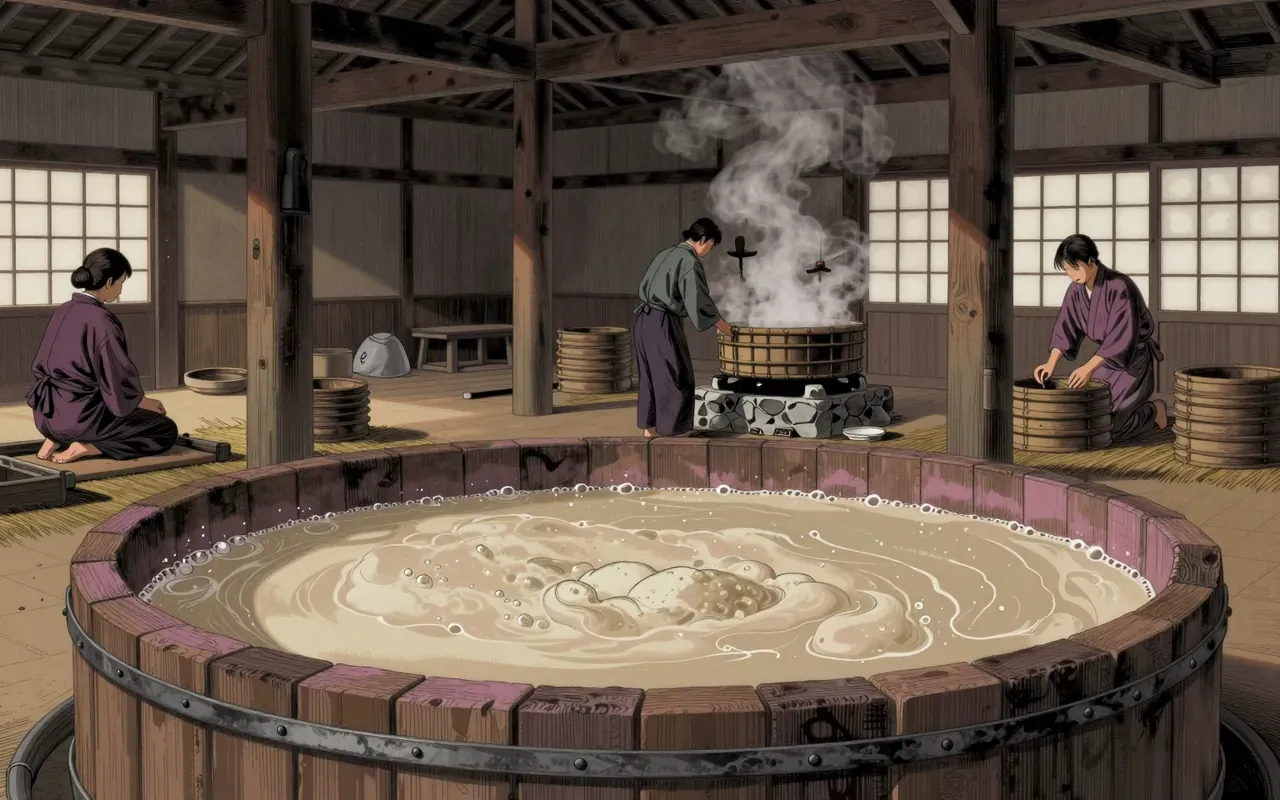
True sake began in the Nara period—not with myth, but with koji, rice, and water.
3:06
One Fermentation, Two Conversions
Its double fermentation happens at once—unlike beer or wine—making it a unique microbial choreography.
4:07
Stronger Than It Looks
Undiluted, it hits 18–20% ABV—stronger than wine, unfiltered by dilution until bottling.
5:10
Sacred, Social, and Slightly Silly
By 712, it was in the Kojiki; by Heian, it powered rituals and games—not just reverence.
6:07
A Legal Category, Not Just a Drink
It is legally defined as seishu—clear, brewed rice alcohol—separating it from every other drink under Japanese law.
Worth your time?
Yes. Study the whole thing.
4/ 5
What works
as a case study in how law stabilises craft
as evidence of long-term microbial cohabitation
as a counterpoint to Western fermentation categories
What does not
wine
beer
spirit
ancient
Study it if
brewers
historians of technology
regulatory policy readers
Skip it if
casual drinkers seeking tasting notes
mythographers
The written brief1 min read
What the thing is
Sake is a clear, undiluted alcoholic beverage made by fermenting polished rice using koji mould, with simultaneous starch-to-sugar and sugar-to-alcohol conversion.
Where it came from
Rice fermentation techniques arrived from China around 500 BCE; true sake—made from rice, water, and koji—emerged in the Nara period (710–794).
What it gets right
It treats rice as a living substrate, not inert starch. Its multiple parallel fermentation is chemically precise and culturally embedded.
What it gets wrong
It misleads by name: calling it ‘rice wine’ obscures its beer-like brewing logic and ignores that ‘sake’ in Japanese means all alcohol—not just this drink.
Why it matters now
It reveals how legal definitions (like Japan’s seishu) codify tradition while masking technical continuity across millennia—useful for reading any ‘heritage’ product claim.
Is it worth your time
Yes—if you care how fermentation shapes culture, not just flavour.