What the thing is
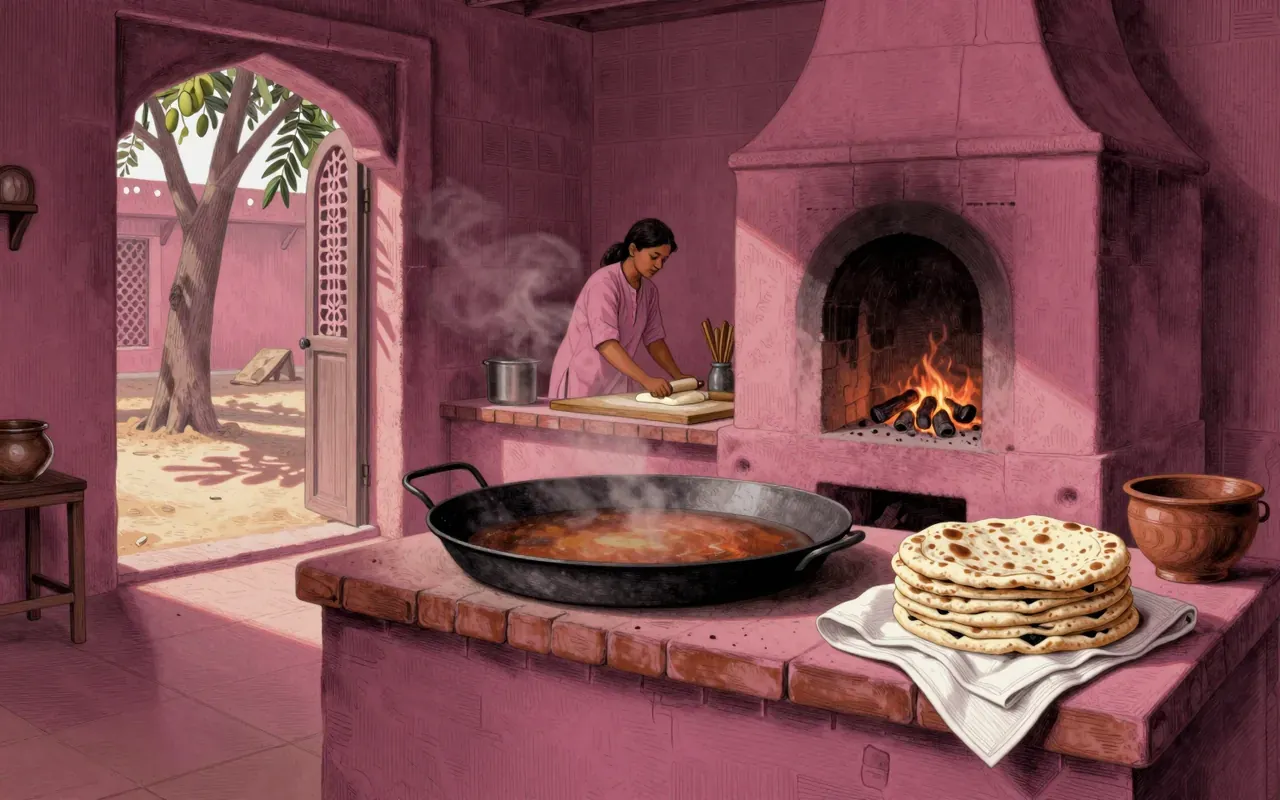
Roti is an unleavened round flatbread made from stoneground whole-wheat flour (atta), water, and optionally salt or fat.
Where it came from
Roti originated on the Indian subcontinent. It spread globally via migration, especially through indentured labourers, reaching Sri Lanka, the Caribbean, Southeast Asia, South Africa, Mauritius, and Iran.
What it gets right
Roti delivers reliable nutrition and adaptability. Its simplicity—atta, water, heat—requires no yeast, no oven, no electricity. It sustains daily life in homes and roadside stalls alike.
What it gets wrong
It is routinely mislabelled as ‘naan’ or ‘chapati’ in global food media, erasing its technical distinction: roti is unleavened, while naan is yeast-leavened and kulcha is also leavened.
Why it matters now
Roti persists where infrastructure fails—no fridge, no starter culture, no gas line needed. Its resilience makes it a quiet benchmark for food sovereignty in volatile climates and economies.
Is it worth your time
Yes—if you want to understand how a humble, unleavened flatbread became a quiet vector of cultural continuity across oceans.