culturebriefs
8:27in productionCh. 1 · Fusion, not origin/ 8:27 · ceiling 15 min
Food

Ramen

Ramen is Cantonese soup in Japanese clothes—and it got the name wrong from day one.

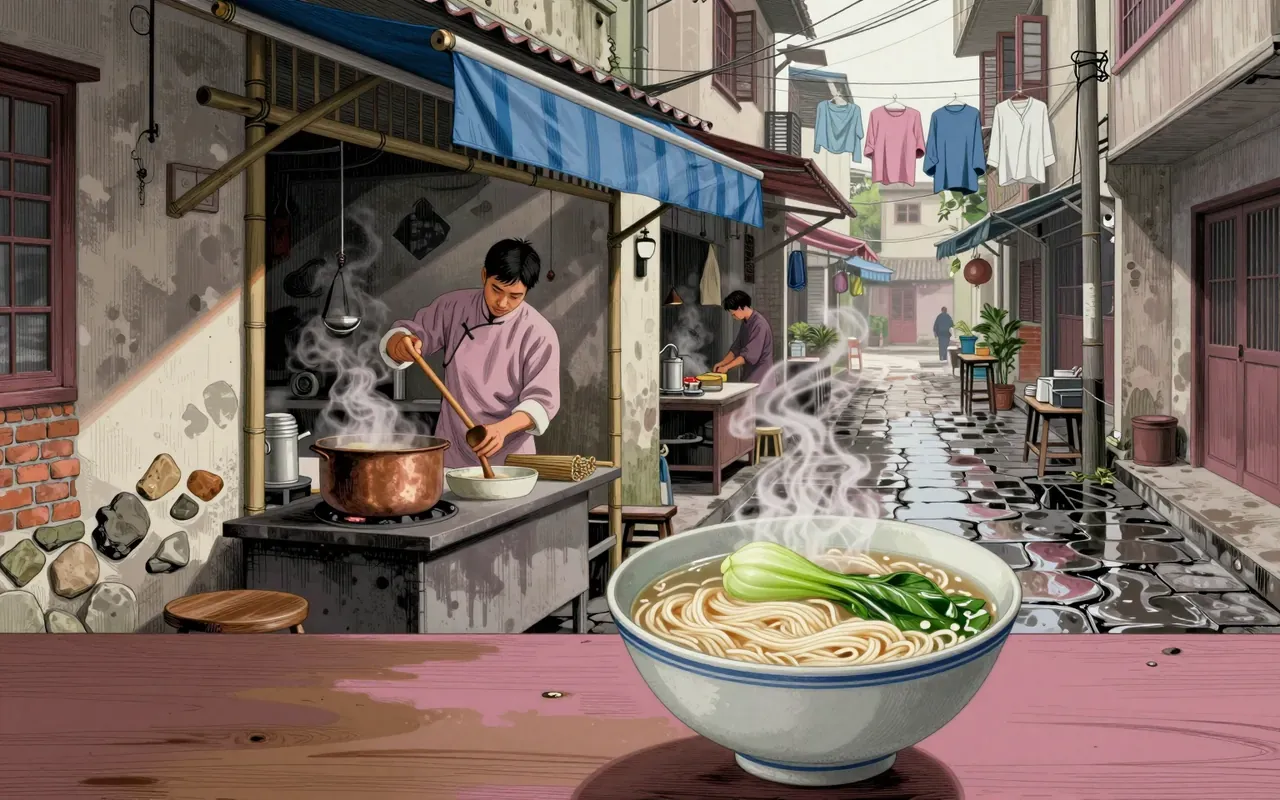
Ramen is a Japanese-Chinese fusion noodle dish originating in Yokohama Chinatown in the late 19th century, with ancestral forms present among Chinese immigrants since the 1880s. Though named after northern Chinese lamian, it derives instead from southern Chinese (especially Cantonese) wheat noodle soups, reflecting the demographic makeup of Yokohama’s Chinese community. Its noodles are cut, not pulled, and are made with kansui — distinguishing them from lamian and aligning them with southern Chinese alkaline noodle traditions.
Chapters & takeaways4
  1. 0:43
    Fusion, not origin

    Ramen is not Japanese or Chinese alone—it is a documented fusion from the start.

  2. 2:02
    Where and when it began

    Yokohama Chinatown—not Tokyo or Kyoto—was the birthplace, and it happened decades before ramen went mainstream.

  3. 4:00
    Noodles tell the truth

    Its noodles are cut, alkaline, and Cantonese—not pulled like northern lamian.

  4. 5:12
    Alkaline is the anchor

    Chūkamen—the 'Chinese noodles'—are defined by kansui, not geography or technique.

Worth your time?

Yes. Study the whole thing.

4.5/ 5
What works
  • it corrects a naming error with evidence
  • it locates cuisine in real people, not abstractions
  • it separates technique from terminology
What does not
  • influence
  • define
  • displace
  • start
Study it if
  • people studying culinary adaptation
  • readers tracking diaspora foodways
  • anyone tired of origin myths
Skip it if
  • those seeking a 'history of ramen culture' beyond documented facts
  • fans of speculative food anthropology
The written brief1 min read

What the thing is

Ramen is a Japanese-Chinese fusion noodle dish featuring alkaline wheat noodles served in hot broth.

Where it came from

It emerged in Yokohama Chinatown in the late 19th century, shaped by Cantonese immigrants who brought southern Chinese wheat noodle soups.

What it gets right

It honours southern Chinese noodle traditions through alkaline wheat noodles cut—not pulled—and served in broth.

What it gets wrong

It misattributes its lineage to northern Chinese lamian, despite using cut noodles and Cantonese techniques.

Why it matters now

It reveals how culinary adaptation is demographic, not just geographic—what arrives depends on who arrives.

Is it worth your time

Yes—if you care how food migrates, adapts, and misnames itself across borders.

Same beat · Food4 of 210
Up next in Culture

Ratatouille

· 9:40

A dish built on surplus became a symbol of refinement—despite arriving centuries late to its own origin story.

9:40