9:35 in production Ch. 1 · Templates, not drawings / 9:35 · ceiling 15 min
Subcultures · Society Rage comic
Rage comics weren’t funny — they were syntax.
Rage comics were a standardised, low-fidelity visual language for expressing frustration, confusion and irony. They emerged from 4chan in 2008, peaked in early 2012, and disappeared as platforms shifted toward image-first feeds and algorithmic curation. They displaced nuance with repetition. They reached millions — but only as vessels, never as voices.
Chapters & takeaways 4
1:01 Templates, not drawings
They were never art — they were templates drawn in Paint.
2:03 Born on /b/
They began on 4chan’s /b/ board — not as satire, but as shorthand.
3:28 Shared experience, not shared feeling
They worked because they named universal friction — not because they expressed it.
5:33 Dead by 2013
Google Trends shows their peak was February 2012 — then collapse.
Worth your time?
No. The brief is enough. 2.5 / 5
What works as infrastructure as historical marker as linguistic artifact What does not art literature design comedy Study it if early-2010s internet users 4chan /b/ regulars people who needed to say 'this is absurd' without typing it Skip it if anyone after 2014 anyone needing subtlety anyone outside the meme ecosystem The written brief 1 min read
What the thing is
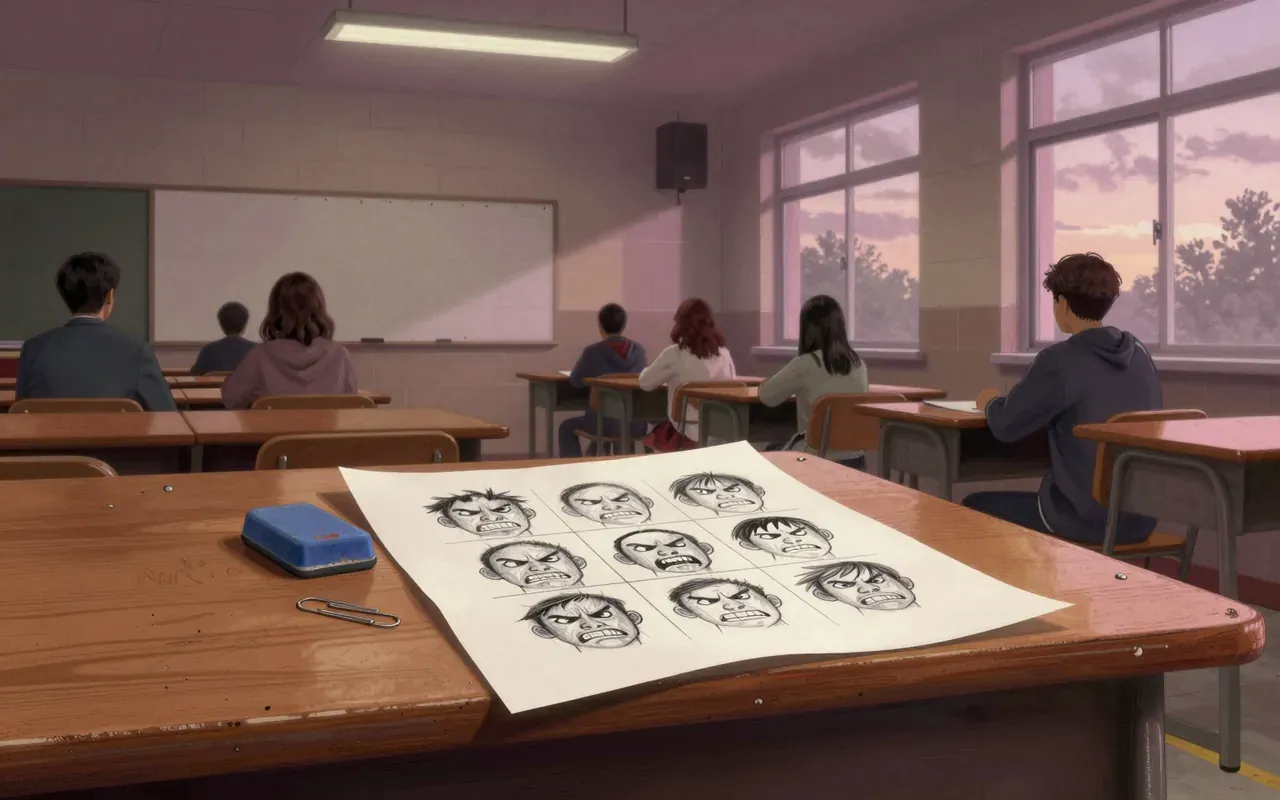
Rage comics are short, crudely drawn cartoon strips using pre-made faces expressing simple emotions.
Where it came from
They originated on 4chan’s /b/ board in mid-2008. Trollface was drawn by Carlos Ramirez in Oakland that same year.
What it gets right
They codified shared frustration into reusable visual units. They turned Microsoft Paint into a vernacular.
What it gets wrong
They flattened emotion into caricature. Rage Guy does not express rage. He performs the idea of it — badly.
Why it matters now
They reveal how quickly digital vernaculars harden, spread, and fossilise — then vanish from active use while lingering as cultural residue.
Is it worth your time
No. Rage comics are obsolete infrastructure — a dead language whose grammar no longer parses.
Same beat · Subcultures 4 of 63
Jungle music 1987 Jungle was a short-lived, high-velocity genre that fused UK rave energy with Jamaican bassweight. It peaked in 1994–1995, then shed its reggae DNA by 1996–1997. By 1998, it had become drum and bass—less a continuation than a repudiation of its own origins. 8:31
Burton Snowboards 1977 Burton Snowboards is a subcultural infrastructure project disguised as a product company. Its 1977 origin was materially constrained, not visionary. Its 1982 breakthrough was tactical, not cultural. Its influence lies in what it displaced—not what it inspired. 8:40
Rude boy Rude boy began as a label for violent, unemployed youths in 1960s Kingston who disrupted rival sound system dances. Its style fused US jazz and soul tailoring, Sean Connery’s Bond suits, and outlaw film imagery. Musicians responded directly—some condemning, some endorsing—its violence. In late-1970s England, the term was repurposed to describe fans of two-tone and ska, severing it from its origin in economic desperation and street conflict. 8:20
4chan 2003 4chan is an anonymous English-language imageboard launched by Christopher Poole in October 2003. It was created as an unofficial English-language counterpart to Japan’s Futaba Channel (2chan), initially focused on anime. Registration is not available except for staff, and users typically post anonymously. Posting is ephemeral, as threads receiving recent replies are 'bumped' to the top of their respective board and old threads are deleted as new ones are created.