culturebriefs
9:31in productionCh. 1 · What it is/ 9:31 · ceiling 15 min
Society · Ideas

Platform capitalism

Platform capitalism isn’t just business as usual—it’s economic power disguised as infrastructure.

Platform capitalism names the dominance of tech giants—not as service providers, but as infrastructural gatekeepers. It correctly identifies industry-wide dependence on their hardware and software. But it wrongly treats all platform-mediated activity as inherently capitalist, erasing regulatory, cooperative and public alternatives. Its urgency lies in the fragility it reveals: when platforms shift, whole sectors buckle. Worth your time if you want to see the architecture behind today’s economic instability.

Chapters & takeaways4
  1. 1:02
    What it is

    It’s not about apps—it’s about control of the foundation others build on.

  2. 2:09
    What it does

    Industries don’t just use platforms—they’re hostage to them.

  3. 3:38
    What it sparks

    Its impact is contested—and overlaps with surveillance capitalism’s logic.

  4. 6:00
    What it excludes

    It defines itself by contrast: profit-first platforms versus fairness-first cooperatives.

Worth your time?

Yes. Study the whole thing.

4/ 5
What works
  • economics
  • technology-policy
  • digital-society
What does not
  • culture/art
  • culture/arts
  • culture/cities
  • culture/generations
Study it if
  • policy-makers
  • developers
  • journalists
Skip it if
  • casual-users
  • students-without-context
The written brief1 min read

What the thing is

Platform capitalism is a business model where major technology companies—like Google, Facebook, Apple, Microsoft, Uber, Airbnb and Amazon—operate as foundational platforms.

Where it came from

It emerged from analysis of how those companies use hardware and software as a foundation for third-party economic activity.

What it gets right

It names a real shift: industries now depend on platforms owned by tech companies.

What it gets wrong

It conflates all platform-based business with profit-only logic, ignoring hybrid and regulated models that exist outside the binary it constructs.

Why it matters now

Because entire industries collapse when platform owners change terms—making dependence structural, not incidental.

Is it worth your time

Yes—if you need to understand how economic power is now concentrated in infrastructure, not just firms.

Same beat · Society4 of 286
8:48
Image macroImage macros are a digital interface—not an art form. They standardised how millions expressed irony, frustration and affiliation before platforms automated tone and stripped away authorship. Their rigidity enabled scale. Their simplicity enabled theft. Their legacy isn’t humour—it’s the template as infrastructure.
9:10
Self-managed social centerSelf-managed social centers are anti-authoritarian, volunteer-run spaces that operate as infoshops, free schools, bicycle workshops and concert venues. They began in Italy in the 1980s and spread to the US and UK in the 1990s. They oppose gentrification and megaprojects. They create and practice the commons. They are transient, precarious, and politically active—but do not survive long enough to institutionalise what they prefigure.
10:00
Home recordingHome recording is sound captured in private homes—not studios. It began with isolated pioneers in the US, UK, Australia, and Jamaica in the 1950s–1970s. The 1979 Portastudio enabled consumer multitrack recording. Digital recorders and DAWs replaced analog in the 1990s. Lockdowns in 2020 caused a global surge in home-based artists and microgenres. Untreated rooms produce misleading acoustics that compromise mixing. Professional studios have been heavily impacted over the last two decades.
10:02
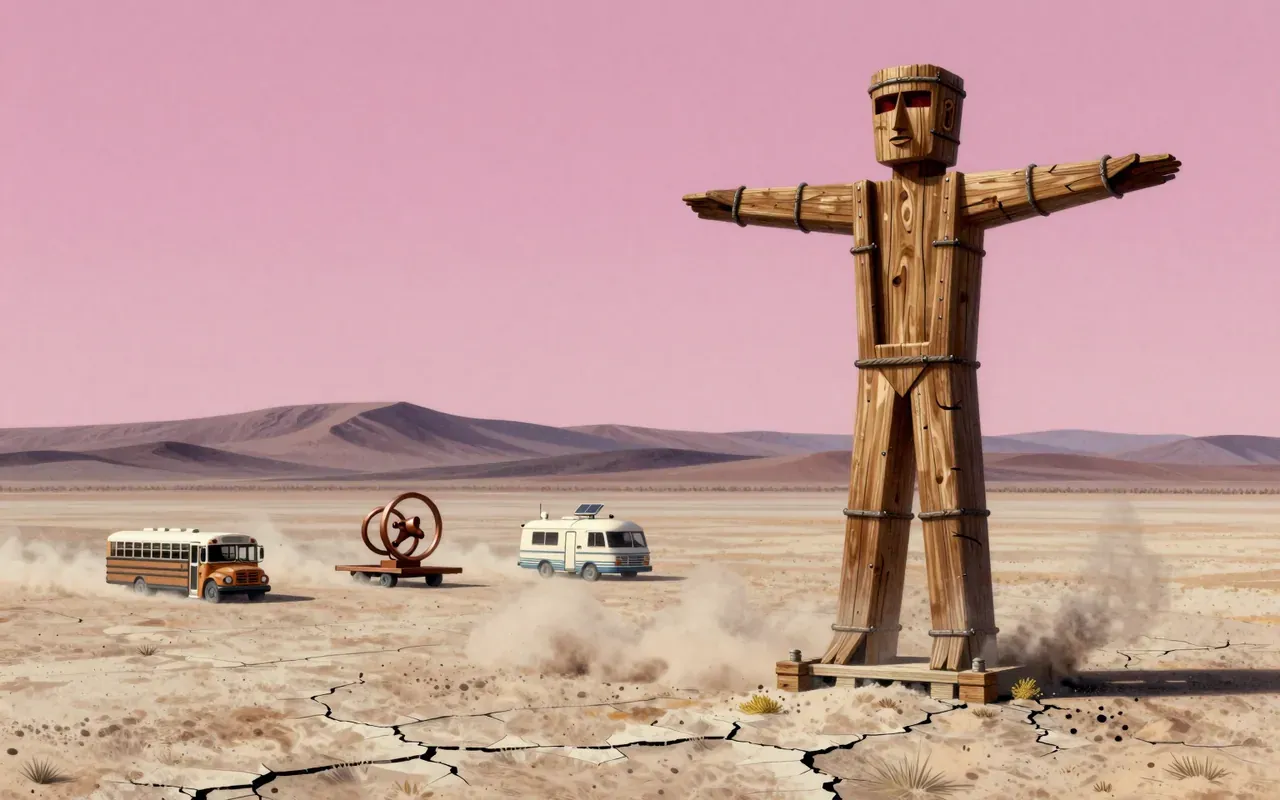
Burning Man1986Burning Man is a participant-built desert gathering named for the ceremonial burning of a wooden effigy—the Man—on the Saturday before Labor Day. It began on Baker Beach in 1986, moved to the Black Rock Desert in 1990, and operates on radical self-reliance, communal effort, and theme-driven art made solely by attendees. Its ten principles were codified in 2004—not at origin—and its model has since been replicated, commercialised, and contested. It is neither pure counterculture nor corporate spectacle, but a documented instance of how ritual, place, and principle diverge over time.
Up next in Culture

Post-Impressionism

· 8:02

The label for French painting from 1886 to 1905 that kept Impressionism's vivid colour and threw out its naturalistic light.

8:02