9:58in productionCh. 1 · What pelmeni are (and aren’t)/ 9:58 · ceiling 15 min
Food · Society
Pelmeni
Pelmeni aren’t Russian first—they’re Komi and Udmurt. Russia just froze them into the national menu.
Pelmeni are a functional food born in Komi and Udmurtia, adapted by Russian settlers for Siberian winters. Their ice-water filling technique solves preservation and hydration in extreme cold. But calling them ‘Russia’s national dish’ obscures Indigenous origin and frames assimilation as celebration. They matter now as a case study in culinary erasure—and as proof that the most practical foods often carry the heaviest history.
Pelmeni are unleavened dumplings—dough wrapped around filling, not pasta or wonton.
2:15
Not invented in Moscow
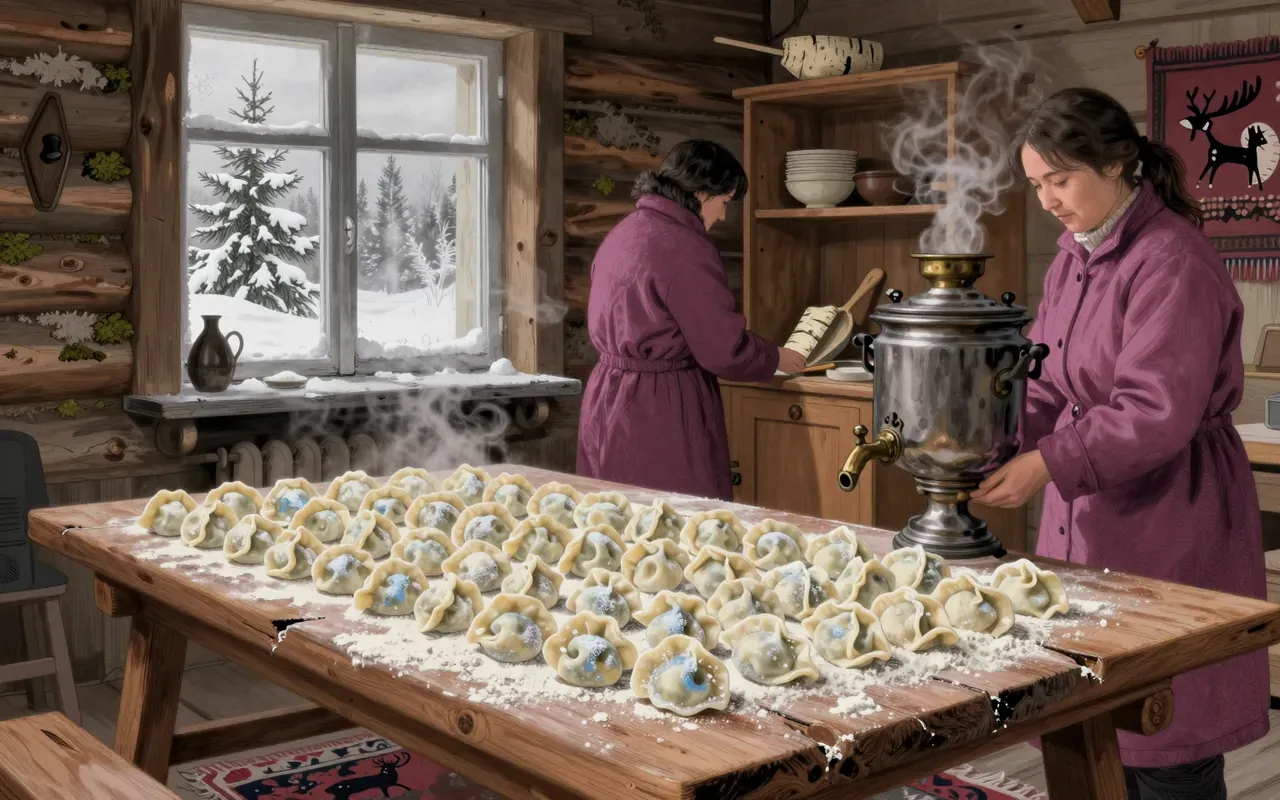
The dish and its name came from Komi and Udmurt traditions, then spread east with Russian settlers.
3:23
The Siberian physics trick
Ice-water in the raw meat creates broth inside—no stock, no simmering, no waste.
4:19
National dish ≠ native dish
Calling pelmeni 'Russia’s national dish' flattens their Indigenous roots and colonial adoption.
5:38
Dough is regional infrastructure
Dough varies: water-only elsewhere, smetana-added in Siberia to soften gluten for freezing.
6:28
How empires eat on the move
Pelmeni became essential because they stored well in sub-zero temperatures—food for empire.
Worth your time?
Yes. Study the whole thing.
4/ 5
What works
as a lens on Indigenous knowledge absorption
as a demonstration of climate-driven food engineering
as a counter-narrative to national cuisine myths
What does not
iconic
timeless
groundbreaking
masterpiece
Study it if
readers interested in how food encodes power
cooks who value technique over trend
students of Eurasian cultural exchange
Skip it if
those seeking nostalgic comfort-food stories
viewers expecting celebrity chef narratives
audiences looking for viral cooking hacks
The written brief1 min read
What the thing is
Pelmeni are unleavened dough parcels filled with raw meat kneaded with ice-water to generate internal broth when boiled.
Where it came from
Pelmeni originated in Komi and Udmurtia, where the name and tradition emerged before becoming a staple during Russian expansion into the Urals and Siberia.
What it gets right
Pelmeni solve a Siberian logistical problem: they preserve meat through winter and deliver broth without stock.
What it gets wrong
Calling pelmeni solely ‘Russian’ erases their Komi and Udmurt origins and misattributes authorship.
Why it matters now
Pelmeni expose how national cuisines absorb, rename and overwrite regional knowledge—especially Indigenous food systems in Russia’s north.
Is it worth your time
Yes—if you care how food encodes geography, climate and conquest in its folds.