culturebriefs
9:41in productionCh. 1 · Not ancient. Not anonymous./ 9:41 · ceiling 15 min
Food

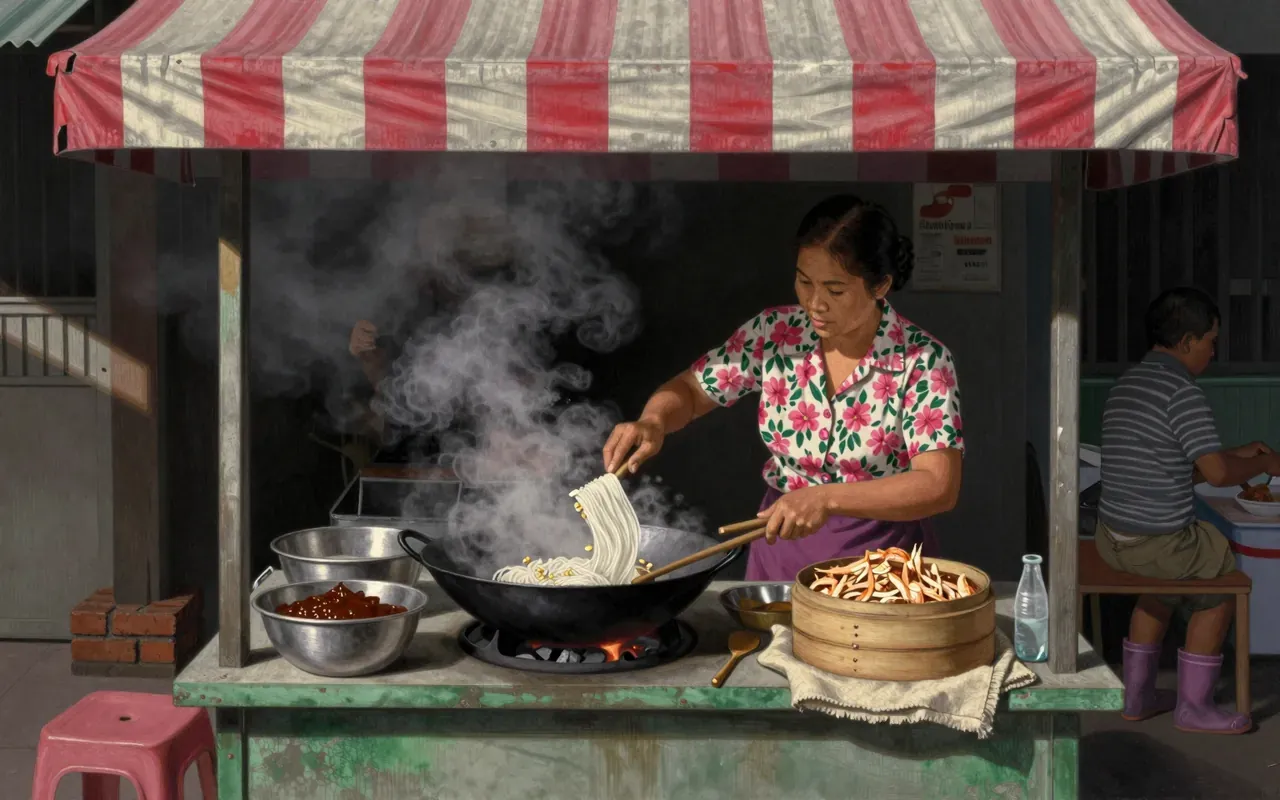
Pad thai

Pad thai isn’t Thai tradition—it’s mid-century policy on a plate.

Pad thai is a mid-20th-century invention—neither ancient nor traditionally Thai—but a deliberate product of nationalism, wartime policy and Thai Chinese adaptation.

Chapters & takeaways4
  1. 1:04
    Not ancient. Not anonymous.

    Pad thai is a modern dish—not an ancient one—and its name was shortened from kuai tiao pad thai.

  2. 2:16
    Made for nationalism

    It was created in the 1930s as part of Thailand’s nation-building campaign.

  3. 4:28
    Born of shortage

    During WWII, the Thai government promoted noodles to conserve rice—and named a new dish after Chanthaburi Province.

  4. 5:55
    Chinese roots, Thai name

    Thai Chinese immigrants likely invented it—noodle cookery in Southeast Asia came from southern China.

Worth your time?

Yes. Study the whole thing.

4.5/ 5
What works
  • as evidence of policy-made-cuisine
  • as a case study in naming-as-nation-building
  • as proof that street food can be state-designed
What does not
  • claim influence beyond what is documented
  • treat popularity as significance
  • confuse contemporary intent with retrospective meaning
Study it if
  • readers tracking how states shape taste
  • food writers rejecting origin myths
  • historians of mid-century Asia
Skip it if
  • those seeking culinary nostalgia
  • readers who assume 'traditional' means pre-1945
The written brief1 min read

What the thing is

Pad thai is stir-fried rice noodles with tamarind, fish sauce, palm sugar, dried shrimp, tofu, bean sprouts and peanuts.

Where it came from

It was invented in Thailand in the 1930s or 1940s—either as nationalist propaganda under Plaek Phibunsongkhram, a wartime response to rice shortages, or by Thai Chinese immigrants adapting southern Chinese noodle cookery.

What it gets right

It names rice noodles as Thai. It makes them portable, affordable and adaptable. It gives street vendors a signature dish with national branding.

What it gets wrong

It pretends to be ancient tradition. It obscures its origins in policy, not practice. It erases the Thai Chinese cooks who likely made it first.

Why it matters now

It reveals how state power reshapes cuisine—and how that reshaping gets mistaken for authenticity in global food culture.

Is it worth your time

Yes—if you care how nationalism, scarcity and migration cook themselves into everyday food.
Same beat · Food4 of 210
Up next in Culture

Paella

· 10:17

Paella is not Spanish. It is Valencian — and every global version that ignores socarrat, fire, and Albufera rice misses the point.

10:17