culturebriefs
8:18in productionCh. 1 · Heat is the ingredient/ 8:18 · ceiling 15 min
Food

Naan

Naan is not Indian tradition—it’s Delhi Sultanate infrastructure baked into dough.

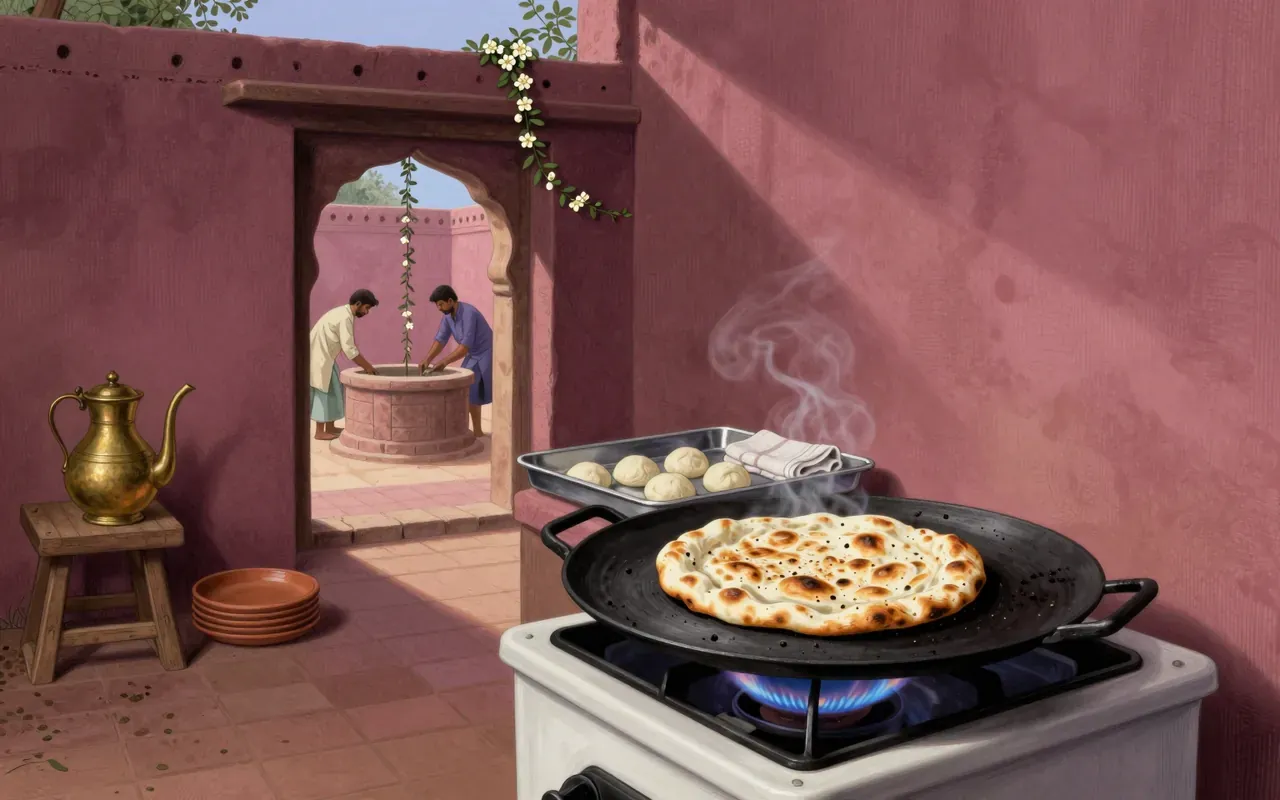
Naan is a leavened flatbread baked in tandoor, tava or oven. It arrived in the Indian subcontinent during the Delhi Sultanate period. Its texture relies on leavening and intense heat. Its dairy ingredients serve structural roles. Its modern ubiquity obscures its origin as infrastructural adaptation—not folk craft.

Chapters & takeaways4
  1. 0:57
    Heat is the ingredient

    Tandoor baking at 480 °C defines naan—not recipe, but physics.

  2. 2:00
    Leavening is a choice, not a rule

    Yeast builds air pockets; baking powder shortcuts them.

  3. 3:10
    Browning is evidence, not aesthetics

    Spotty browning isn’t decoration—it’s thermal imprint.

  4. 4:41
    Dairy does the work

    Ghee and yogurt are structural, not just flavourful.

Worth your time?

Yes. Study the whole thing.

4.5/ 5
What works
  • anyone who treats cooking as applied physics
What does not
  • culture/arts
  • culture/literature
  • culture/movements-and-scenes
  • culture/photography
Study it if
  • home cooks
  • food historians
  • culinary technicians
Skip it if
  • casual diners seeking nostalgia
  • vegetarian advocates without technical interest
The written brief1 min read

What the thing is

Naan is a leavened flatbread. It is rolled, flattened, and baked—most authentically in a tandoor at up to 480 °C.

Where it came from

It spread to the Indian subcontinent during the Delhi Sultanate period.

What it gets right

It delivers consistent texture: light, fluffy, with spotty browning. Yeast or chemical leavening reliably creates air pockets. Dairy additives like yogurt and ghee enrich structure and flavour.

What it gets wrong

It misleads on authenticity when baked outside the tandoor. Stovetop or oven versions lack the thermal shock that defines its signature spots and blistered surface.

Why it matters now

It reveals how food carries imperial infrastructure: the tandoor’s heat, the dairy additions, the yeast substitution—all reflect adaptation under constraint, not tradition for tradition’s sake.

Is it worth your time

Yes—if you care how a simple bread encodes centuries of migration, heat physics, and dairy chemistry.
Same beat · Food4 of 210
Up next in Culture

Naomi Campbell

· 10:20

Campbell didn’t break barriers—she exposed them, one Vogue cover at a time.

10:20