9:51in productionCh. 1 · What it is/ 9:51 · ceiling 15 min
Food · Ideas
Molecular gastronomy
It was never about foam—it was about giving cooks a science that spoke their language.
Molecular gastronomy is a discipline—not a cuisine. It emerged in 1988 to give cooks access to food science. It names no technique, creates no menu, and serves no restaurant. It asks: what happens, at the molecular level, when we cook? That question remains urgent. The answer does not belong to chefs alone—or to labs alone—but to both, on equal terms.
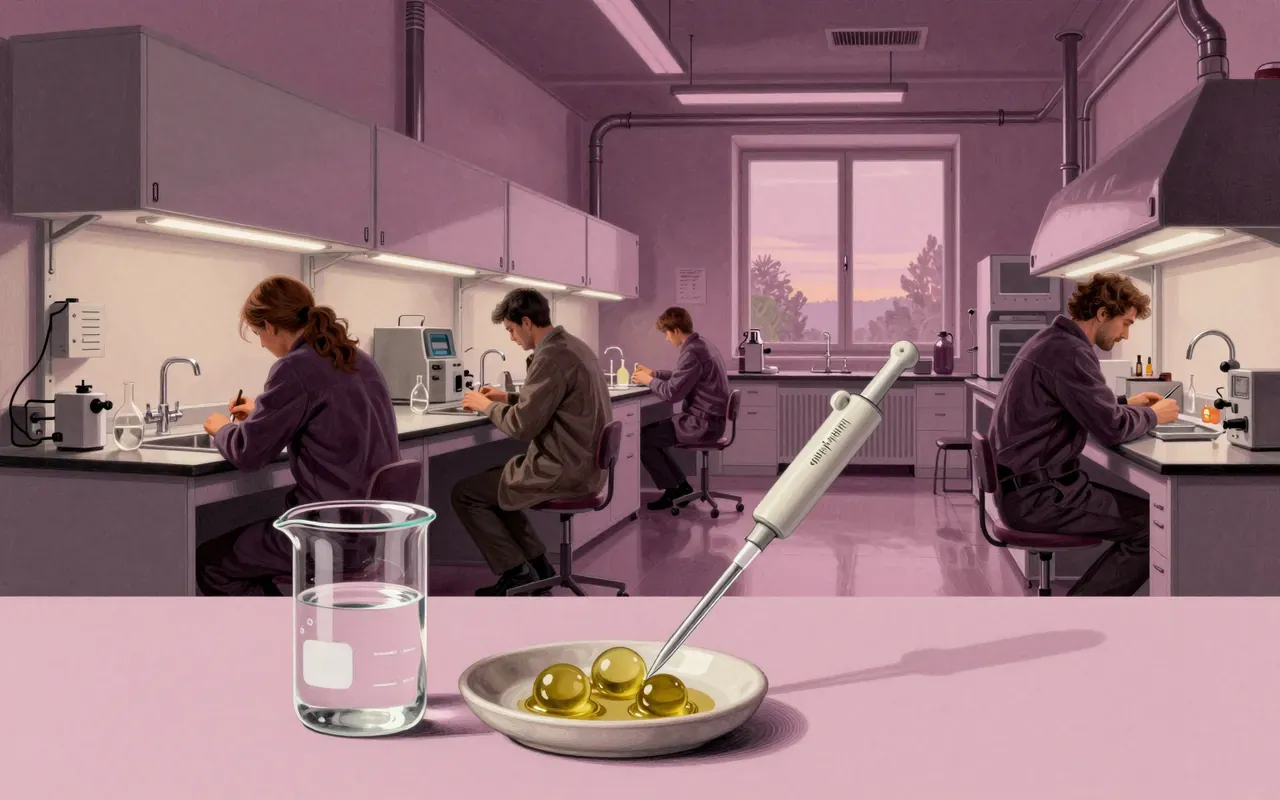
It studies cooking at the scale of atoms and molecules—not to invent new dishes, but to explain why old ones work.
2:32
Who made it
It was named in 1988 by a physicist and a chemist—neither a chef nor a restaurateur.
4:03
How it spread
Its workshops in Erice, Italy, starting in 1992, brought scientists and professional cooks together to discuss traditional methods.
5:27
What it explains
It explores the science behind traditional cooking—not to replace it, but to codify it.
Worth your time?
Yes. Study the whole thing.
4/ 5
What works
as a framework
as a corrective
as a pedagogical tool
What does not
influence
define
launch
displace
Study it if
cooks
scientists
food educators
Skip it if
diners
foodies
restaurant critics
The written brief1 min read
What the thing is
Molecular gastronomy is the scientific study of cooking from chemistry and physics. It examines molecular structure, physical properties, and chemical transformations of ingredients.
Where it came from
It began in 1988 when Hungarian physicist Nicholas Kurti and French physical chemist Hervé This coined ‘molecular and physical gastronomy’ in France and Hungary.
What it gets right
It treats cooking as a legitimate domain for scientific investigation. It focuses on atoms, molecules, and mixtures in food preparation. It unifies fragmented knowledge for cooks—not just industrial food scientists.
What it gets wrong
It misleads by implying novelty where tradition already held empirical knowledge. Its name suggests molecular manipulation, but its method is descriptive analysis of existing techniques.
Why it matters now
It reasserts that culinary knowledge belongs to cooks—and can be systematised without being commercialised or aestheticised.
Is it worth your time
Yes—if you want to understand how cooking became a site of scientific inquiry, not spectacle.