culturebriefs
8:11in productionCh. 1 · A calendar, not a carnival/ 8:11 · ceiling 15 min
Fashion

Milan Fashion Week

1958

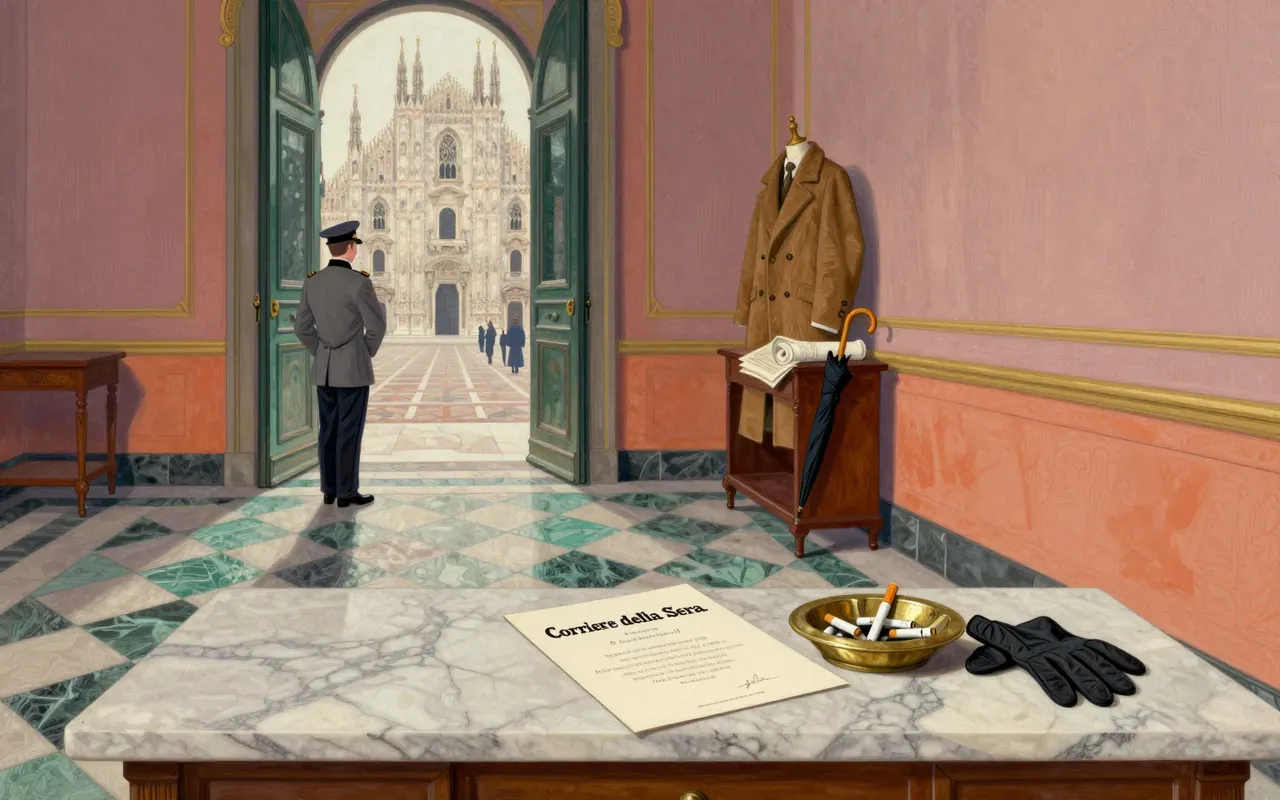
Milan Fashion Week didn’t launch Italian style—it launched Italian industry.

Milan Fashion Week is not about glamour. It is about timing, trade, and institutional discipline. It was built to sell clothes—not ideas.

Chapters & takeaways4
  1. 1:00
    A calendar, not a carnival

    It is a trade show—not a festival or runway spectacle—with fixed seasonal timing.

  2. 2:06
    Third in line, not first in mind

    It occupies the third slot in the Big Four, after New York and London, before Paris.

  3. 3:30
    Born from a syndicate

    It began in 1958 with a trade union for fashion—designed to coordinate, not celebrate.

  4. 4:55
    Shared control, not central command

    The National Chamber of Italian Fashion runs it—but only partially.

Worth your time?

Yes. Study the whole thing.

4/ 5
What works
  • coordinating-industry
  • setting-global-calendar
  • standardising-seasonality
  • promoting-national-brand
What does not
  • art-deco
  • haute-couture
  • avant-garde
  • subcultures
Study it if
  • designers
  • buyers
  • textile-manufacturers
Skip it if
  • general-public
  • critics
  • collectors
The written brief1 min read

What the thing is

Milan Fashion Week is a semi-annual clothing trade show. It showcases autumn/winter fashions in February/March and spring/summer fashions in September/October.

Where it came from

It began in 1958 with the founding of the Camera Sindacale della Moda Italiana on 11 June. That body became the National Chamber of Italian Fashion, which partially organises the event.

What it gets right

It established Italy as a coordinated fashion economy. It gave designers a fixed calendar, shared infrastructure, and collective representation.

What it gets wrong

It sidelined regional craft traditions in favour of industrial scalability. It prioritised commercial readiness over experimentation.

Why it matters now

It codified the global fashion calendar still used today. Its sequence—New York, London, Milan, Paris—remains unchallenged.

Is it worth your time

Yes—if you need to understand how fashion became a structured, national export industry rather than a collection of ateliers.
Same beat · Fashion4 of 113
11:00
CosplayCosplay is a materially grounded, globally dispersed performance practice rooted in two separate histories—one in US sci-fi fandom, one in Japanese anime culture. Its significance lies in how it turns representation into labour, and character into conduct.
8:18
Grunge (fashion)1980Grunge fashion was an anti-fashion statement rooted in mid-1980s Seattle’s music scene. It used durable, thrift-store clothing worn loosely and androgynously—especially flannel shirts and Doc Martens—to reject 1980s flash. Kurt Cobain’s blend of lumberjack workwear and vintage feminine dresses helped define it. By the mid-1990s, it had been commodified globally—most notably by Marc Jacobs for Perry Ellis in 1993. Its legacy is not authenticity, but the speed with which resistance becomes product.
8:50
GyaruGyaru is a Japanese fashion subculture rooted in the transliteration of 'gal'. It emerged as nonconformist resistance to traditional Japanese gender roles and beauty standards—particularly the expectation that women be housewives with pale skin and dark hair. Early associations included juvenile delinquency and frivolousness among teenage girls. Kogal culture, a defining variant, rose prominently in the Heisei era (1989–2019), peaking in the 1990s and early 2000s. It is currently experiencing a revival in the Reiwa era. The subculture includes a male counterpart, gyaruo. Its core visual ingredients are consistently cited as gaudy fashion, extreme makeup, and dyed hair.
10:21
Levi Strauss & Co.Levi Strauss · 1853Levi Strauss & Co. is a pragmatic infrastructure project disguised as clothing. It began as immigrant commerce, not craft. Its innovations were patents, lot numbers, trademarks — administrative tools that made reproducible, durable workwear. It did not define youth culture, nor did it seek cultural status. It solved problems for people who needed pants to last — and kept doing so, even when the problem changed.
Up next in Culture

Minimalism

· 8:41

Minimalism didn’t remove meaning—it relocated it from the canvas to the ceiling, the floor, and the viewer’s feet.

8:41