10:53in productionCh. 1 · Where It Is/ 10:53 · ceiling 15 min
Society · Ideas
Laghman Province
Laghman isn’t a relic—it’s a palimpsest of empires, faiths, and routes erased and rewritten for 2,300 years.
Laghman Province is not a case study in resilience or identity—it is a geographically fixed archive of overlapping imperial claims, religious shifts, and trade logics. Its value lies in what the evidence concretely attests—not in what later narratives project onto it.
Laghman is an Afghan province in the east, with Mihtarlam as its capital.
2:26
What the Evidence Says
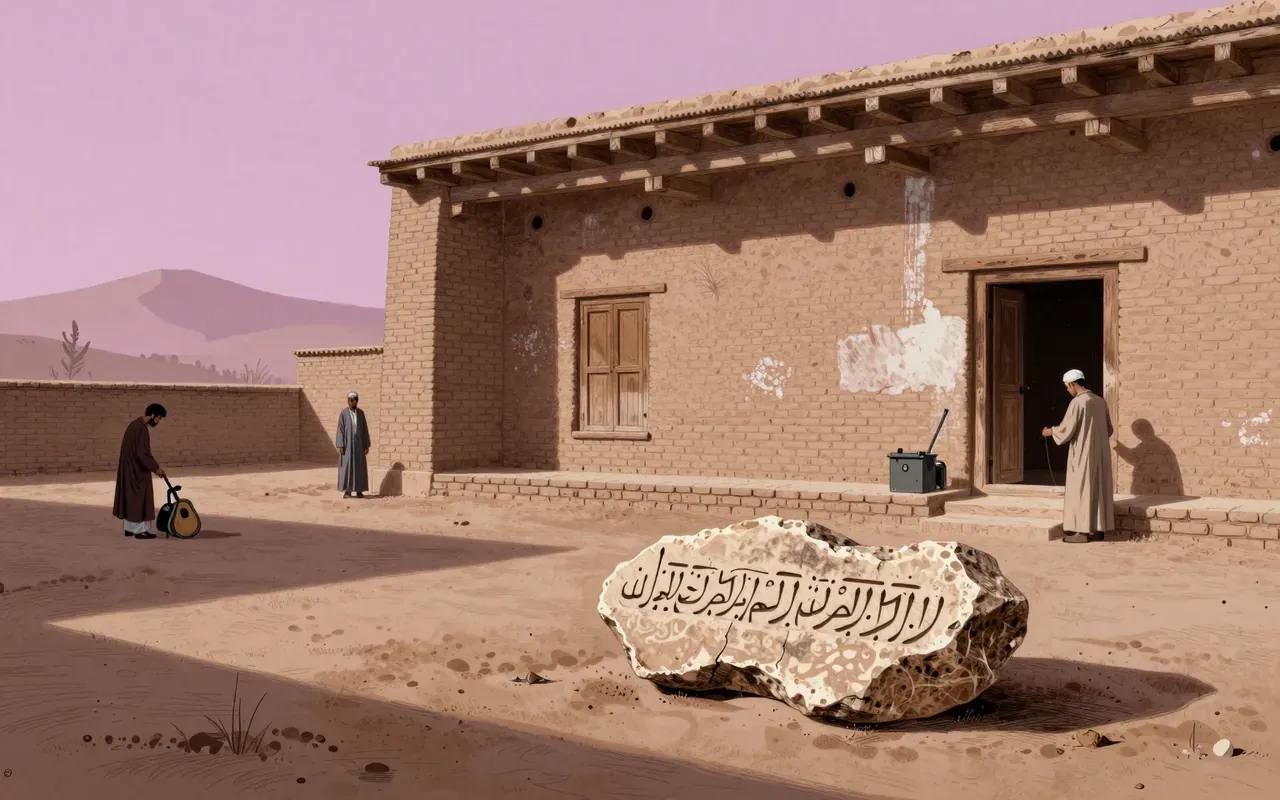
Aramaic inscriptions, Tantric texts, and Xuanzang’s account prove Laghman was a node in ancient Indian, Buddhist, and trans-Eurasian networks.
4:01
What the Sources Leave Out
Its population of 502,148 is multi-ethnic and mostly rural—yet none of the sources describe current social structure, language distribution, or economic life.
5:48
The 2021 Shift
The Taliban seized Laghman in 2021—but the sources say nothing about resistance, administration, or local response.
Worth your time?
Yes. Study the whole thing.
4/ 5
What works
Mauryan inscriptions
Mahamayuri Tantra
Xuanzang's records
2021 Taliban offensive
What does not
ancient-greece
islam
colonialism
Study it if
historians
geopolitical analysts
students of South Asian religion
Skip it if
general readers seeking narrative cohesion
policy audiences expecting governance analysis
The written brief1 min read
What the thing is
Laghman Province is one of Afghanistan’s 34 provinces, located in the east.
Where it came from
Its documented history begins with Mauryan Dynasty (3rd century BCE) Aramaic inscriptions found there—and extends through Ghaznavid, Mughal, and Durrani eras to the 2021 Taliban offensive.
What it gets right
It documents Laghman’s role as a crossroads: Aramaic inscriptions prove Indo-Palmyrene trade; Mauryan-era texts confirm Ashoka’s Buddhist turn; the Mahamayuri Tantra names Yaksha worship in Lampaka; Xuanzang placed it within India’s cultural orbit.
What it gets wrong
It implies continuity where evidence is fragmented. No source confirms unbroken practice from Mauryan inscriptions to Mughal rule—or links Lampaka directly to modern Laghman beyond toponymic suggestion.
Why it matters now
Because its 2021 capture by the Taliban closed a chapter that began with Ashoka—and because its layered past contradicts monolithic narratives about Afghanistan’s religious or geopolitical identity.
Is it worth your time
Yes—if you need to understand how ancient trade, imperial succession and religious pluralism shaped a single Afghan province over two millennia.