10:36in productionCh. 1 · Nablus, not Baghdad/ 10:36 · ceiling 15 min
Food
Knafeh
Knafeh is not ancient—it’s a 19th-century invention dressed in caliph-era folklore.
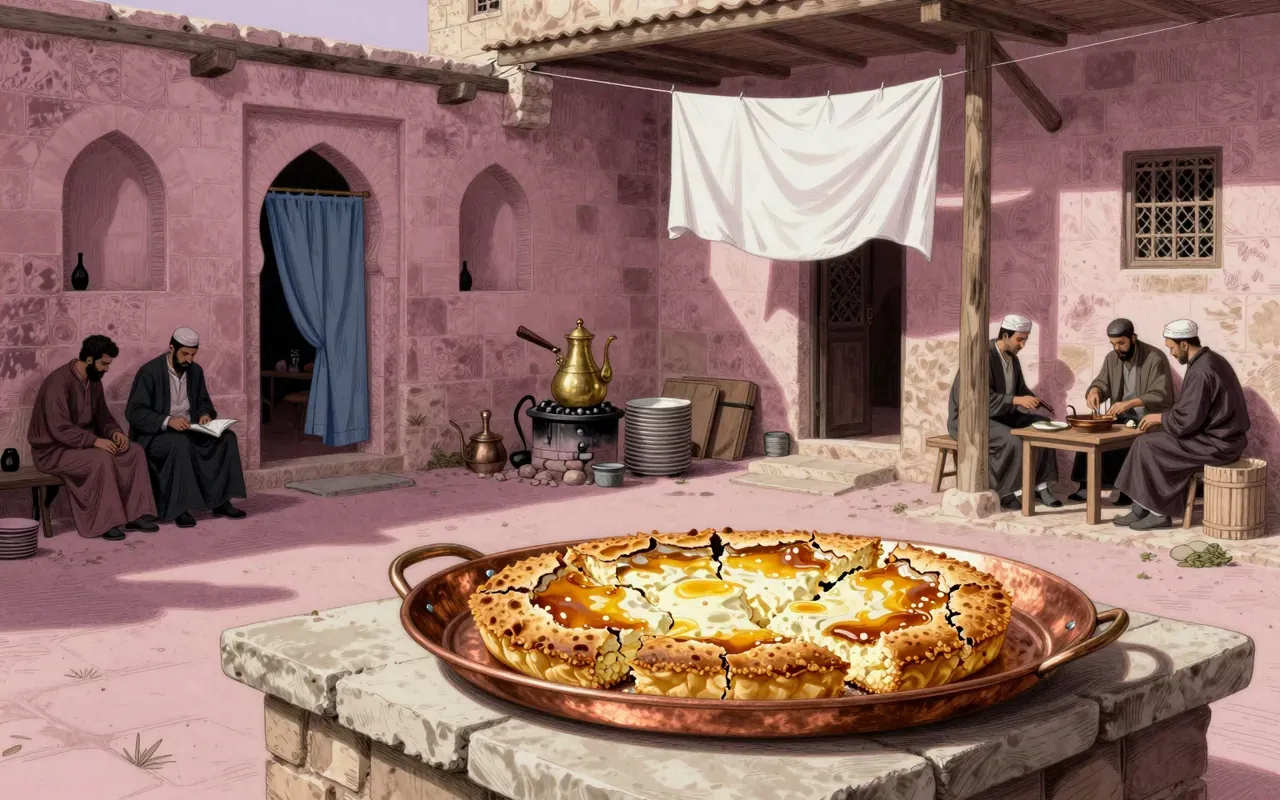
Knafeh is a traditional Arab dessert made with kadayif, cheese and attar. Its most common variant, Knafeh Nabulseyeh, originated in Nablus. Though associated with caliphs in 10th-century Fatimid Egypt or Umayyad Damascus, it does not appear in 10th-century Abbasid records. A 13th-century cookbook describes it as a thin pancake dumpling. Cheese-filled knafeh does not appear before the 19th century, with the earliest documented example in an 1885 Beirut cookbook.
Knafeh Nabulseyeh is the dominant variant—and it is Palestinian, rooted in Nablus.
2:08
No cheese before the 19th century
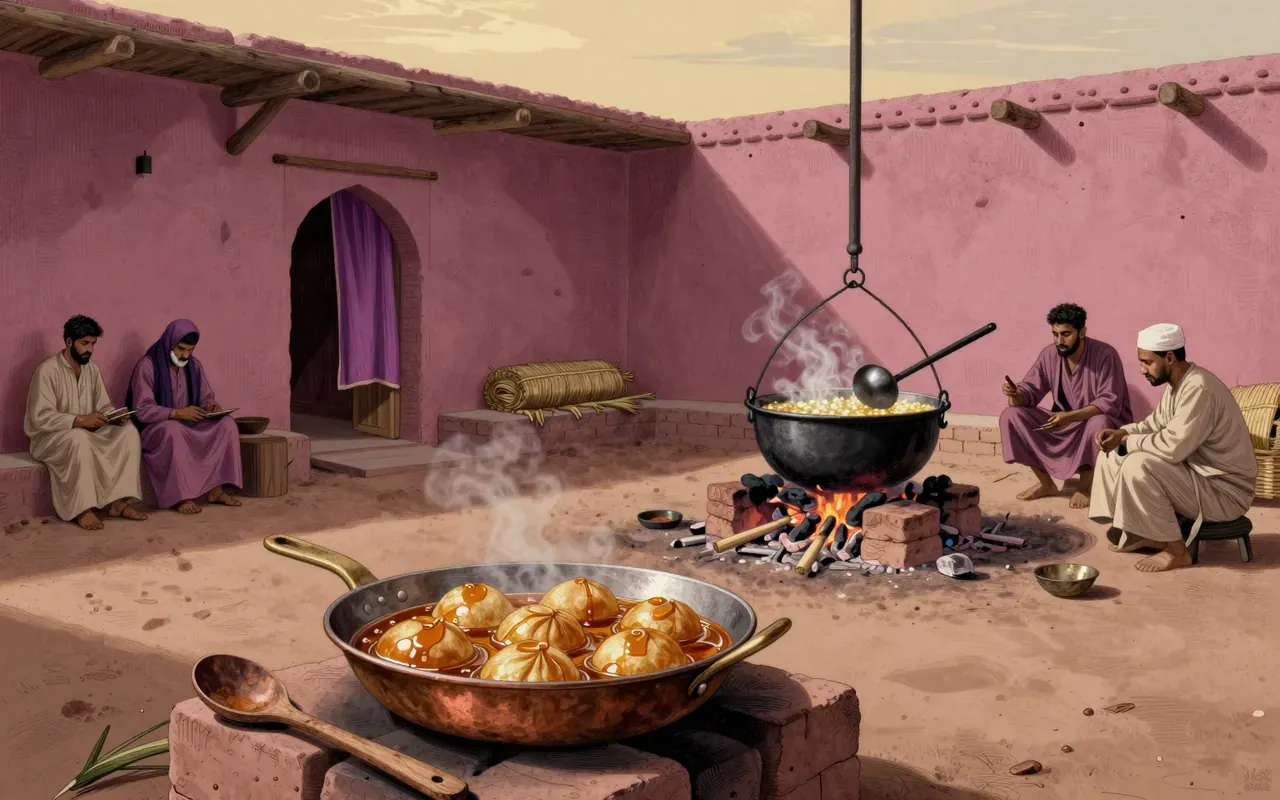
It was absent from 10th-century Abbasid records—and first appeared as a thin pancake, not cheese-stuffed.
3:28
Legends vs. inspectors
Stories of caliphs eating knafeh are unverified legends; real regulation began with 13th-century Mamluk inspectors in Damascus.
4:27
1885 is the birth year
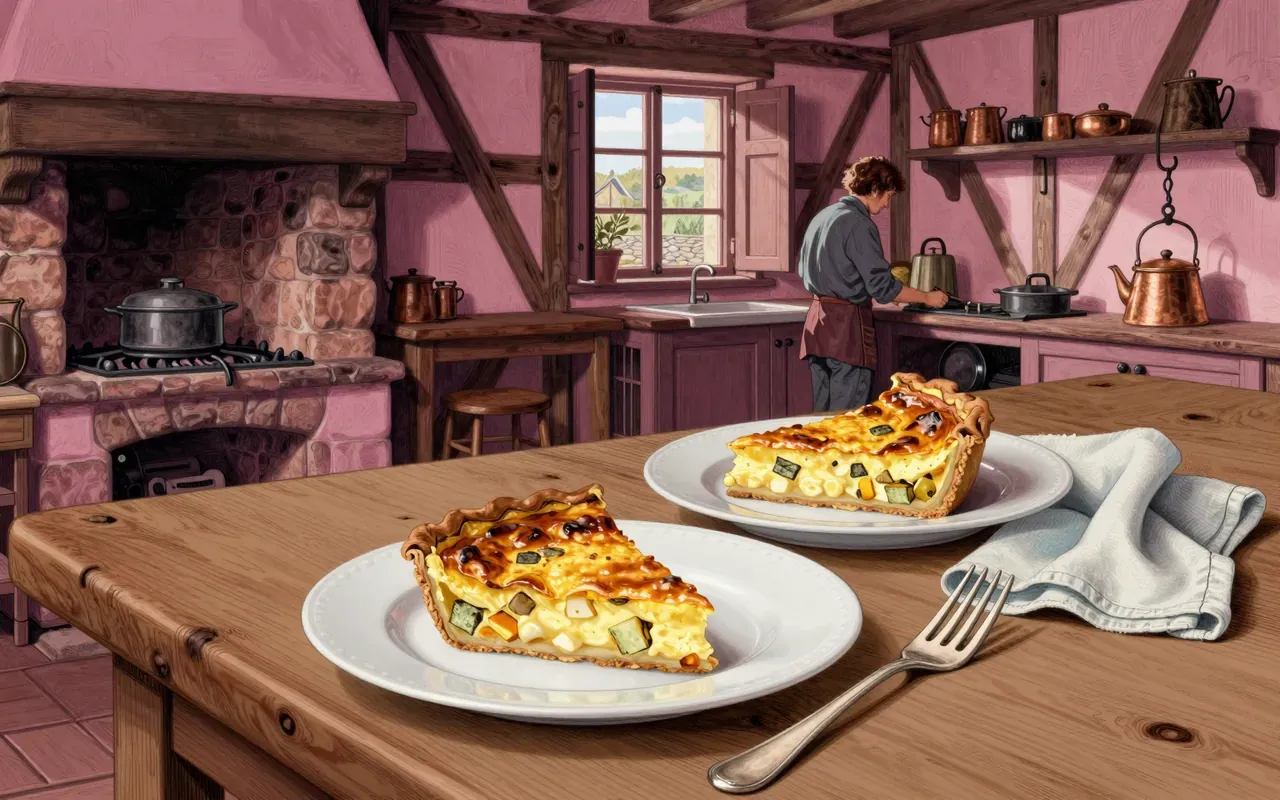
Cheese-filled knafeh has no pre-1885 documentation—its modern form is younger than the telephone.
5:44
Ramadan before cheese
Knafeh was already a Ramadan staple by the 13th century—regulated, regional, and ritualised.
6:33
Two cities, two centuries
Nablus gave knafeh its name and identity—but Beirut gave it its modern structure.
Worth your time?
Yes. Study the whole thing.
4.5/ 5
What works
as a case study in how oral tradition outpaces archive
as a corrective to uncritical food nationalism
as evidence that ritual precedes ingredient innovation
What does not
claims influence beyond documented use
confuses legend with record
treats popularity as proof of antiquity
Study it if
food historians
Palestinian cultural practitioners
readers suspicious of nationalist culinary mythmaking
Skip it if
those seeking ‘authentic’ ancient recipes
casual diners who just want to order dessert
The written brief1 min read
What the thing is
Knafeh is a layered Arab dessert: spun pastry (kadayif), cheese, and sugar syrup (attar).
Where it came from
It originated in Nablus as Knafeh Nabulseyeh. Its earliest verifiable form—thin pancake-like—is in a 13th-century Maghrebi-Andalusi cookbook. Cheese-filled knafeh appears only from the 19th century, first documented in an 1885 Beirut cookbook.
What it gets right
It anchors itself in Arab culinary tradition. It reflects Ramadan’s rhythms. It shows how street food becomes ceremonial.
What it gets wrong
It claims ancient origins in Fatimid Egypt or Umayyad Damascus, but the earliest written record is 13th-century and describes a pancake—not cheese-filled dessert. The caliph stories are uncorroborated narratives, not documented practice.
Why it matters now
It reveals how contested heritage gets weaponised in cultural diplomacy—especially when origin claims bypass archival evidence.
Is it worth your time
Yes—if you care about how food myths harden into national symbols without historical basis.