8:50in productionCh. 1 · Teff, not grain/ 8:50 · ceiling 15 min
Food · Society
Injera
Injera isn’t just bread—it’s a timed microbial ritual baked into Amhara daily life.
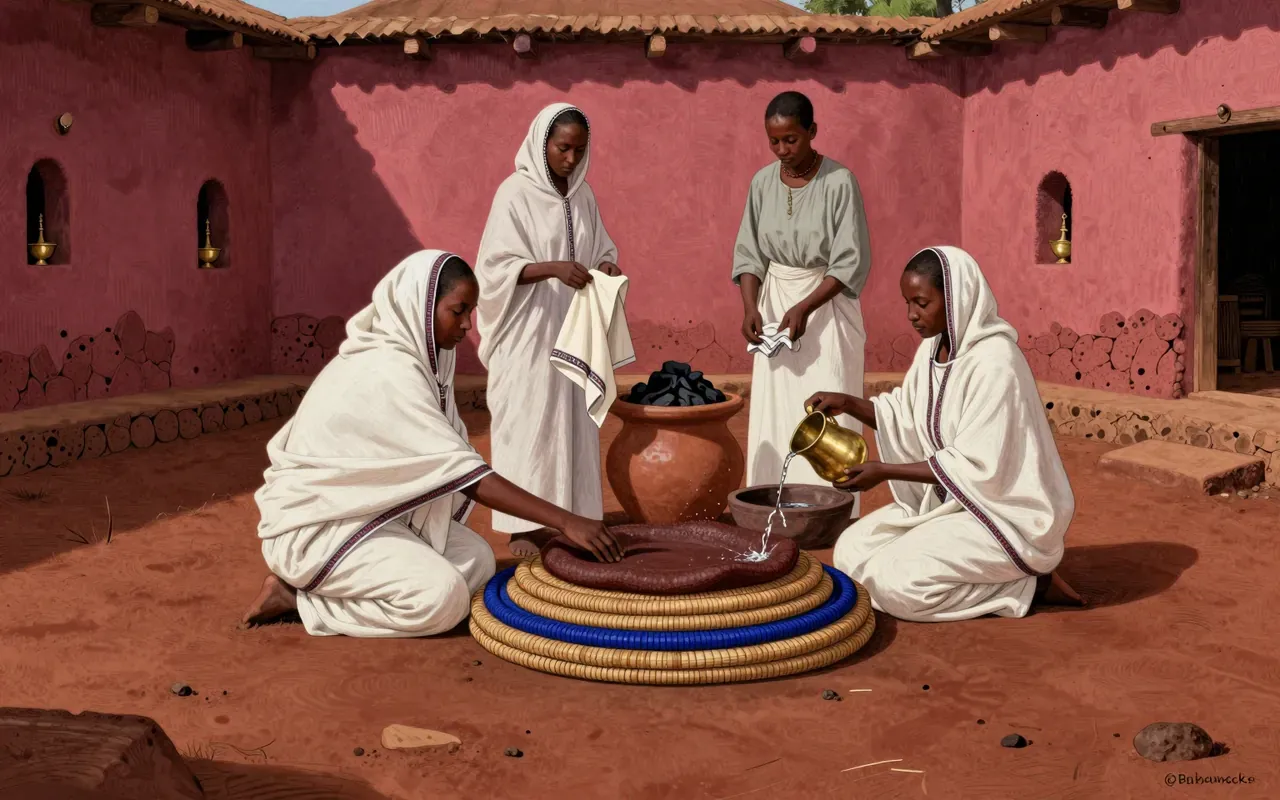
Injera is a sour fermented pancake-like flatbread traditionally made of teff flour, central to the dining process in Amhara society and stored in a mesob. Its origin is Ethiopia and Eritrea; its period of emergence is unknown. Fermentation uses ersho, proceeds in two stages (24–72 hours primary, then 30–120 minutes secondary), and yields measurable changes in gas formation, volume, and acidity (pH < 5.8). Absit—a pregelatinized starch binder—is prepared by boiling part of the dough and added before secondary fermentation. Teff is the preferred grain due to its sensory attributes and shelf life.
Acidity isn’t taste—it’s a documented pH threshold below 5.8.
Worth your time?
Yes. Study the whole thing.
4.5/ 5
What works
as a model of low-tech food resilience
as a cultural anchor for shared eating
as evidence of precise pre-industrial fermentation
What does not
define a movement
influence named artists
displace other staples
achieve global popularity
Study it if
Amhara diners
teff growers
microbial food practitioners
Skip it if
commercial bakeries
gluten-free trend adopters
fast-food systems
The written brief1 min read
What the thing is
Injera is a sour fermented pancake-like flatbread with a spongy texture, traditionally made of teff flour.
Where it came from
It originates in Ethiopia and Eritrea. Its period of emergence is explicitly unknown.
What it gets right
It uses teff for its sensory and shelf-life advantages. It relies on ersho for reproducible sourness. It structures fermentation in two precise stages with measurable biochemical outcomes.
What it gets wrong
Nothing is stated as wrong. The document makes no value claims about flaws, failures or missteps.
Why it matters now
It demonstrates how microbial practice—fermentation timed to pH and volume shifts—can anchor communal dining without refrigeration or industrial additives.
Is it worth your time
Yes—if you care about how fermentation shapes daily ritual, not just flavour.