culturebriefs
8:52in productionCh. 1 · No kitchen required/ 8:52 · ceiling 15 min
Food · Society

Hot pot

Hot pot isn’t cuisine—it’s consensus cooking.

Hot pot is communal, precise, ancient—and stubbornly unstandardised.

Chapters & takeaways4
  1. 0:55
    No kitchen required

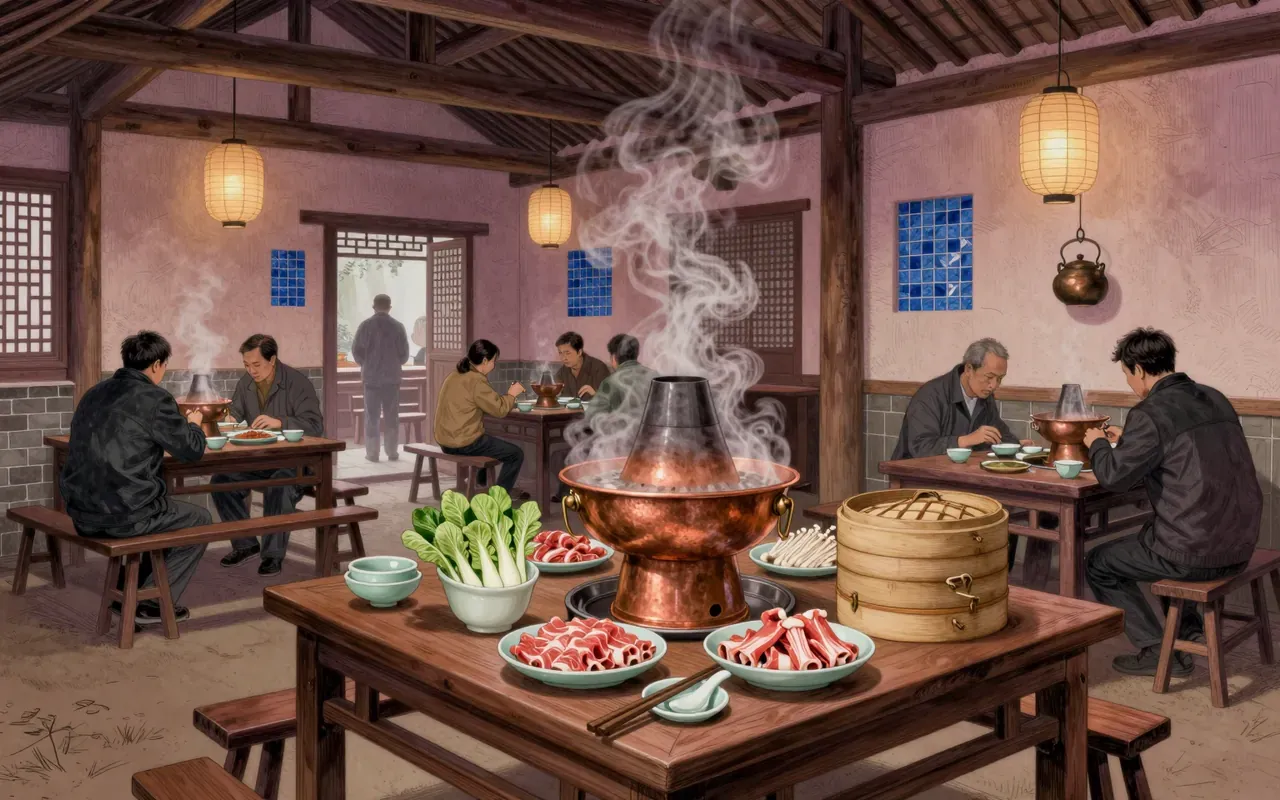
    Hot pot is cooked at the table—not in a kitchen.

  2. 2:12
    Precision by immersion

    Thin slices and timed dips make every ingredient cook on its own terms.

  3. 3:35
    200 AD, not 2000

    Its origin lies in a copper pot from the Three Kingdoms period—not myth, not trend.

  4. 5:31
    Imperial then immigrant

    It moved from Qing emperors’ tables to U.S. strip malls only after 1990.

Worth your time?

Yes. Study the whole thing.

4.5/ 5
What works
  • as ritual
  • as resistance
  • as infrastructure
What does not
  • culture/art
  • culture/literature
  • culture/movements-and-scenes
Study it if
  • people who eat together
  • people who distrust restaurant hierarchies
Skip it if
  • people who want passive dining
  • people who dislike shared utensils
The written brief1 min read

What the thing is

Hot pot is a table-side cooking method: a simmering broth, raw thinly sliced ingredients, and dipping sauces. Cooked by brief immersion. Served communally.

Where it came from

Tripods of the Zhou dynasty are its earliest prototypes. A copper hot pot from the Three Kingdoms period (200–280 AD) is generally acknowledged as its origin.

What it gets right

It makes cooking a shared act. Everyone controls their own immersion time. Everyone chooses their sauce. No chef stands between diner and dish.

What it gets wrong

It assumes uniform heat and timing across all ingredients—yet raw foods demand individualised immersion durations, and the broth’s gentle boil cannot accommodate divergent needs without vigilance or error.

Why it matters now

It resists the professionalisation and atomisation of eating. In an era of meal kits and algorithmic menus, it insists on real-time, collective decision-making at the table.

Is it worth your time

Yes—if you care about food as social infrastructure, not just flavour.
Same beat · Food4 of 210
Up next in Culture

Hugh Hefner

· 9:21

Playboy didn’t liberate male sexuality—it outsourced its ethics to a chequebook and a calendar shoot.

9:21