9:48in productionCh. 1 · What it is/ 9:48 · ceiling 15 min
Food
General Tso's chicken
A dish invented in New York, named for a 19th-century Hunan general, and rejected by Hunan when it came home.
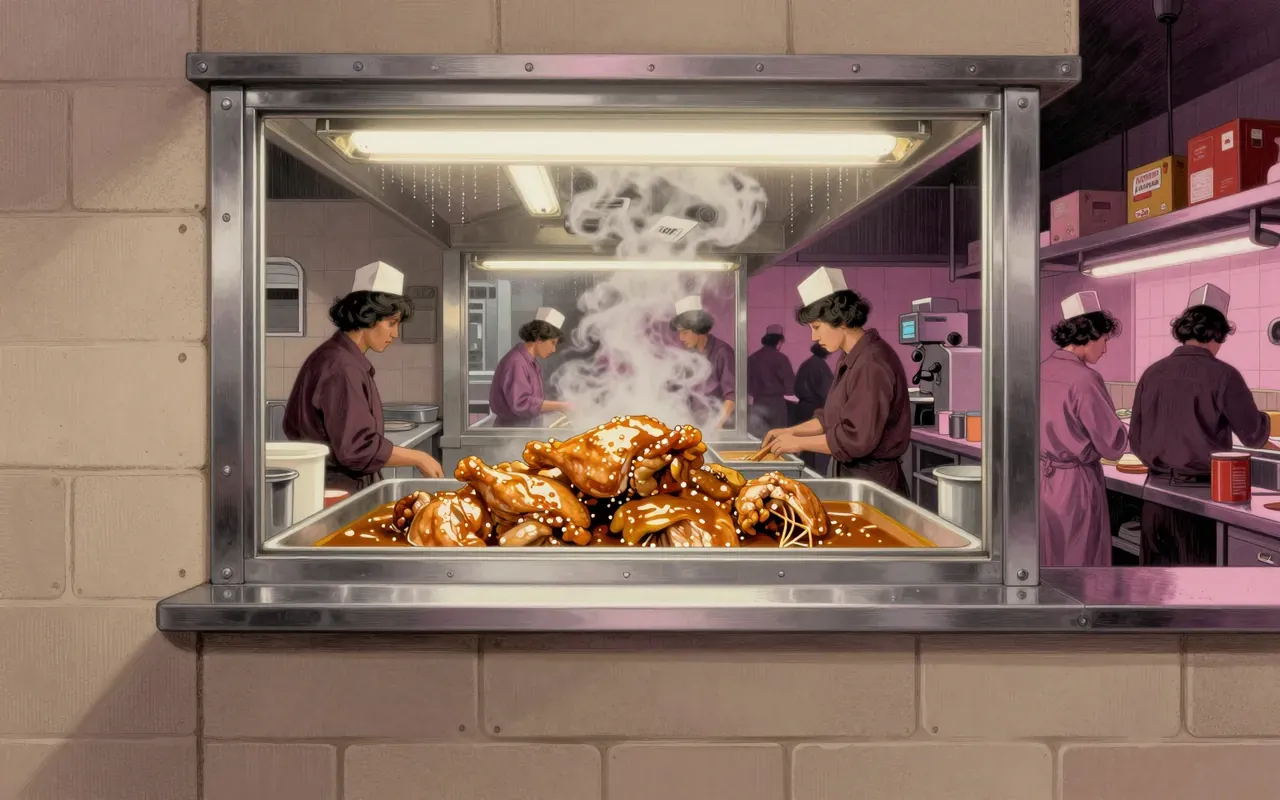
General Tso's chicken is a Chinese-American sweet-and-spicy deep-fried chicken dish. Two chefs—Peng Chang-kuei (circa 1973, East 44th Street, NYC) and T. T. Wang (1972, Shun Lee Palaces, NYC)—independently claimed invention. It was retroactively named after Zuo Zongtang (1812–1885), a Hunanese Qing dynasty statesman. It was altered from spicy to sweet-and-spicy to suit American palates. When Peng brought it to Hunan in the 1990s, locals found it too sweet. It reveals how cultural adaptation operates without consent: a dish stripped of regional fidelity, renamed for prestige, then exported back as 'authentic'—and refused.
It is not Hunanese. It is Chinese-American—and defined by its sweetness.
2:32
Who made it, and where
Two chefs in 1970s New York claimed it—neither in Hunan, neither naming it after Zuo Zongtang at first.
4:21
How it changed
It was altered from spicy to sweet-and-spicy to suit American palates.
5:40
What Hunan said
When Peng brought it to Hunan in the 1990s, locals found it too sweet.
Worth your time?
Yes. Study the whole thing.
3.5/ 5
What works
as a case study in cultural translation
as evidence of American palate dominance
as a reminder that authenticity is often assigned, not inherited
What does not
culture/art
culture/arts
culture/cities
culture/fashion
Study it if
people who eat takeout
students of culinary adaptation
anyone curious about how names travel farther than recipes
Skip it if
people seeking authentic Hunan cooking
those who assume 'Chinese restaurant food' is traditional
The written brief1 min read
What the thing is
General Tso’s chicken is a Chinese-American sweet-and-spicy deep-fried chicken dish.
Where it came from
Two chefs—Peng Chang-kuei (circa 1973, East 44th Street, NYC) and T. T. Wang (1972, Shun Lee Palaces, NYC)—independently claimed invention. It was retroactively named after Zuo Zongtang (1812–1885), a Hunanese Qing dynasty statesman.
What it gets right
It delivers consistent texture and contrast: crisp fried chicken, glossy sauce, heat balanced by sugar. It works as fast, reliable, crowd-pleasing food.
What it gets wrong
It misrepresents Hunan cuisine. When reintroduced there in the 1990s, locals rejected it as too sweet.
Why it matters now
It reveals how cultural adaptation operates without consent: a dish stripped of regional fidelity, renamed for prestige, then exported back as ‘authentic’—and refused.
Is it worth your time
Yes—if you want to understand how American taste reshaped Chinese food, and why that reshaping still confuses both nations.