9:47in productionCh. 1 · A method, not a metaphor/ 9:47 · ceiling 15 min
Movements & scenes · Ideas
Ecofeminism
Ecofeminism names a real link—but mistakes a 1974 label for a 1973 movement.
Ecofeminism is a critical framework that integrates feminism and political ecology, using gender to analyse human–nature relationships. It emerged from two sources: the 1974 coining of the term by Françoise d'Eaubonne in France, and the longstanding, cross-historical practice of women linking gender, race, class and environmental justice. Its strength lies in exposing culturally constructed parallels between the oppression of women and wildlife—not to equate them, but to reveal shared mechanisms of domination. Its weakness is the risk of retrojecting a named theory onto diverse, pre-theoretical actions—like the 1973 Chipko movement—without clarifying what the theory adds beyond naming. It matters now because climate governance still fails to centre the ecological knowledge and agency of women, especially in the Global South.
Ecofeminism is not about nature worship—it’s a method: using gender to analyse human–nature relationships.
2:24
Two origins, one name
The word was born in Paris in 1974—but the practice began with unnamed women across histories linking gender, race, class and environment.
4:26
Parallels are political
It treats the cultural equation of women and nature not as truth—but as a politically consequential construct to be dismantled.
6:08
Action before theory
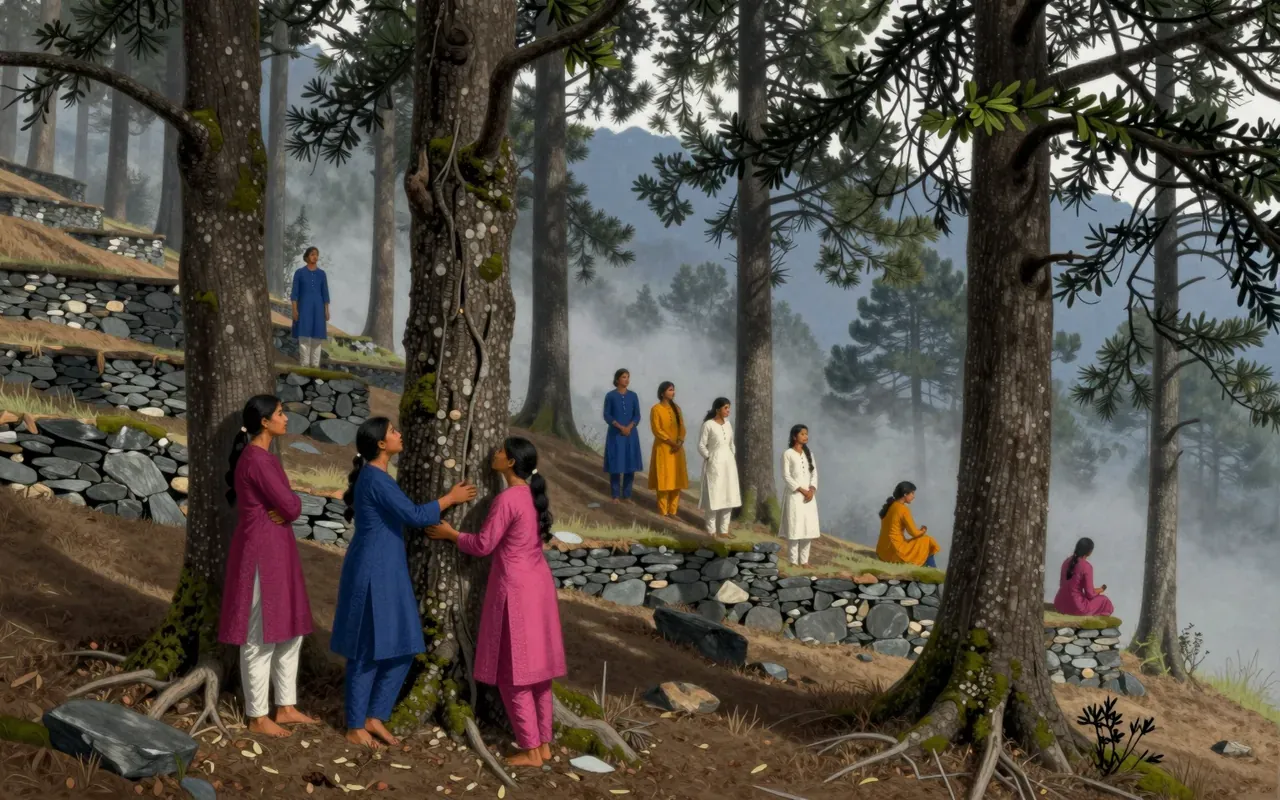
Its clearest empirical result is the 1973 Chipko movement—women in Uttarakhand protecting forests—not a French manifesto.
Worth your time?
Yes. Study the whole thing.
3.5/ 5
What works
exposes political parallels
integrates feminism into green politics
demands egalitarian, non-dominant society
What does not
arguably
perhaps
in many ways
seminal
Study it if
policy makers
activists
students of political ecology
Skip it if
those seeking spiritual ecology
readers looking for a unified global movement
The written brief1 min read
What the thing is
Ecofeminism is a theoretical practice that integrates feminism and political ecology. It uses gender as an analytical lens for human–nature relationships. It examines how cultural parallels between women’s and wildlife’s oppression produce political effects.
Where it came from
The term was coined by Françoise d’Eaubonne in France in 1974. But the sources state its origins lie not only with her, but with women across diverse historical backgrounds who perceived connections among gender, race, class, and environmental issues.
What it gets right
It correctly identifies culturally constructed parallels between the oppression of women and wildlife. It insists on respect for both women and nature as non-negotiable. It brings feminism into green politics with a demand for egalitarian, non-dominant social structures.
What it gets wrong
It risks conflating diverse women’s environmental actions—like the Chipko movement—with a unified theory coined in 1974 Paris. The sources show ecofeminism began with women across historical backgrounds, but the term and its formal integration into political ecology came later—and from one author.
Why it matters now
Because climate policy still routinely sidelines gendered labour, knowledge and leadership—especially in the Global South—while ecological movements often reproduce hierarchies they claim to oppose.
Is it worth your time
Yes—if you need a framework that links gender, ecology and power without flattening either women or nature into symbols.