8:56in productionCh. 1 · What it is/ 8:56 · ceiling 15 min
Food
Dosa (food)
Dosa isn’t ancient tradition—it’s a durable infrastructure for South Indian mobility.
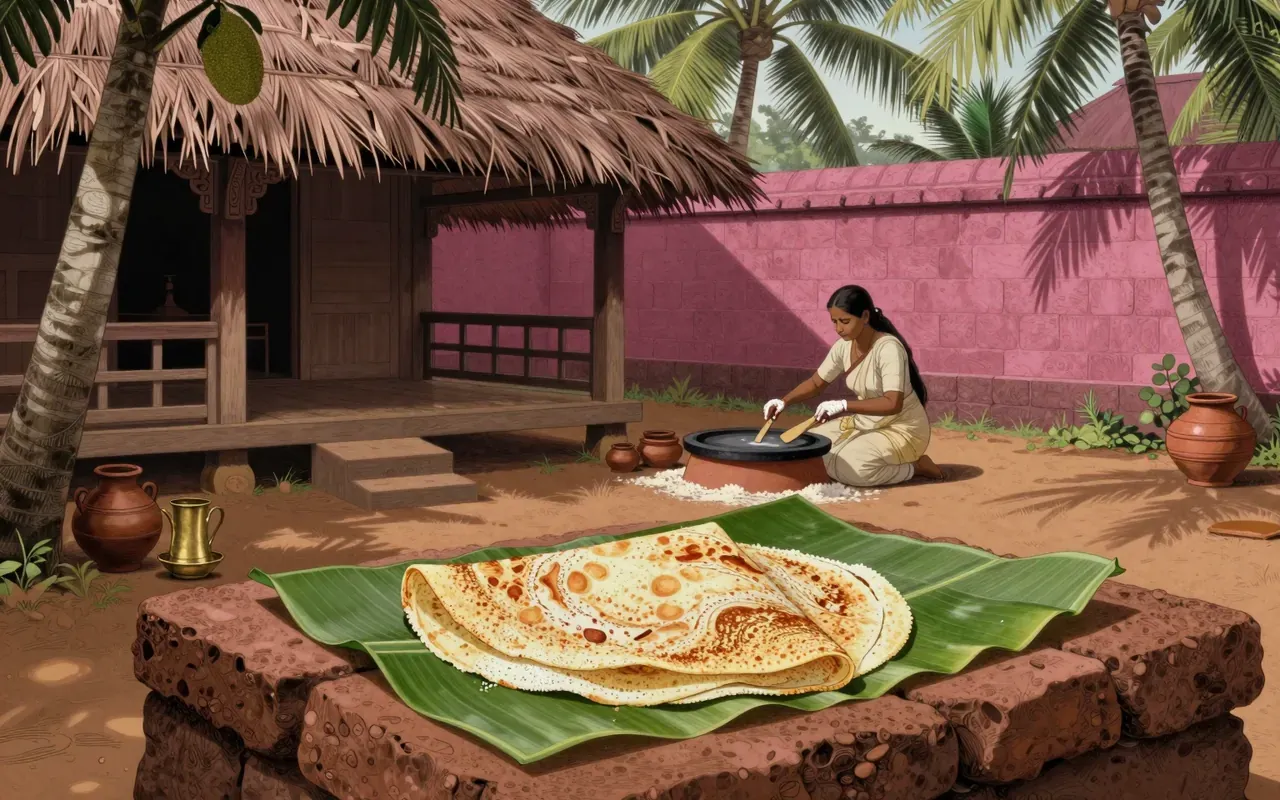
Dosa is a fermented rice-and-black-gram crepe from South India. Evidence confirms its use in the ancient Tamil country by the first century CE and its earliest written mention in eighth-century Tamil Nadu literature. It arrived in Mumbai via Udupi restaurants in the 1930s and gained wider North Indian popularity after 1947. It is served hot with chutney and sambar, and appears in a 12th-century Sanskrit cookbook. Its durability as a portable, scalable, fermentable food explains its endurance—and its dominance over less-documented contemporaries.
Its first-century use in the Tamil country predates its eighth-century literary record.
3:12
How it moved
Udupi restaurants carried it to Mumbai in the 1930s; independence accelerated its spread north.
5:03
How it’s eaten
It has been served hot with chutney and sambar for at least 800 years.
Worth your time?
Yes. Study the whole thing.
4.5/ 5
What works
as an edible record of South Indian mobility
What does not
iconic
groundbreaking
seminal
timeless
Study it if
people who track how food carries language, caste, and region across borders
Skip it if
people seeking novelty or fusion
The written brief1 min read
What the thing is
A thin, savoury crepe made from fermented black gram and rice batter.
Where it came from
South India. Textual evidence places it in the ancient Tamil country by the first century CE. The earliest written mention is in eighth-century Tamil Nadu literature.
What it gets right
It delivers reliable nutrition through fermentation. It adapts to local grains and fuel sources. It travels without losing structural integrity.
What it gets wrong
It displaces older, unrecorded grain preparations from the Tamil country by becoming the default ‘ancient’ South Indian food in popular accounts.
Why it matters now
It is a living archive of South Indian culinary continuity—and of how migration, restaurant economies, and post-1947 national integration reshaped what ‘Indian food’ means across the subcontinent.
Is it worth your time
Yes—if you care about how a food’s longevity reveals regional power, migration patterns, and the quiet standardisation of South Indian identity.