Dada wasn’t art—it was a refusal signed in nonsense and stamped with a cabaret ticket.
Dada was an international art movement that developed in the context of World War I, its aftermath, and the Futurist movement. First established in Zürich, Switzerland, it later quickly spread to Berlin, Paris, New York City and a variety of artistic centers in Europe and Asia. The Dada movement's principles were first collected in Hugo Ball's Dada Manifesto in 1916. Dadaists worked across media, including sound poetry, collage and photomontage (especially in Berlin), and the use of found objects and assemblage. In New York and Paris, Marcel Duchamp's readymades became emblematic of Dada's anti‑art stance. Dadaists disagreed over whether the movement's acts of negation were primarily ends in themselves or means of clearing the ground for new forms of art and experience. Dada coalesced among émigré artists and writers in neutral Switzerland during 1916, with Hugo Ball and Emmy Hennings founding the Cabaret Voltaire as a venue for nightly performances and manifestos. Participants framed their activity as a protest against war, nationalism, and cultural conformity, adopting strategies of nonsense, chance, and ridicule to negate prevailing aesthetic values.
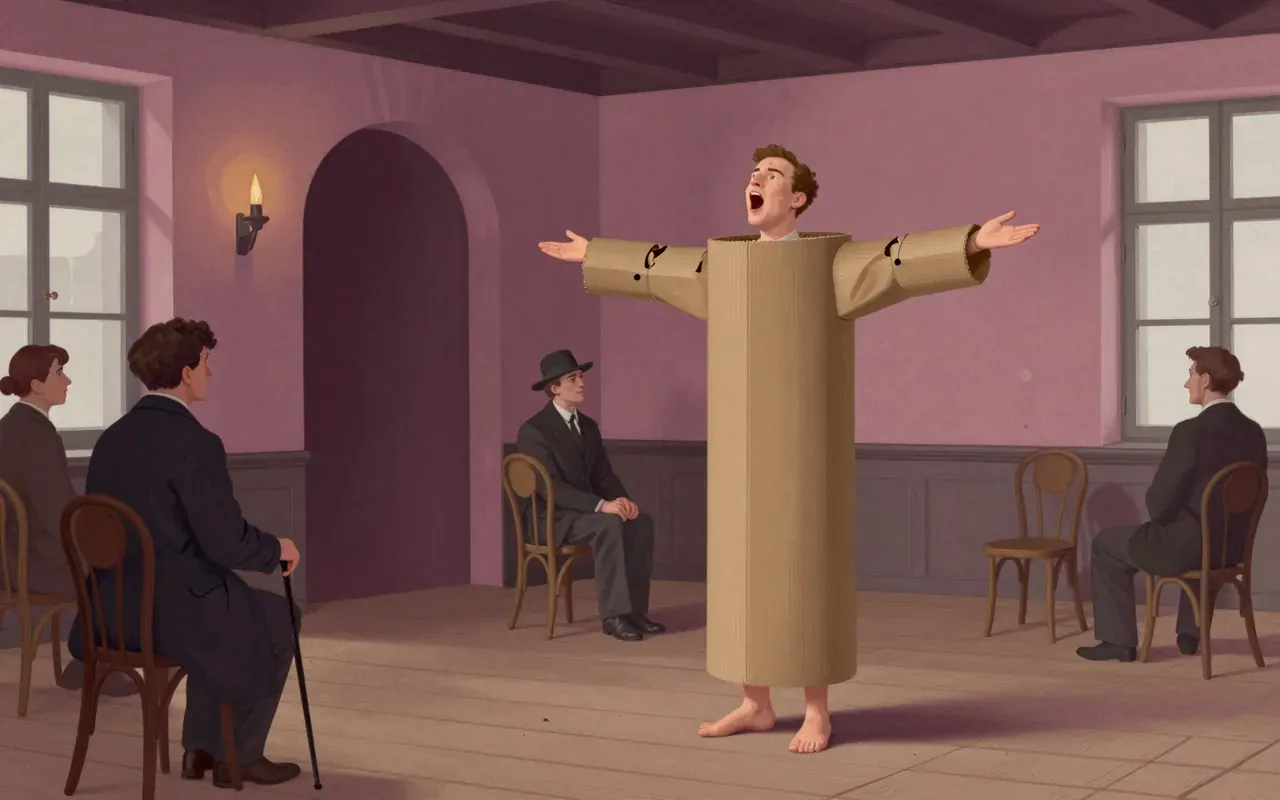
Dada began in exile—not as a style, but as nightly performances in Zürich’s Cabaret Voltaire.
2:11
The Weapon of Nonsense
Its manifesto named war, nationalism and conformity as targets—and nonsense, chance and ridicule as tactics.
3:30
No Medium, No Master
It worked across media: sound poetry, collage, photomontage, readymades—each a rejection of authorial control.
5:00
Demolition Without Blueprint
It split on its own purpose: was negation an end, or just demolition before rebuilding?
Worth your time?
Yes. Study the whole thing.
4.5/ 5
What works
as protest
as method
as precedent
What does not
timeless
groundbreaking
iconic
seminal
Study it if
artists
critics
anyone who has ever deleted a draft and called it a statement
Skip it if
those seeking coherence
those who need resolution
The written brief1 min read
What the thing is
Dada is an international art movement. It is anti-art by design. It is defined by protest, not style.
Where it came from
Dada coalesced in 1916 among émigré artists and writers in neutral Zürich, Switzerland. Hugo Ball and Emmy Hennings founded the Cabaret Voltaire. Its principles were first collected in Hugo Ball’s Dada Manifesto in 1916.
What it gets right
Dada names war, nationalism and cultural conformity as enemies. It uses nonsense, chance and ridicule as weapons. It works across media: sound poetry, collage, photomontage, found objects.
What it gets wrong
It offers no shared aesthetic beyond negation. Its internal disagreement—whether destruction is an end or a means—remains unresolved. It displaces craft without proposing replacement disciplines.
Why it matters now
Dada reappears whenever consensus collapses: when language fails, institutions harden, and outrage outpaces argument. Its methods—cut-up, absurdity, delegation to chance—are now infrastructure, not rebellion.
Is it worth your time
Yes—if you want to understand how protest becomes form, and why refusal can be a creative act.