culturebriefs
9:41in productionCh. 1 · Name First, Style Later/ 9:41 · ceiling 15 min
Subcultures · Movements & scenes

Cybergoth

A fashion label borrowed from a roleplaying game — then stretched over rave gear, goth tailoring and industrial hardware.

Cybergoth is a fashion-based subculture that emerged in the 1990s. It synthesises goth, raver, rivethead and cyberpunk aesthetics. Its visual grammar relies on black-and-neon contrast, reflective and PVC materials, goggles, gas masks, artificial hair and androgyny. The term was coined in 1988 — not for fashion, but for a roleplaying game. Its peak prevalence was late 1990s to 2000s. It declined dramatically thereafter.

Chapters & takeaways4
  1. 0:43
    Name First, Style Later

    The name predates the look by ten years — coined in 1988 for a game, not worn on the street until the 1990s.

  2. 1:52
    Four Sources, One Silhouette

    It is a deliberate collage: goth’s monochrome, rave’s neon, rivethead’s hardware, cyberpunk’s sci-fi props.

  3. 3:08
    What You Wear

    Black clothing with neon hints, PVC, reflective fabric, platform boots, bright hair extensions and multiple piercings form its core uniform.

  4. 4:22
    Peak and Fade

    Its peak prevalence was brief — late 1990s to 2000s — and its decline has been dramatic.

Worth your time?

Yes. Study the whole thing.

3.5/ 5
What works
  • as a taxonomy of 1990s aesthetic borrowing
  • as evidence of how subcultural naming outpaces practice
What does not
  • culture/art
  • culture/arts
  • culture/cities
  • culture/generations
Study it if
  • researchers of 1990s–2000s youth style
  • designers tracing industrial-material adoption in streetwear
  • historians of label migration from fiction to dress
Skip it if
  • those seeking musical innovation
  • those studying political or ideological movements
  • those expecting sustained cultural influence beyond the 2000s
The written brief1 min read

What the thing is

Cybergoth is a fashion-based subculture defined by clothing and accessories, not music, ideology or community structure.

Where it came from

It derives from goth, raver, rivethead and cyberpunk fashion, and was particularly prevalent from the late 1990s through the 2000s.

What it gets right

It synthesises goth, raver, rivethead and cyberpunk fashion into a legible visual language: black-and-neon contrast, reflective/PVC materials, goggles, gas masks, artificial hair and androgyny.

What it gets wrong

It misattributes its own origin: the term was coined in 1988 by Games Workshop for Dark Future, but the fashion did not emerge until the 1990s — a decade-long gap the style does not resolve or acknowledge.

Why it matters now

It matters now as a case study in how subcultural labels migrate from fiction to dress code — and how aesthetic borrowing can outpace conceptual coherence.

Is it worth your time

It is worth your time only if you are researching 1990s–2000s subcultural hybridity, industrial fashion aesthetics, or the material logic of rave-to-rivethead transitions.

Same beat · Subcultures4 of 96
8:48
Image macroImage macros are a digital interface—not an art form. They standardised how millions expressed irony, frustration and affiliation before platforms automated tone and stripped away authorship. Their rigidity enabled scale. Their simplicity enabled theft. Their legacy isn’t humour—it’s the template as infrastructure.
10:01
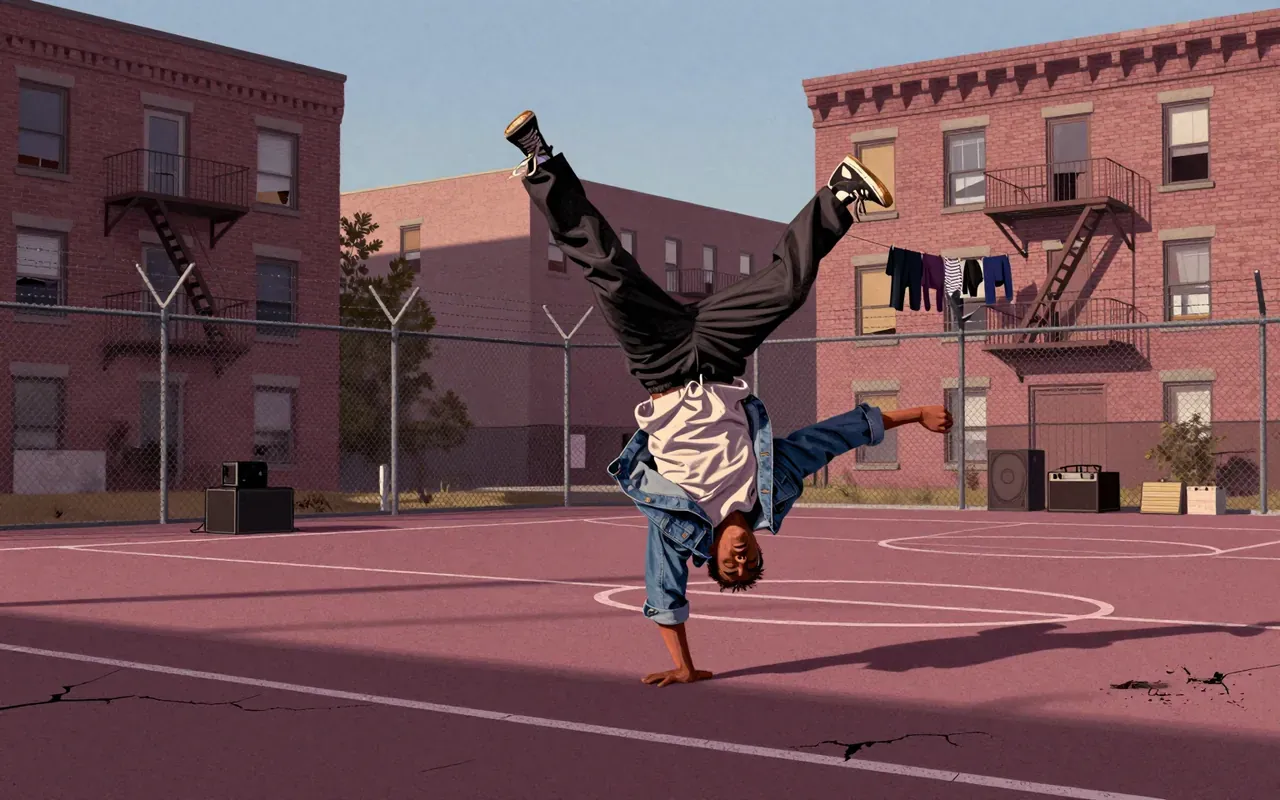
BreakdancingBreakdancing is a street dance style developed by African Americans and Puerto Ricans in the Bronx during the 1970s and early 1980s. It consists of four core movement types — toprock, footwork, power moves, and freezes — performed to music featuring drum breaks. Its Olympic debut in Paris 2024 formalised a global practice that began as an act of cultural assertion in marginalised communities.
9:42
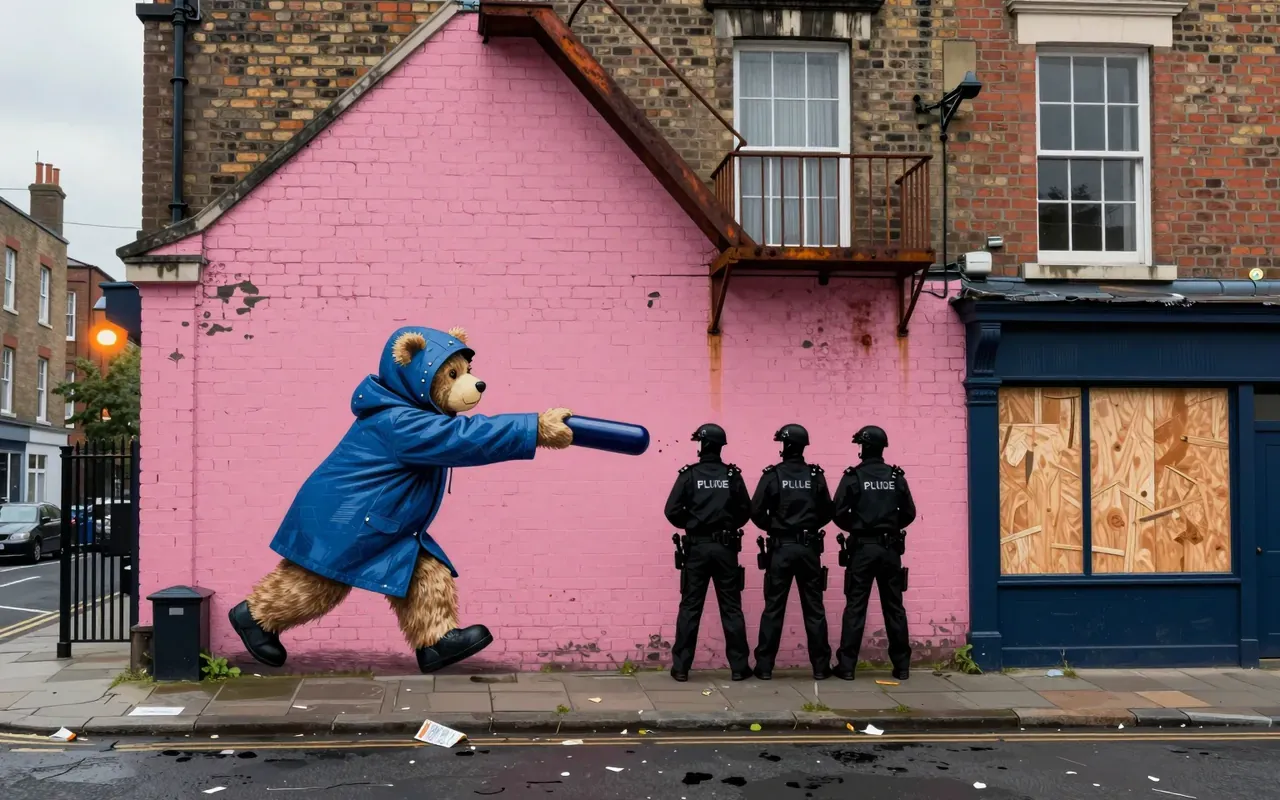
BanksyBanksy is a pseudonymous England-based street artist whose practice centres on stencilled, satirical interventions placed on publicly visible surfaces. He emerged from the Bristol underground scene in the 1990s. His first known large-scale mural was The Mild Mild West in 1997 on Stokes Croft. Banksy makes satire legible on city walls. His stencils deliver punchlines fast. They occupy surfaces people pass daily. They force confrontation without requiring attention. The method relies on evasion—but that evasion obscures authorship, dilutes accountability, and turns political gesture into branded ambiguity. His work established a template for art that operates outside institutions but trades on their validation—exposing the friction between subversion and market absorption.
9:46
BeatnikBeatnik was a media slur—not a self-chosen identity. It erased Kerouac’s spiritually grounded 'beat' in favour of a consumable caricature. Its legacy is not influence, but warning: how fast serious ideas become costumes.
Up next in Culture

Cyberfeminism

· 9:23

The 1991 alliance that formed around cyberspace in Adelaide, England and Canada at once, with VNS Matrix, Sadie Plant and Nancy Paterson.

9:23