culturebriefs
8:54in productionCh. 1 · Where it is from/ 8:54 · ceiling 15 min
Food · Society

Char kway teow

Char kway teow is not heritage—it’s hunger solved on a wok.

Char kway teow is a functional food born of exhaustion and economy—not identity or artistry.

Chapters & takeaways4
  1. 0:58
    Where it is from

    It is a stir-fried rice noodle dish from Maritime Southeast Asia—not China, not Singapore alone, not Malaysia alone.

  2. 2:52
    Who it was for—and who claims it

    It was made for Chinese labourers—but its roots are ambiguous, its name Hokkien, and its strongest association (Teochew) is asserted, not demonstrated by vendor practice.

  3. 4:39
    How it was made and sold

    Its real origin story is economic: sold by fishermen, farmers and cockle-gatherers in the evening, valued for high fat and low cost.

  4. 5:40
    When it became widespread

    Its popularity is late-20th-century—not ancient, not colonial-era, not pre-war.

Worth your time?

Yes. Study the whole thing.

4/ 5
What works
  • delivers energy efficiently
  • embeds informal economic adaptation
  • exposes gap between naming and making
What does not
  • represent refined technique
  • originate in a single ethnic community
  • predate the late 20th century in popular form
Study it if
  • Chinese labourers
  • fishermen
  • farmers
Skip it if
  • gourmet diners
  • cultural tourists seeking authenticity
The written brief1 min read

What the thing is

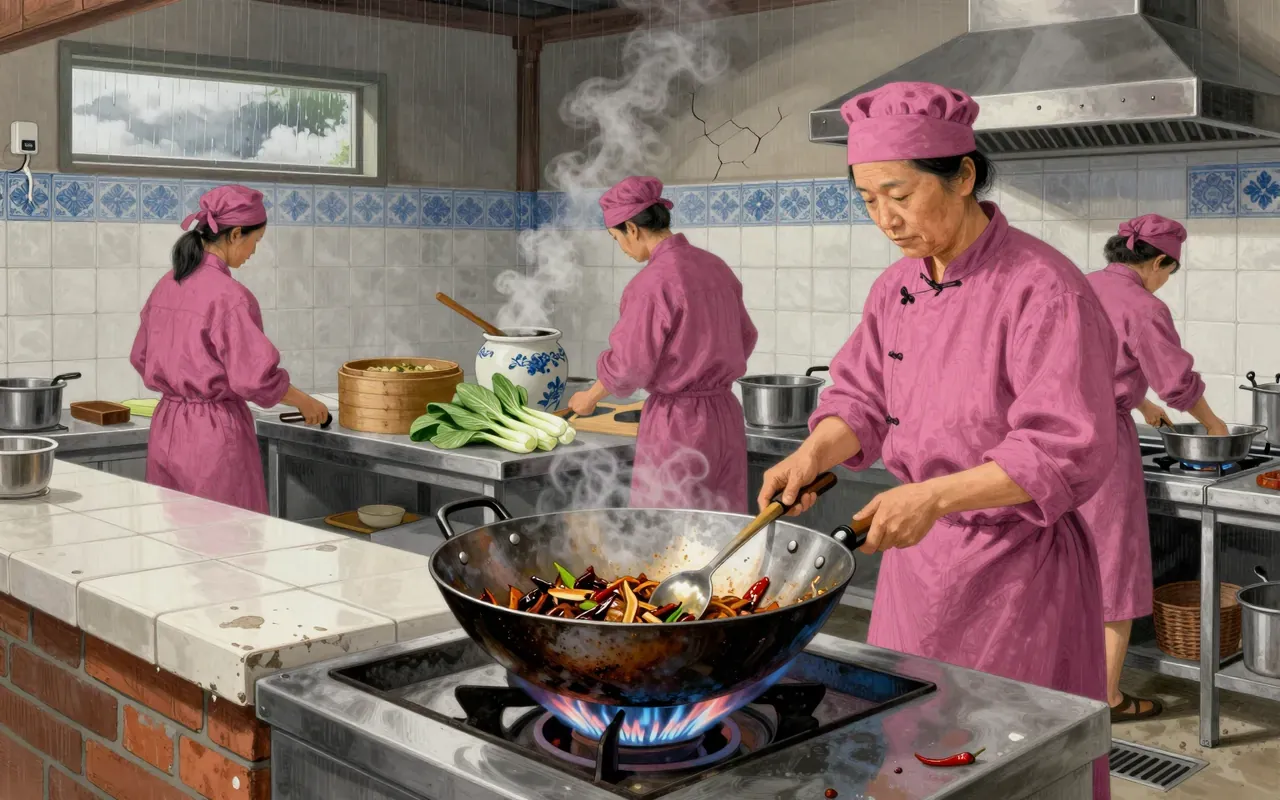
Char kway teow is a stir-fried rice noodle dish from Maritime Southeast Asia.

Where it came from

It was developed for Chinese labourers in Southeast Asia. It may have roots in Chaozhou, Guangdong, and is mostly associated with the Teochew—but its name is Hokkien, and its early vendors were not chefs or migrants from China, but local fishermen, farmers and cockle-gatherers selling it evenings as a side hustle.

What it gets right

It delivers dense calories and fat at low cost. It meets the physical needs of exhausted workers. Its ingredients are minimal and locally available.

What it gets wrong

It does not represent culinary refinement or regional unity. Its association with the Teochew is asserted but not substantiated in practice—its name is Hokkien, its vendors were fishermen and cockle-gatherers, not cultural custodians.

Why it matters now

It reveals how food systems emerge not from tradition but from necessity—and how popular narratives about origin often overwrite the actual conditions of its making: informal, adaptive, uncredited labour.

Is it worth your time

Yes—if you care how food encodes labour, migration and survival. It is not a delicacy. It is a functional object disguised as dinner.
Same beat · Food4 of 210
Up next in Culture

Chili's

1975 · 10:05

Chili's didn’t invent casual dining—it weaponised forgettability.

10:05