culturebriefs
10:04in productionCh. 1 · What it is/ 10:04 · ceiling 15 min
Food

Cassoulet

A 19th-century name retrofitted to a 14th-century siege story—and still treated as authentic tradition.

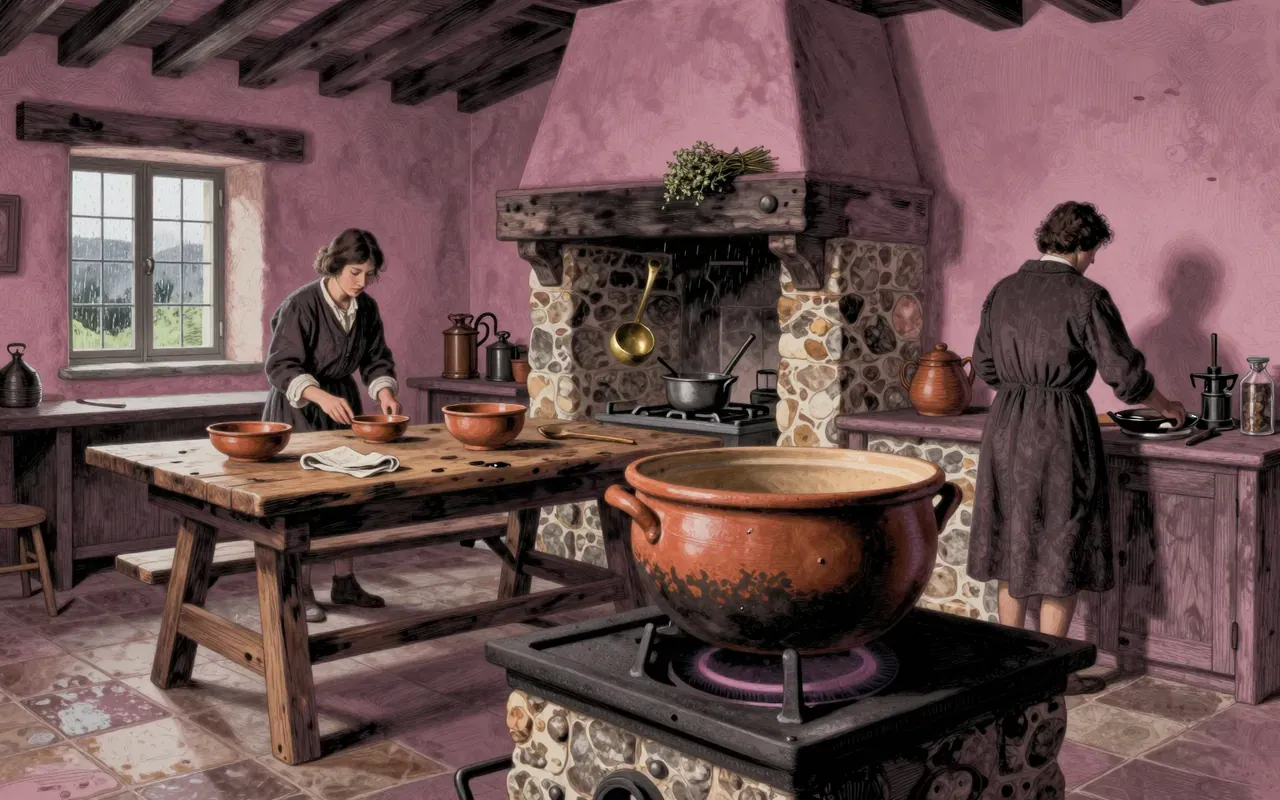
Cassoulet is a rich stew from southern France, specifically Castelnaudary in the Aude department. Tradition holds it was invented in 1355 during the Hundred Years’ War—but the term 'cassoulet' dates only to the 19th century. Haricot beans are now central, though medieval versions used broad beans. It is cooked in an earthenware cassole or toupin. Prosper Montagné classified its main variants as 'the Trinity': Castelnaudary (the 'Father'), Carcassonne (the 'Son'), and Toulouse (the 'Holy Ghost').
Chapters & takeaways4
  1. 1:02
    What it is

    Cassoulet is a rich stew from southern France, specifically Castelnaudary in the Aude department.

  2. 2:40
    When it wasn’t invented

    Tradition says it was invented in 1355—but the word 'cassoulet' didn’t appear until the 19th century.

  3. 4:36
    What changed in the pot

    Haricot beans replaced broad beans—showing ingredient shifts that contradict claims of ancient continuity.

  4. 6:01
    How it got its doctrine

    Montagné’s 'Trinity' classification fixed regional rivalry into gastronomic dogma—and made cassoulet a vessel for territorial pride.

Worth your time?

Yes. Study the whole thing.

3.5/ 5
What works
  • as a case study in culinary myth-making
What does not
  • culture/arts
  • culture/cities
  • culture/fashion
  • culture/generations
Study it if
  • people who study how food becomes ideology
Skip it if
  • people who want recipes or restaurant recommendations
The written brief1 min read

What the thing is

Cassoulet is a slow-cooked bean stew from southern France.

Where it came from

It originated in Castelnaudary in the Aude department, according to tradition dating to 1355 during the Hundred Years’ War.

What it gets right

It establishes a durable framework for regional French cooking: three named variants, each tied to a town and defined by meat choices.

What it gets wrong

It misattributes medieval origins to a dish whose name did not exist before the 19th century.

Why it matters now

It reveals how culinary authority is constructed: through naming, classification, and retrospective myth-making—not continuity.

Is it worth your time

Yes—if you care about how food encodes regional identity, not as folklore but as contested practice.

Same beat · Food4 of 210
Up next in Culture

Causa limeña

· 8:56

A dish named after a revolution—and still feeding it.

8:56