Saved
Subcultures · Movements & scenes

Burton Snowboards

1977

Burton didn’t invent snowboarding—it weaponised polyurethane and rope to force ski resorts to let people ride.

Worth your time?3.5/5Yes.Study the whole thing.What works, what does not, who it is for ↓
8:31in productionCh. 1 · Garage origin/ 8:31 · ceiling 15 min
4 chapters · 8:31Ceiling 15:00

The brief is written and checked. The video joins this page when it is cut.4 chapters · 2 min read · 8:31 planned

Read the brief

Burton Snowboards is a subcultural infrastructure project disguised as a product company. Its 1977 origin was materially constrained, not visionary. Its 1982 breakthrough was tactical, not cultural. Its influence lies in what it displaced—not what it inspired.

Chapters & takeaways4
  1. 1:09
    Garage origin

    The first Burton board was handmade in a Vermont garage—not born in a lab or a boardroom.

  2. 2:07
    Material constraints

    Polyurethane and rope weren’t aesthetic choices—they were workarounds for missing tools and unstable control.

  3. 3:46
    First resort access

    Suicide Six’s 1982 decision wasn’t inevitable—it followed direct, local advocacy.

  4. 5:10
    Binding standardisation

    EST® eliminated the baseplate—but also eliminated compatibility with non-Burton bindings.

1 more chapterFewer chapters
Worth your time?

Yes. Study the whole thing.

3.5/ 5
What works
  • forced institutional access
  • solved binding instability
  • standardised mounting
What does not
  • invention
  • movement
  • lifestyle
Study it if
  • early snowboarders
  • Vermont skiers
  • garage makers
Skip it if
  • retrospective snowboard historians
  • brand strategists
  • design theorists
Who should study it, and who should skipHide who it is for
The written brief2 min read

What the thing is

A snowboard manufacturer founded in 1977. Not a sport, not a lifestyle brand, not a movement—first and foremost a maker of boards and bindings.

Burton is a privately owned manufacturer founded by Jake Burton Carpenter, making snowboards, bindings, boots, outerwear and accessories. He owned it until his death in 2019; his wife Donna Carpenter, active in the business since 1983, was named president in 2011 and CEO in 2015.

Where it came from

Londonderry, Vermont. A garage. Handmade. Polyurethane applied because proper equipment was unaffordable.

Dimitrije Milovich, an East Coast surfer and founder of the snowboard company Winterstick, was a co-founder, and their boards were inspired by the Snurfer, created in 1965 by Sherman Poppen. In 1978 the company moved to Manchester, Vermont.

What it gets right

It solved binding instability with the BB1’s rope-and-handle system. It made snowboarding physically possible on existing slopes.

Jake Burton campaigned for local ski resorts to open their lifts to riders. In 1982 Suicide Six, now Saskadena Six, in Pomfret, Vermont, was reportedly the first mountain to permit snowboarders, followed by Stratton Mountain and later Jay Peak and Stowe. When resorts began allowing snowboarders on lifts the public followed, and Burton became one of the main suppliers. In 1982 it marketed its product at the National Snowboarding Championships held at Suicide Six; in 1985 the event moved to Stratton and became the U.S. Open Snowboarding Championships, owned and operated by Burton, which helped legitimize the sport.

What it gets wrong

It displaced early snowboarders’ improvisational culture with standardised, proprietary hardware. Its later global expansion sidestepped accountability in supply chains.

Burton has also faced controversy. In 2008 Burton drew complaints over boards illustrated with self-mutilation and Playboy bunnies, and the Burton Love model was discontinued for the 2012 line. In 2010 it announced it would stop manufacturing in Vermont and move production to Austria, and it has since moved some production to China. In 2022 BBC News reported on its expansion in China and promotion of Xinjiang; its China lead said the company did not want to abandon the region despite allegations of human rights abuse.

Why it matters now

Because its 1982 campaign opened Suicide Six to snowboarders—the first documented resort access—and proved institutional gatekeeping could be broken by persistent, local pressure.

Burton is the second-largest snowboard manufacturer in the US, with products in over 4,348 stores worldwide. In 2013 Donna Carpenter estimated that it held 40 to 45% of a snowboarding market worth $236 million.

Is it worth your time

Yes—if you care how a garage-built prototype forced ski resorts to change their rules.
Same beat · Subcultures4 of 101
7:56
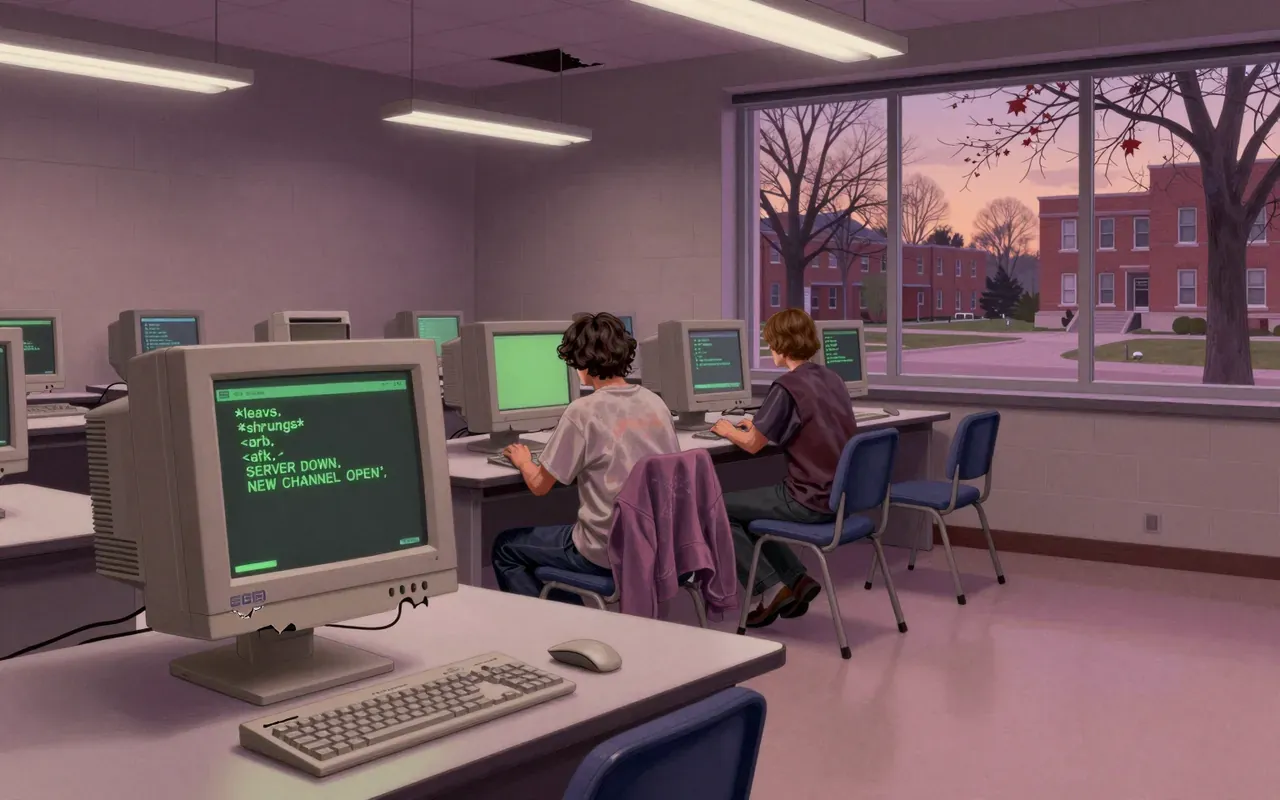
IRC subcultureIRC subculture is the first widespread, server-unlogged, real-time text chat culture. It formed in 1988 among programmers, hackers, and computer gamers. Its conventions—*actions*, <pseudo-XML>, /slashed/ emphasis, and ALL CAPS—replaced tone and gesture. Grammatical informality was tolerated because messages vanished instantly. Its influence lives in how we signal intent, mood, and hierarchy in digital text—even if the servers are gone.
9:36
Visual kei1984Visual kei is a Japanese subculture and category of musicians defined by extravagant stage costumes and visual expression—not musical style. It emerged in the early 1980s Japanese underground music scene, pioneered by bands like X Japan and Dead End, drawing from glam rock, heavy metal, punk rock and gothic rock. Its core method is visual composition: makeup and fashion as syntax for a band’s worldview. Its roots are in Western rock genres—but its logic is entirely Japanese: image as genre. Popularity forced compromise—many bands muted their visuals to enter the mainstream, exposing the tension between authenticity and access. It prefigured the total visual saturation of pop—without the platforms, without the metrics, and without surrendering musical identity to the feed.
8:58
Black metal1985Black metal is an extreme subgenre of heavy metal music. It began in England in 1982 with Venom’s album Black Metal. The first wave declined by 1987—but influential works followed from bands across Hungary, Brazil, Canada, Sweden and Greece. The Norwegian scene (1991–1997) defined it as a distinct genre—and inspired parallel scenes in Finland, Sweden, the US, France, Japan and England. Its lyrical themes—misanthropy, anti-Christianity, Satanism, ethnic paganism—are central, not decorative. In the 1990s, members of the scene committed church burnings and murders. A small neo-Nazi movement emerged—but was shunned by many prominent artists.
9:06
Emo1984Emo is a post-hardcore genre rooted in mid-1980s Washington, D.C., combining hardcore punk instrumentation with emotionally confessional lyrics. Pioneered by Rites of Spring and Embrace, it was reinvented by Maryland bands Moss Icon and the Hated, then adopted across alternative, indie, and pop-punk scenes in the early-to-mid 1990s. By the mid-1990s, Midwest emo bands—including Braid and the Promise Ring—emerged alongside screamo, pioneered by San Diego bands Heroin and Antioch Arrow. Emo remains a formal and ideological pivot point: where punk’s outward fury met inward articulation.
Up next in Culture

Critical thinking

· 6:50

Critical thinking is not natural. It must be induced — and it fails where knowledge ends.

6:50