9:34in productionCh. 1 · What It Is/ 9:34 · ceiling 15 min
Food
Baklava
Baklava has no homeland—only a history of layering, borrowing, and erasure.
Baklava is not a symbol of cultural purity. It is evidence of transmission—technique passed across empires, names borrowed, recipes lost and remade. Its modern disputes reveal more about present-day nationalism than ancient kitchens.
Baklava is defined by three fixed elements: layered filo, nut filling, and syrup or honey.
2:33
Where It Came From
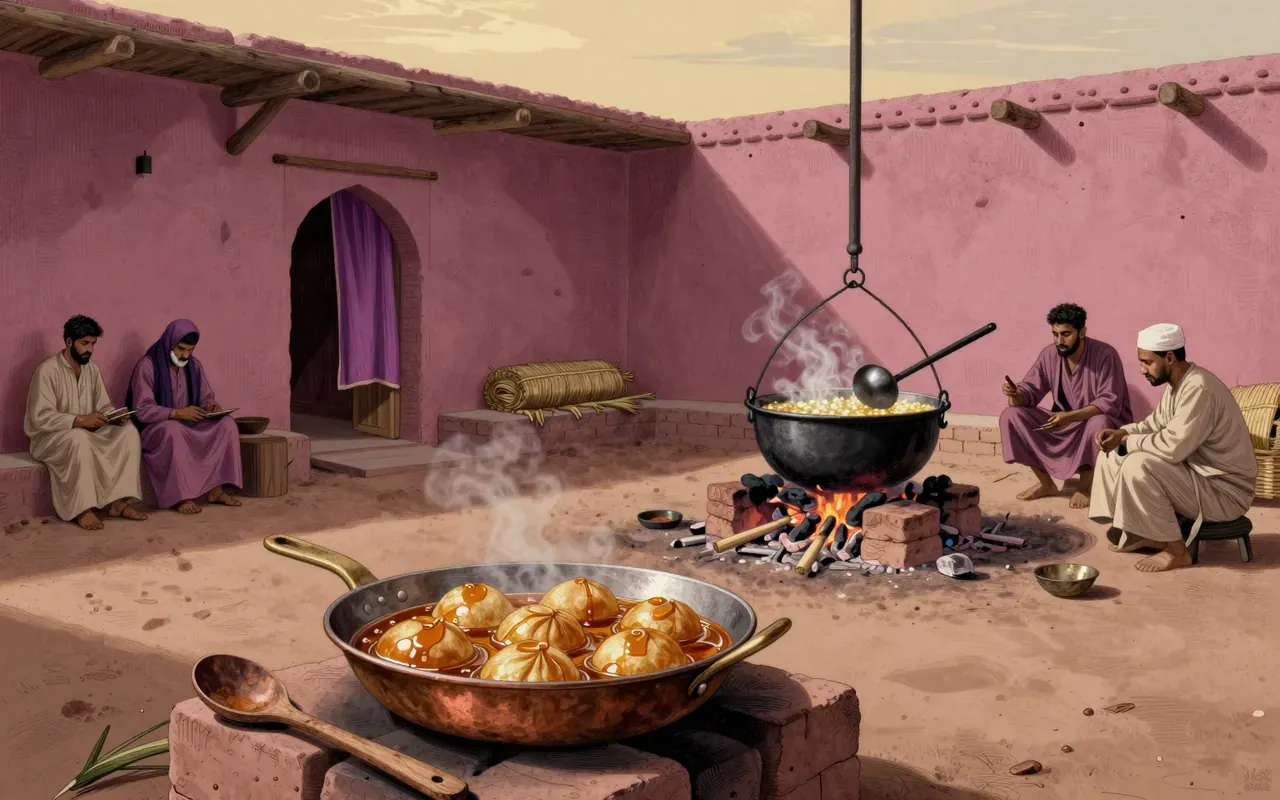
Its ancestry runs from Greek placenta (2nd c. BC) to Byzantine koptoplakous to Ottoman palace kitchens in Constantinople.
4:16
When It Appeared
The word 'baklava' first appears in English in 1650—and in literature centuries earlier, in a 15th-century mystic’s poem.
5:36
What’s Missing
No baklava recipe exists in the 10th-century Arabic Kitab al-Tabikh—undermining claims of early Arab authorship.
Worth your time?
Yes. Study the whole thing.
4.5/ 5
What works
as a case study in material continuity
as a corrective to food-based identity claims
What does not
define a region
originate in the Arab world
appear in 10th-century Arabic cookbooks
Study it if
historians of technique
readers tired of culinary nationalism
Skip it if
those seeking definitive national origin stories
The written brief1 min read
What the thing is
Baklava is a layered filo pastry dessert filled with chopped nuts and sweetened with syrup or honey.
Where it came from
Its lineage traces from 2nd-century BC Greek placenta, through Byzantine koptoplakous, to Ottoman imperial development in Topkapı Palace kitchens in Constantinople. The word entered English in 1650 from Ottoman Turkish; the earliest known reference is in a 15th-century poem by Kaygusuz Abdal.
What it gets right
It preserves layered pastry technique across empires. It links Greek placenta to Byzantine koptoplakous to Ottoman palace kitchens. It survives as edible continuity.
What it gets wrong
It is routinely claimed as national property—Turkish, Greek, Armenian, Lebanese—despite zero evidence of exclusive origin. The 10th-century Kitab al-Tabikh contains no baklava. No early Arabic or Persian source names it.
Why it matters now
Because contested paternity of baklava mirrors how food is drafted into identity politics—while the actual record shows diffusion, not ownership.
Is it worth your time
Yes—if you care about how food histories are weaponised, or how a dessert becomes a nationalist prop without ever having been one.
A colonial bread became Vietnamese only after the French left—and only because people from the North flooded Saigon with new tastes and tighter budgets.