culturebriefs
9:33in productionCh. 1 · What it is/ 9:33 · ceiling 15 min
Ideas · Society

Tyranny of the majority

Democracy’s greatest threat isn’t autocracy — it’s the majority voting itself unchecked power.

A conceptual warning, not a historical event. A diagnostic tool for institutional design — not a description of how power behaves in practice.

Chapters & takeaways5
  1. 0:49
    What it is

    Majority rule can repress minorities without breaking democratic rules.

  2. 2:10
    Who said it first

    Tocqueville named it, Adams warned against it, Madison analysed its mechanics, and Mill popularised it — but it was never a single idea.

  3. 3:32
    The counter-argument built in

    Madison argued scale dilutes factional power — not that majorities are inherently dangerous.

  4. 4:38
    The flaw in the framing

    It misrepresents how power actually works — Olson shows organized minorities dominate more reliably than majorities.

  5. 5:38
    How we stop it

    Constitutions, supermajority rules and judicial independence exist to block this — not as luxuries, but as operating conditions.

Worth your time?

Yes. Study the whole thing.

4.5/ 5
What works
  • as a lens for evaluating institutional resilience
  • as a prompt to test where protections fail
  • as a reminder that procedure ≠ fairness
What does not
  • solve democracy
  • describe real-world power dynamics
  • apply equally across all polities
Study it if
  • constitutional designers
  • students of political theory
  • critics of populist governance
Skip it if
  • those seeking empirical models of voting behaviour
  • activists looking for tactical frameworks
  • historians tracking electoral change
The written brief1 min read

What the thing is

Tyranny of the majority is the domination of the political landscape by majority preferences, sidelining or repressing minorities through ostensibly democratic means.

Where it came from

Alexis de Tocqueville coined the term in Democracy in America, using it in chapter and section titles to analyse how American institutions either mitigate or manifest the phenomenon.

What it gets right

It correctly identifies that majority rule can produce systematic exclusion without violating formal democratic procedure.

What it gets wrong

It wrongly assumes majorities act as unified agents — the document shows organized minorities often dominate instead.

Why it matters now

It matters now because constitutional safeguards — supermajority rules, judicial independence, separation of powers — are under active contestation in multiple democracies.

Is it worth your time

Yes. It is a foundational tension in democratic theory, not a solved problem.

Same beat · Ideas4 of 214
8:14
Crypto-anarchyCrypto-anarchy is a movement, not a prophecy. It uses cryptography to enable anonymity, free speech and trade. It emerged from Timothy C. May’s 1988 manifesto and the 1992 cypherpunk founding. It gets right that code can constrain power—but wrong that it will collapse the state. A 2022 study confirms its political irrelevance—yet its architecture remains vital for Internet-native dissent.
13:44
CypherpunkCypherpunk is a libertarian movement that champions strong cryptography and privacy‑enhancing technologies to effect social and political change. It began in the late 1980s, gained traction with the 1992 mailing list, and has influenced Bitcoin, secure messaging, and privacy browsers. While it rightly foregrounds decentralisation and individual autonomy, it over‑emphasises technology as a panacea and ignores legal and economic barriers. In an era of state surveillance and corporate data mining, Cypherpunk ideas underpin modern cryptocurrencies and secure messaging, offering useful concepts for those who value digital privacy and decentralised finance, but its tech‑first focus may feel incomplete for those seeking concrete policy solutions.
8:55
Free software movementThe free software movement is a precise, principled refusal of proprietary control over software. It began in 1983 with GNU and institutionalised in 1985 with the FSF. It gets right that software freedom must be guaranteed—not merely permitted. It gets wrong that licence compliance alone secures user agency. Its relevance has grown as software becomes infrastructural—but its methods remain rooted in individual refusal and collective development.
12:36
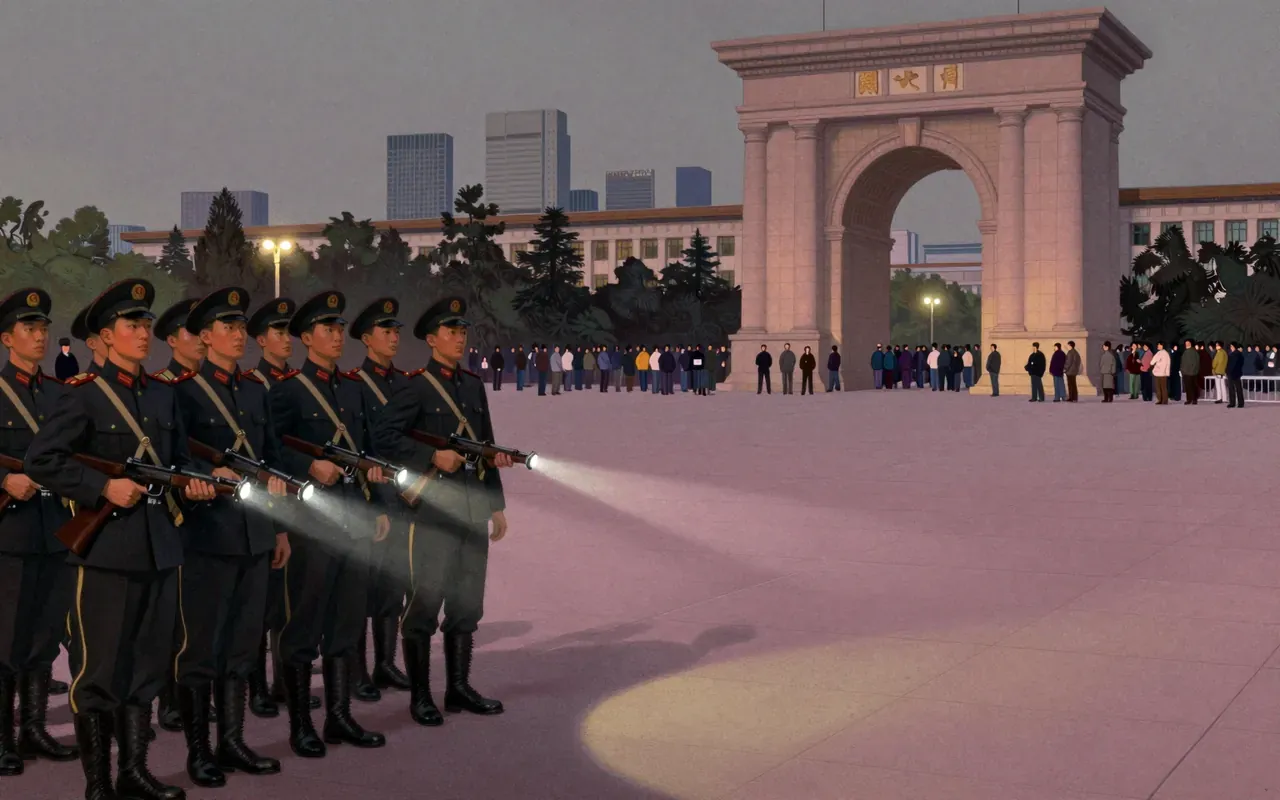
1989 Tiananmen Square protests and massacre1989The 1989 Tiananmen Square protests were a mass demonstration in Beijing that grew to about one million participants at its peak. The Chinese government declared martial law in late May and deployed troops to occupy the square on the night of 3 June.
Up next in Culture

The Wisdom of Crowds

2004 · 8:20

Crowds are only wise when they’re structured like Galton’s ox-guessers—not like Twitter threads.

8:20