What the thing is
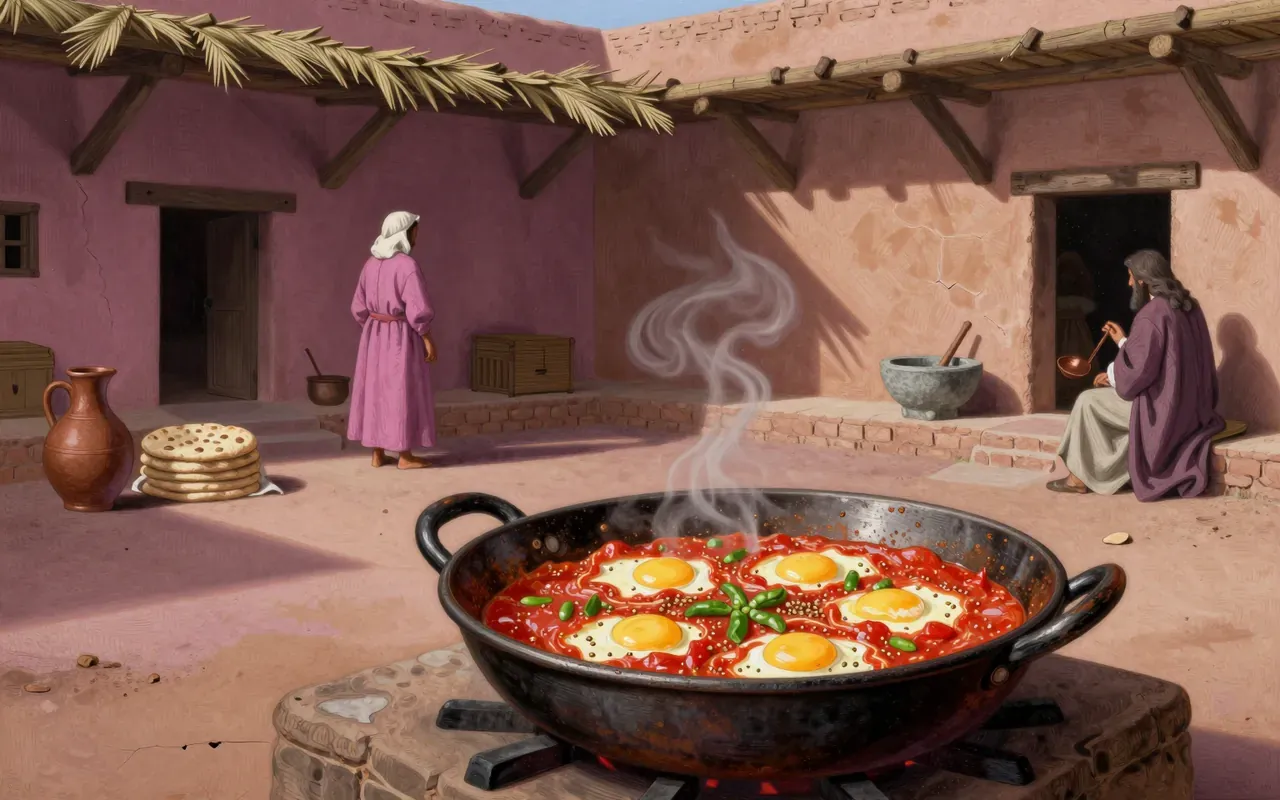
Shakshouka is a Maghrebi dish of eggs poached in a spiced tomato-and-pepper sauce with onion, garlic, and olive oil.
Where it came from
It originated in the Maghreb, evolving from Ottoman şakşuka via imperial influence, then entered Israel with Maghrebi Jewish migration in the 1950s.
The word shakshuka means “mixture” in Algerian Arabic and “mixed” in Tunisian Arabic. The Oxford English Dictionary treats the English word as borrowed from two sources: an onomatopoeic Maghribi Arabic word related to the verb shakshaka, “to bubble, to sizzle, to be mixed up, to be beaten together”, and the French chakchouka, itself taken from Algerian Arabic.
The Ottoman route is one account among several. Gil Marks, noting similarities with the Ottoman dish menemen, suggests shakshouka evolved from şakşuka, which spread to the Maghreb through Ottoman influence. Anthony Buccini and Noam Sienna instead place shakshouka and menemen, along with piperade and ratatouille, in a wider family of vegetable stews of common ancestry across the western Mediterranean. The dish was not previously associated with Palestinian or Levantine cuisine, and it began appearing in Israeli restaurants in the 1990s.
What it gets right
It honours Maghrebi technique: slow-simmered tomatoes, olive oil, cumin, paprika, and eggs poached directly in the sauce.
The basic sauce varies in spice and sweetness. Cooks add preserved lemon, salty sheep milk cheeses, olives, harissa, or a spicy sausage such as chorizo or merguez, and the eggs can be scrambled as in menemen. In Algeria it is commonly a side dish, and hmiss, with grilled peppers, tomatoes and garlic, is eaten with kesra bread. Tunisia has a similar dish, slata meshouia, with onions, cumin and tuna, and Tunisian cooks may add potatoes, broad beans, artichoke hearts or courgettes. In Egypt the base is sautéed onions, garlic and bell peppers, with the eggs cracked into the thickened sauce and poached until the whites set and the yolks stay runny, then commonly eaten with eish baladi, and is a popular breakfast choice there.
What it gets wrong
It is routinely misattributed to Palestinian or Levantine cuisine — a claim unsupported by evidence and contradicted by verified sources.
Why it matters now
Because it exemplifies how diaspora cuisine can be rebranded, stripped of origin, and absorbed into national narratives without acknowledgment.
Is it worth your time
Yes — if you care about how food migrates, acquires new meanings, and becomes detached from its origins.
The dish travels under other names too. In Syria, jaz maz is a similar eggs-and-tomatoes dish that is sometimes called shakshouka. Andalusian cuisine has huevos a la flamenca, with chorizo and serrano ham, and Italian cuisine has uova in purgatorio, which adds garlic, basil or parsley. In Jewish culture a large batch of tomato stew may be made on Friday for the Sabbath dinner, with the leftovers used on Sunday morning for a breakfast shakshouka. It often appears on breakfast menus in English-speaking countries, while in the Arab world and Israel it is also a popular evening meal.