9:26in productionCh. 1 · What makes it pirate?/ 9:26 · ceiling 15 min
Society
Pirate radio
Pirate radio isn’t rebellion—it’s the first crack in the myth that airwaves can be owned.
Pirate radio is not a genre or movement. It is a regulatory category—one that reveals how spectrum control was never about safety or clarity, but about authority, geography, and commerce. Its earliest instances were not rebellious but procedural: failures of enforcement in 1907, then presidential intervention in 1912. Its first commercial form—Radio Mercur in 1958—was a business exploiting jurisdictional gaps, not a cultural uprising. The myth of pirate radio as countercultural heroism obscures its actual function: testing, exposing, and sometimes bypassing the state’s claim to the air.
A pirate signal isn’t defined by intent—it’s defined by licence status, ID failure, power, or jurisdictional mismatch.
1:56
It predates the rules
Piracy began not with counterculture, but with the first attempt to enforce order on the airwaves—in 1907.
3:11
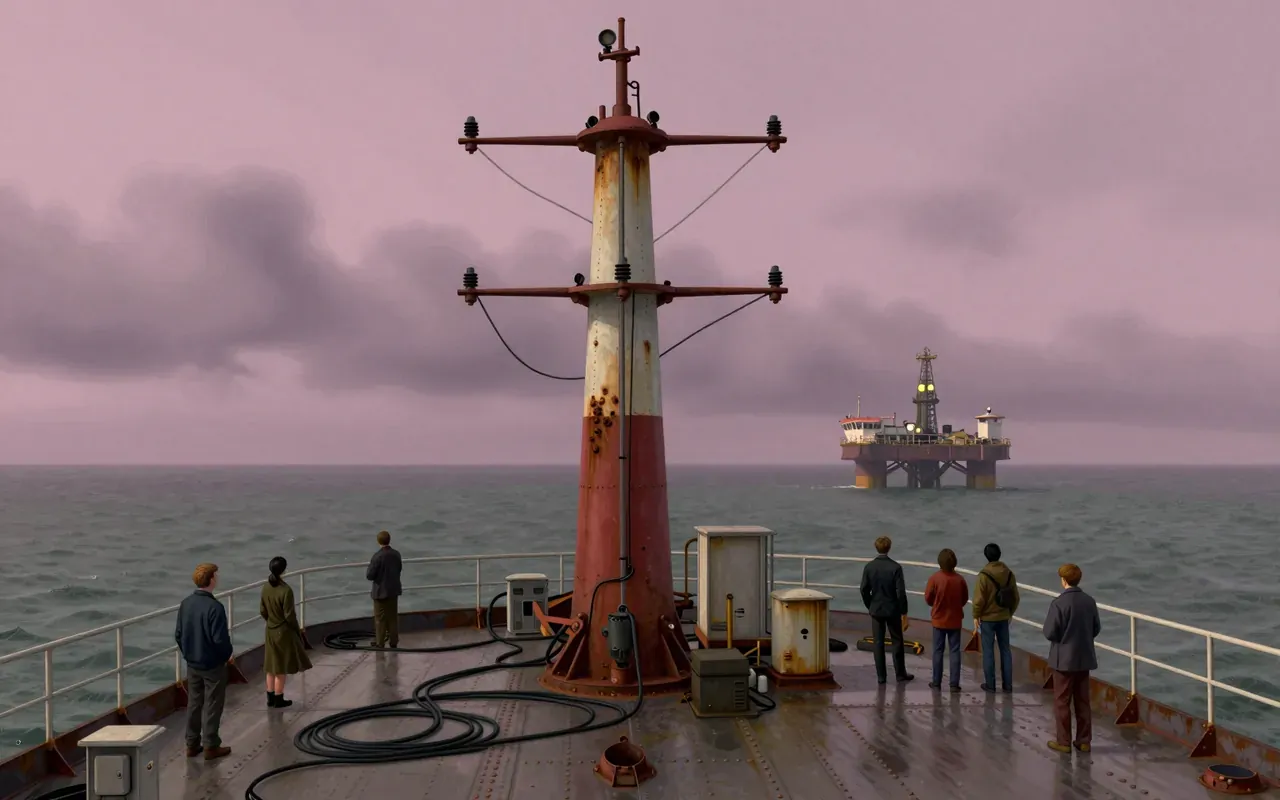
A maritime tragedy shaped the law
The Titanic disaster didn’t inspire pirate radio—it triggered the first national push to criminalise unlicensed use.
4:25
The first commercial pirate
Radio Mercur wasn’t a youth revolt—it was a commercial offshore venture, launched from international waters in 1958.
5:46
Jurisdiction is the real pirate line
Legality splits across borders: legal where transmitted, illegal where received.
Worth your time?
Yes. Study the whole thing.
4.5/ 5
What works
legal history
media infrastructure
regulatory studies
What does not
culture/movements-and-scenes
culture/subcultures
culture/generations
Study it if
policy-makers
media historians
engineers
Skip it if
nostalgists
music fans seeking origin stories
The written brief1 min read
What the thing is
Pirate radio is broadcasting without a valid license—or with one invalidated by jurisdictional mismatch, format failure, or technical noncompliance.
Where it came from
It emerged at the same moment as formal radio regulation: in 1907, US authorities could not stop amateurs interfering with Navy radio; by 1912, the Titanic disaster spurred presidential action to end ‘mob rule of wireless’.
What it gets right
It exposes the fiction of neutral spectrum governance. Licensing is not technical hygiene—it is territorial control, content policing, and commercial gatekeeping.
What it gets wrong
It conflates illegality with dissent. A station failing to ID itself or exceeding wattage limits is not inherently subversive—it may be careless, amateurish, or commercially aggressive.
Why it matters now
Because spectrum remains a contested public resource—now governed by algorithms, platforms, and licensing regimes that inherit the same logic of exclusion, just with quieter enforcement.
Is it worth your time
Yes—if you care how power over sound is claimed, contested, and rerouted.