8:26in productionCh. 1 · Not a feeling, but a function/ 8:26 · ceiling 15 min
Society · Ideas
Moral panic
Moral panic isn’t mass hysteria — it’s the machinery that turns anxiety into law.
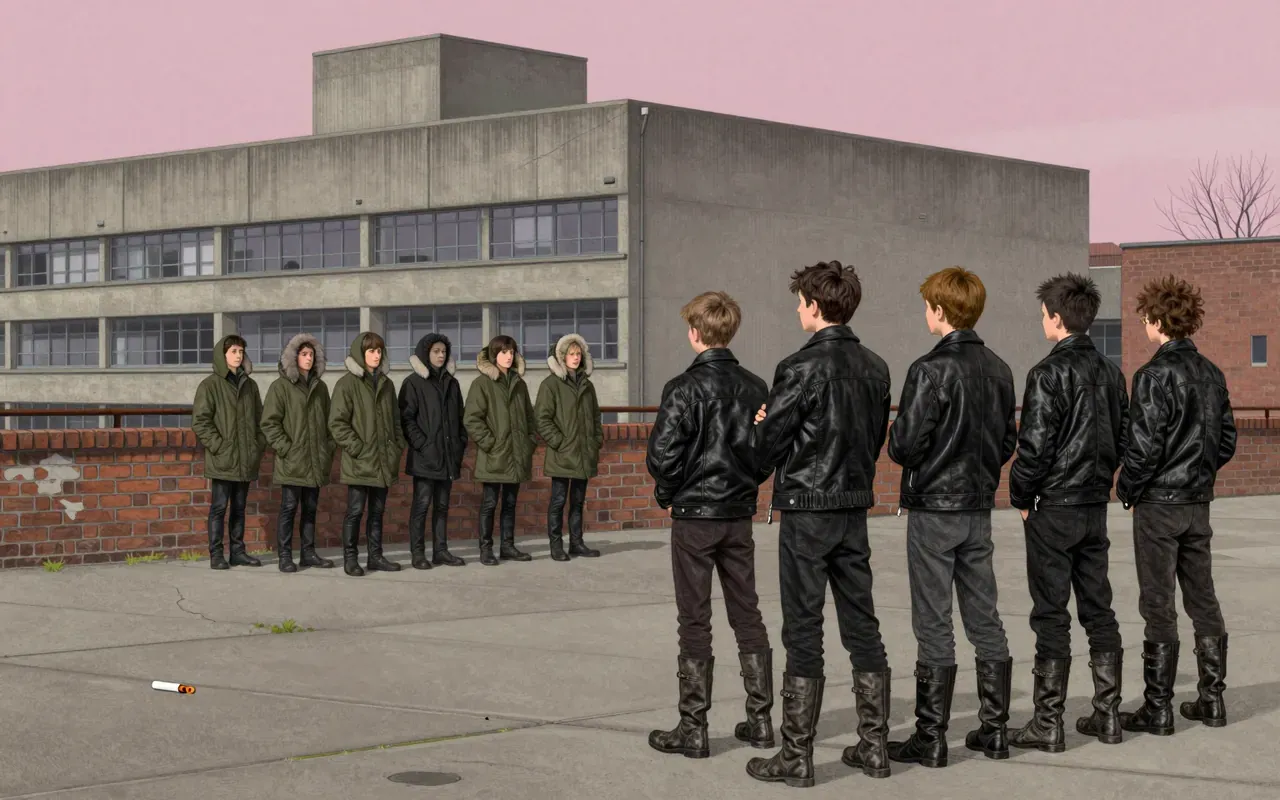
Moral panic is a sociological concept formalised by Stanley Cohen in the UK between 1967 and 1969, based on empirical observation of public and media reaction to mod and rocker youth subcultures in the 1960s and 1970s. It describes how a person, group or condition becomes socially defined as a threat to societal values and interests — often with exaggerated claims about harm — leading to public anxiety, media amplification and sometimes new legislation. It is distinct from mass hysteria because it is sociological, not psychological. The concept remains useful for analysing how perceived threats are constructed and institutionalised.
Moral panic is not an emotion — it’s a process of social definition.
2:36
Born in Britain, 1960s
It began with mods and rockers — not algorithms or influencers.
4:10
Harm is always inflated
Exaggeration isn’t noise — it’s the signal.
5:12
Law follows panic
It produces legislation — not just headlines.
Worth your time?
Yes. Study the whole thing.
4.5/ 5
What works
Folk Devils and Moral Panics (1972)
What does not
mass hysteria
psychological illness
timeless truth
universal phenomenon
Study it if
policy analysts
journalists
teachers of sociology
Skip it if
those seeking reassurance
fans of cultural nostalgia
readers who conflate popularity with validity
The written brief1 min read
What the thing is
A moral panic is a widespread feeling of fear that some person or thing threatens societal values or well-being.
Where it came from
Stanley Cohen developed the concept in the UK between 1967 and 1969, based on his study of British public reaction to mod and rocker youth subcultures in the 1960s and 1970s.
What it gets right
It correctly identifies moral panic as a sociological process, not a psychological state. It shows how groups become defined as threats through amplification, not inherent danger.
What it gets wrong
It treats the ‘folk devil’ as externally imposed, ignoring how subcultures sometimes perform or provoke the panic themselves — a dynamic absent from the source material.
Why it matters now
Because new laws still emerge from exaggerated claims about harm — whether about social media, migration or gender identity — and the model remains the clearest tool for tracing how those claims gain legitimacy.
Is it worth your time
Yes. It gives a precise, testable lens for dissecting how societies turn anxiety into policy — especially when media, politicians and experts converge on a target.