9:25in productionCh. 1 · Where it came from/ 9:25 · ceiling 15 min
Subcultures · Movements & scenes
Jungle music
1987
Jungle didn’t evolve—it was extracted, then erased.
Jungle was a short-lived, high-velocity genre that fused UK rave energy with Jamaican bassweight. It peaked in 1994–1995, then shed its reggae DNA by 1996–1997. By 1998, it had become drum and bass—less a continuation than a repudiation of its own origins.
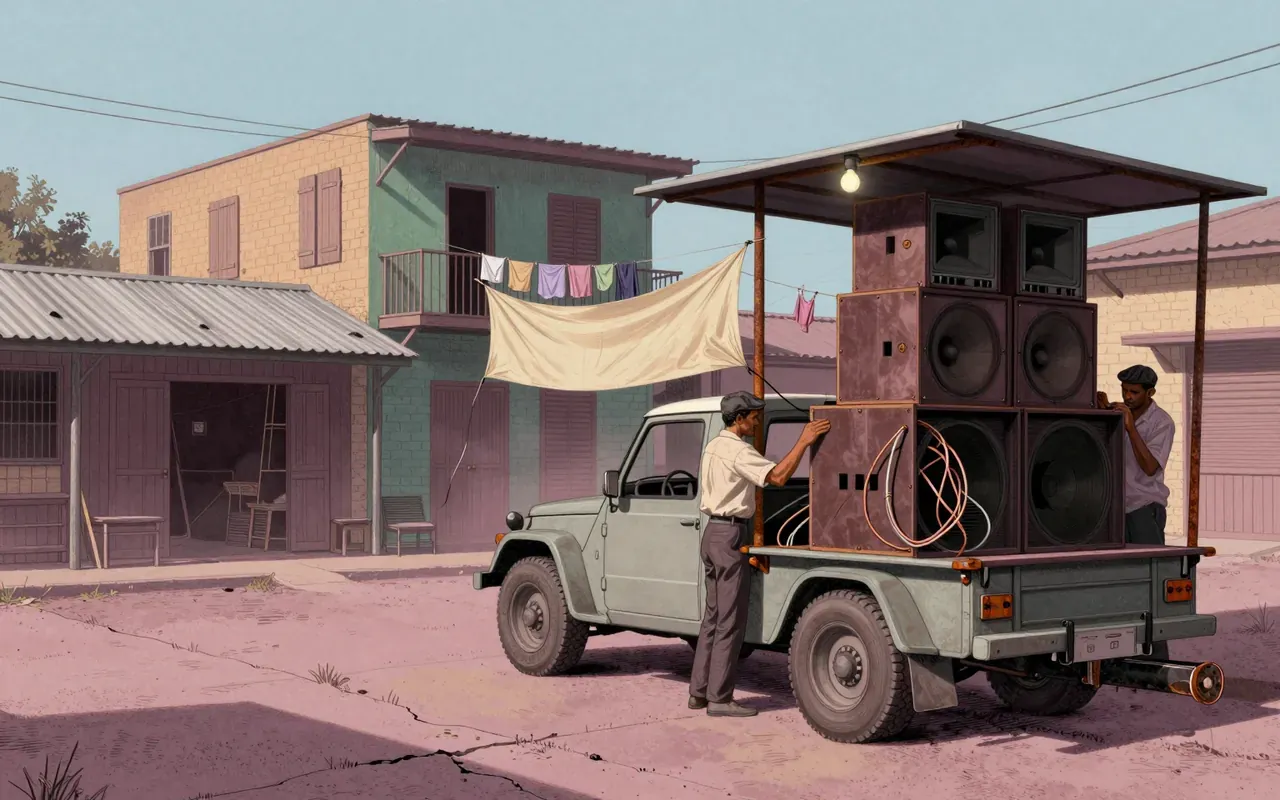
Jungle was born at the collision of UK rave and Jamaican sound system culture—not as an offshoot, but as a recalibration.
2:02
How it worked
Its engine was the Amen break: chopped, sped up, syncopated—and layered with ragga basslines and vocal stabs.
3:06
The first blueprint
Lennie De Ice’s 'We Are I.E.' laid the template—not with innovation, but with intention: a ragga bassline anchoring breakbeat chaos.
4:20
The naming moment
By 1992–1993, 'jungle techno' and 'hardcore jungle' weren’t nicknames—they were labels for a rupture in rave’s identity.
5:16
The peak and pivot
Peak popularity (1994–1995) coincided with its deepest reggae roots—then those roots were stripped away in 1996–1997.
6:18
What it became
By end-1998, jungle had become something else entirely—its original form no longer audible in the mainstream sound.
Worth your time?
Yes. Study the whole thing.
4/ 5
What works
as a sonic archive of UK rave’s racial fault lines
as evidence of how quickly a genre can be rebranded out of its own foundations
What does not
evolve
define a decade
influence named artists
Study it if
UK Black producers
rave attendees who valued bassline weight over tempo alone
crate-diggers seeking funk and jazz breaks
Skip it if
listeners expecting continuity with reggae or dancehall traditions beyond 1995
those looking for stable genre boundaries
The written brief1 min read
What the thing is
Jungle is a UK electronic music genre defined by rapid, syncopated breakbeats, dub/reggae/dancehall basslines and vocals, and hip-hop/funk sampling.
Where it came from
It developed in the 1990s from the UK rave scene and Jamaican sound system culture. It emerged directly from breakbeat hardcore.
What it gets right
It fused breakbeat hardcore’s energy with Jamaican sound system weight. It gave UK Black producers space to reassert reggae/dancehall lineage in rave. It made the Amen break a compositional grammar.
What it gets wrong
It displaced its own roots as it evolved. By 1996–1997, reggae influence receded. By 1998, the sound had changed significantly—shedding the very elements that defined its origin.
Why it matters now
It reveals how quickly a genre can be claimed, reshaped and unmoored from its foundational influences—especially when mainstream attention shifts and sociocultural tensions mount.
Is it worth your time
Yes—if you want to hear how UK rave fractured along race, rhythm and bassline, and how a sound built on Jamaican dub and funk breaks became a battleground for cultural ownership.