culturebriefs
9:02in productionCh. 1 · What it is/ 9:02 · ceiling 15 min
Ideas

Cultural icon

‘Cultural icon’ is not a badge of honour — it’s a battlefield.

A cultural icon is a contested designation — not a status, but a flashpoint.

Chapters & takeaways5
  1. 1:13
    What it is

    A cultural icon is either a person or an artifact — nothing more, nothing less.

  2. 2:00
    How it works

    Identification is subjective — judged by perceived authenticity, not objective criteria.

  3. 3:02
    Why it fractures

    Values attached to icons shift across groups — even among those who claim them.

  4. 4:24
    Why it breaks

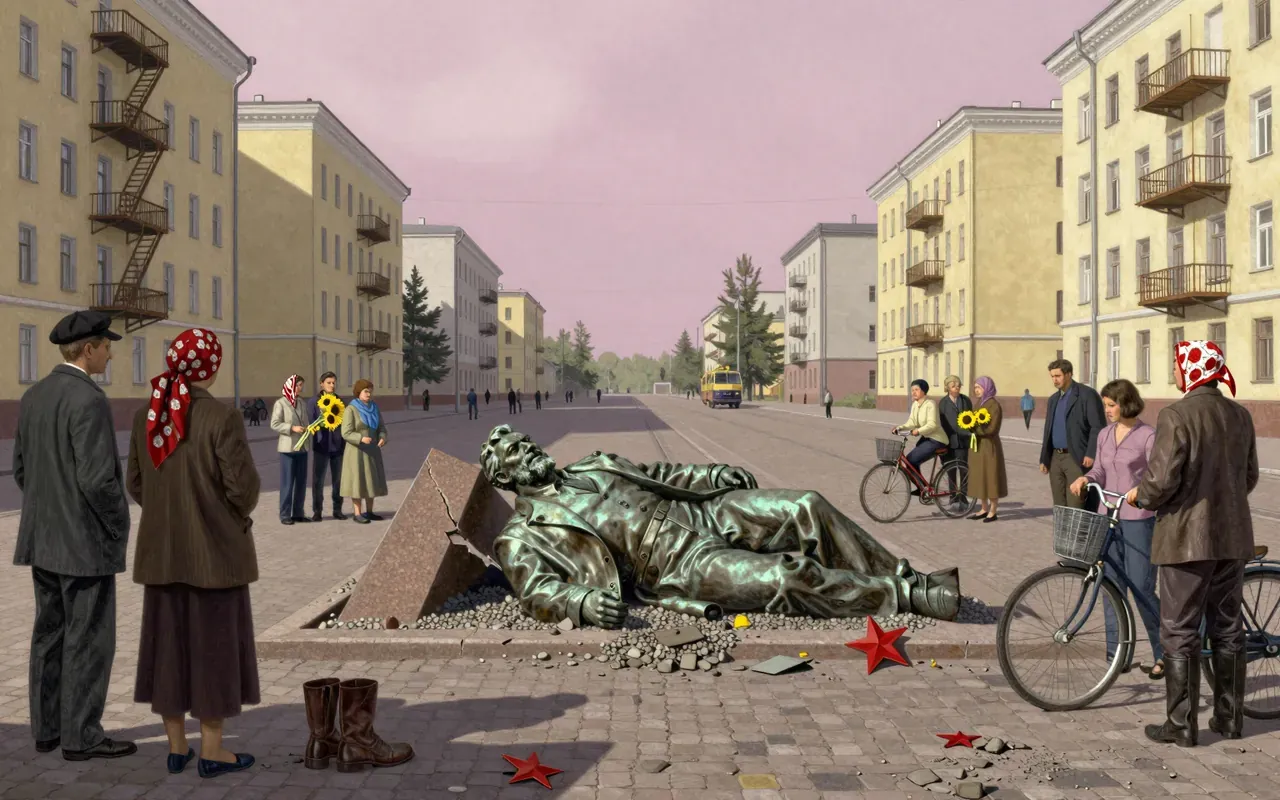
    National icons become targets when regimes fall — they are political, not decorative.

  5. 5:26
    How it crosses borders

    One culture can declare another’s symbol authentic — especially where religion and culture overlap.

Worth your time?

Yes. Study the whole thing.

3.5/ 5
What works
  • critical-theory
  • symbolic-anthropology
What does not
  • celebrity
  • fashion
  • art-deco
Study it if
  • policy-makers
  • journalists
  • curators
Skip it if
  • fans
  • collectors
  • enthusiasts
The written brief1 min read

What the thing is

A cultural icon is a person or artifact identified by members of a culture — or outsiders — as representative of that culture.

Where it came from

It emerged from academic discourse on symbolism, identity, and representation — not from popular usage or institutional decree.

What it gets right

It correctly identifies cultural icons as subjective, unstable symbols. It shows how authenticity is claimed, not inherent. It acknowledges cross-cultural recognition and internal disagreement.

What it gets wrong

It treats ‘cultural icon’ as a neutral analytical category. It does not name who benefits from icon-making, or how power shapes which symbols endure.

Why it matters now

Because national and religious icons are being actively dismantled, rebranded, or weaponised — and the term ‘icon’ is used uncritically in media, marketing, and policy.

Is it worth your time

It is worth your time if you need to interrogate why something feels symbolically charged — not as a label, but as a site of contest.

Same beat · Ideas4 of 214
8:14
Crypto-anarchyCrypto-anarchy is a movement, not a prophecy. It uses cryptography to enable anonymity, free speech and trade. It emerged from Timothy C. May’s 1988 manifesto and the 1992 cypherpunk founding. It gets right that code can constrain power—but wrong that it will collapse the state. A 2022 study confirms its political irrelevance—yet its architecture remains vital for Internet-native dissent.
13:44
CypherpunkCypherpunk is a libertarian movement that champions strong cryptography and privacy‑enhancing technologies to effect social and political change. It began in the late 1980s, gained traction with the 1992 mailing list, and has influenced Bitcoin, secure messaging, and privacy browsers. While it rightly foregrounds decentralisation and individual autonomy, it over‑emphasises technology as a panacea and ignores legal and economic barriers. In an era of state surveillance and corporate data mining, Cypherpunk ideas underpin modern cryptocurrencies and secure messaging, offering useful concepts for those who value digital privacy and decentralised finance, but its tech‑first focus may feel incomplete for those seeking concrete policy solutions.
8:55
Free software movementThe free software movement is a precise, principled refusal of proprietary control over software. It began in 1983 with GNU and institutionalised in 1985 with the FSF. It gets right that software freedom must be guaranteed—not merely permitted. It gets wrong that licence compliance alone secures user agency. Its relevance has grown as software becomes infrastructural—but its methods remain rooted in individual refusal and collective development.
12:36
1989 Tiananmen Square protests and massacre1989The 1989 Tiananmen Square protests were a mass demonstration in Beijing that grew to about one million participants at its peak. The Chinese government declared martial law in late May and deployed troops to occupy the square on the night of 3 June.
Up next in Culture

Curry

· 10:11

Curry isn’t a dish—it’s a colonial taxon that flattened India’s food into a single, exportable concept.

10:11