What the thing is
The casual subculture is a UK-based football subculture defined by the deliberate wearing of expensive designer sportswear and participation in hooliganism.
Where it came from
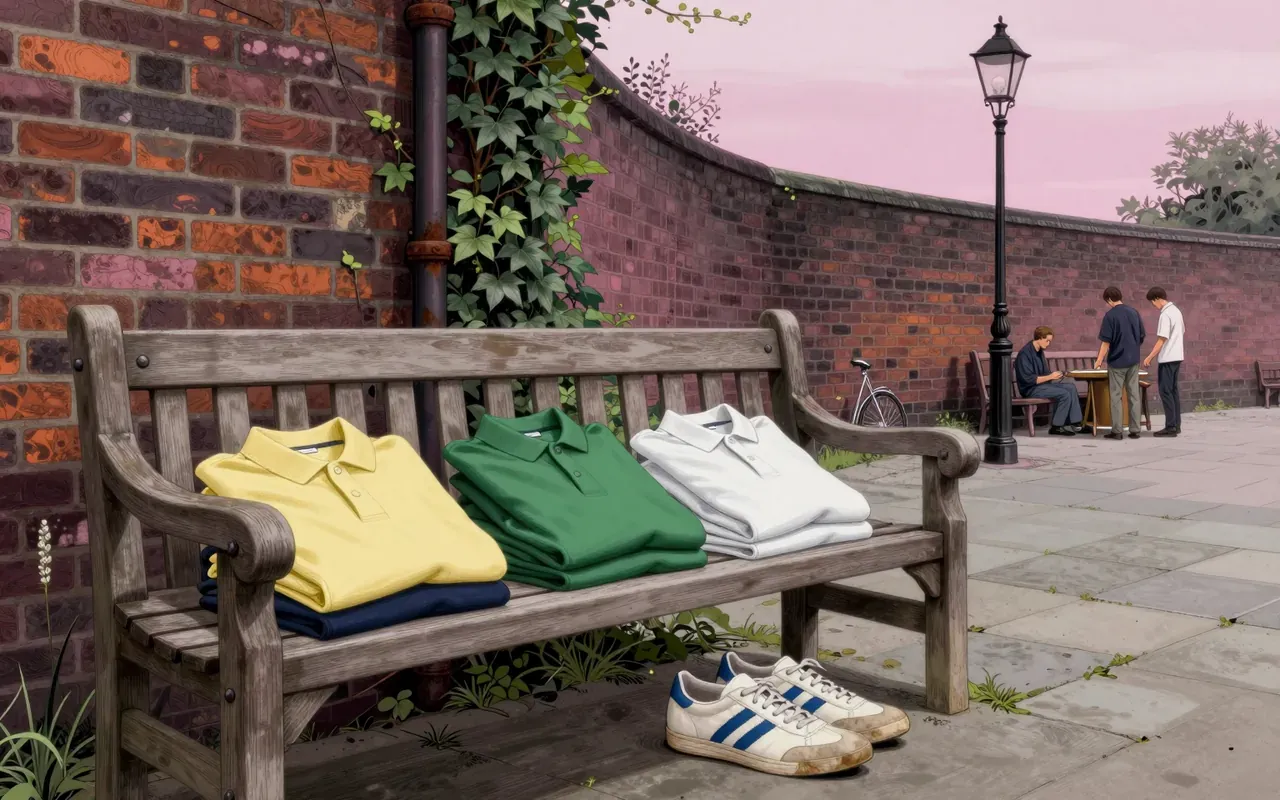
It emerged in the late 1970s from Liverpool youths wearing Peter Storm jackets and Adidas trainers, and Manchester United’s Perry Boys—a mid-1970s precursor composed of Red Army hooligans who wore Fred Perry shirts and Dunlop Green Flash trainers.
What it gets right
It correctly identifies clothing as tactical gear—not self-expression. Designer sportswear was chosen for anonymity, durability and continental provenance. Stone Island and C.P. Company were adopted because their fabrics resisted detection and damage during confrontations.
What it gets wrong
It conflates stylistic influence with ideological coherence. There was no unified ‘casual philosophy’. The subculture had no manifesto, no leadership, and no shared politics beyond local loyalty and opposition to rivals.
Why it matters now
It matters because it prefigured the mainstreaming of streetwear as status currency—without the subculture’s original context of violence, surveillance evasion, and club-based territoriality, that shift is misread.
Is it worth your time
Yes—if you need to understand how football, fashion and territorial identity fused in late-20th-century Britain. It is not a lifestyle trend. It is a documented social formation rooted in hooliganism and brand-conscious display.