culturebriefs
9:16in productionCh. 1 · Not a platform. A patch./ 9:16 · ceiling 15 min
Ideas · Society

Usenet

Usenet was never for the public — it was for the people who kept the machines running.

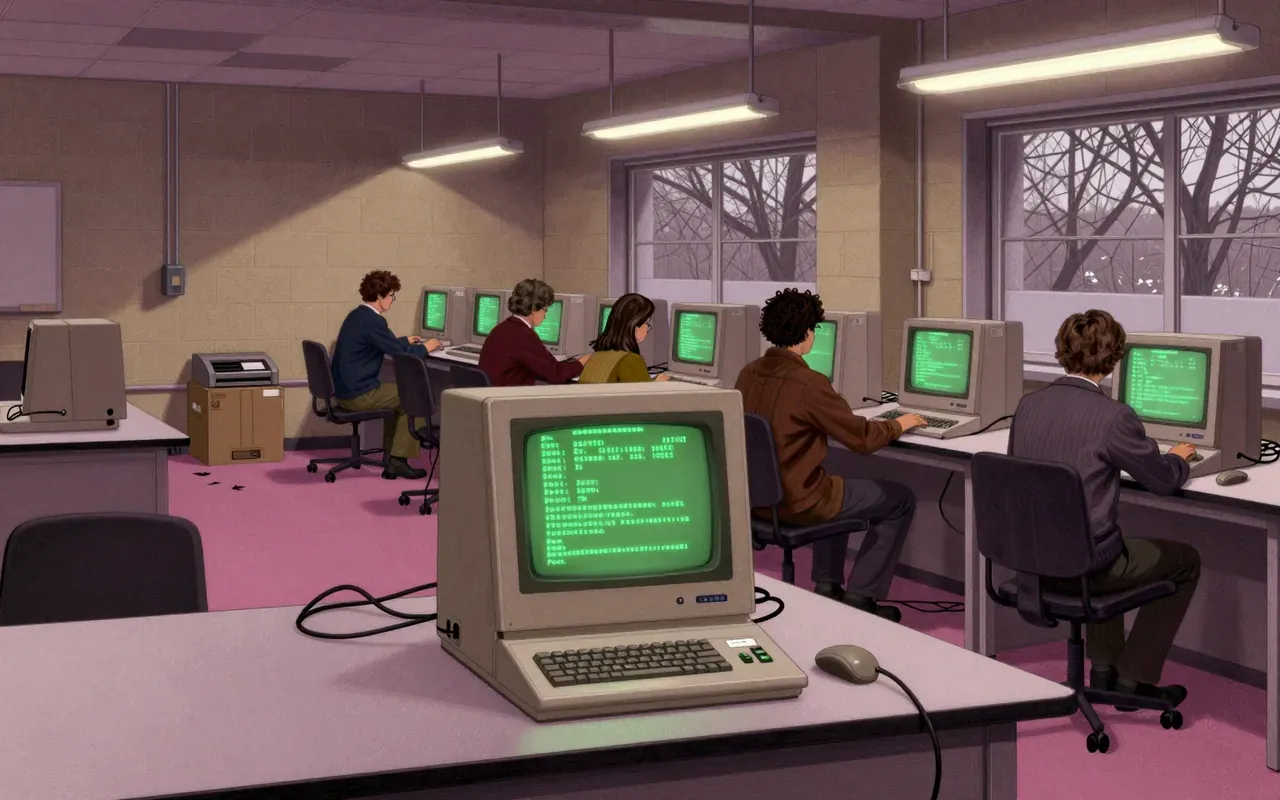
Usenet was a technical solution for a narrow problem: sharing announcements between two university computing departments. It scaled by accident, not intent. It succeeded only where its users shared infrastructure, expertise, and assumptions — and failed everywhere else. It is not a precursor to social media. It is a warning about what happens when you build for operators, then forget they are the only audience.

Chapters & takeaways4
  1. 0:58
    Not a platform. A patch.

    Usenet launched in 1980, not as a public service but as an internal tool for two universities.

  2. 2:30
    Built on dial-up, not ideology.

    It grew from shell scripts and UUCP — duct tape for Unix admins, not design.

  3. 4:02
    A staff network, not a public square.

    Its users were Unix developers and academic computing staff — not students, not journalists, not citizens.

  4. 5:48
    No ambition beyond the next hop.

    It was American, academic, and pre-web — a closed circuit that never sought expansion.

Worth your time?

No. The brief is enough.

2.5/ 5
What works
  • decentralisation
  • threaded-communication
  • server-to-server-exchange
What does not
  • social-media
  • public-discourse
  • democratic-platform
Study it if
  • unix-developers
  • academic-computing-staff
Skip it if
  • general-public
  • journalists
  • students
The written brief1 min read

What the thing is

Usenet is a distributed discussion system. It transmits plain-text articles between servers using a flooding algorithm. Articles are grouped into hierarchically named newsgroups. It runs over UUCP and later NNTP.

Where it came from

Usenet originated in 1979–1980 at the University of North Carolina at Chapel Hill and Duke University. It began as a replacement for a local announcement program. Tom Truscott and Jim Ellis conceived it. Steve Bellovin wrote the first Bourne shell scripts to link the two sites.

What it gets right

It established decentralised, server-to-server text exchange before the web. It proved threaded discussion could scale across administrative boundaries. It gave Unix developers and academic staff a shared space for technical coordination and informal debate.

What it gets wrong

It assumed technical literacy as baseline. It had no moderation model beyond local sysadmin fiat. It offered no identity persistence, no search, no archiving standard, and no access control beyond network topology.

Why it matters now

It matters as a counterpoint to today’s centralised platforms. It shows what happens when infrastructure is built by implementers, not product managers. It reveals how norms form without policy documents — and how they fracture without enforcement.

Is it worth your time

No. Usenet is a historical apparatus, not a living platform. Its infrastructure is obsolete. Its user base has dispersed. Its conventions are alien to modern attention economies.

Same beat · Ideas4 of 247
Up next in Culture

Uses and gratifications theory

· 9:40

People don’t consume media — they deploy it. UGT got that right. Everything else is retrofit.

9:40