culturebriefs
10:23in productionCh. 1 · The Name and the Noise/ 10:23 · ceiling 15 min
Movements & scenes · Subcultures

Frankie Knuckles

He didn’t invent house music—he reverse-engineered disco into something new, using tape, time, and a borrowed drum machine.

Frankie Knuckles was the central node in early Chicago house: his edits, his residency, his drum machine purchase, and his club’s name all anchor the genre’s origin story. But the sources confirm he developed and popularized it—not invented it alone. His work was collaborative, reactive, and technically pragmatic—not visionary in isolation.

Chapters & takeaways4
  1. 1:03
    The Name and the Noise

    House music got its name from the Warehouse—and its sound from what happened inside it.

  2. 2:49
    DJ Alchemy

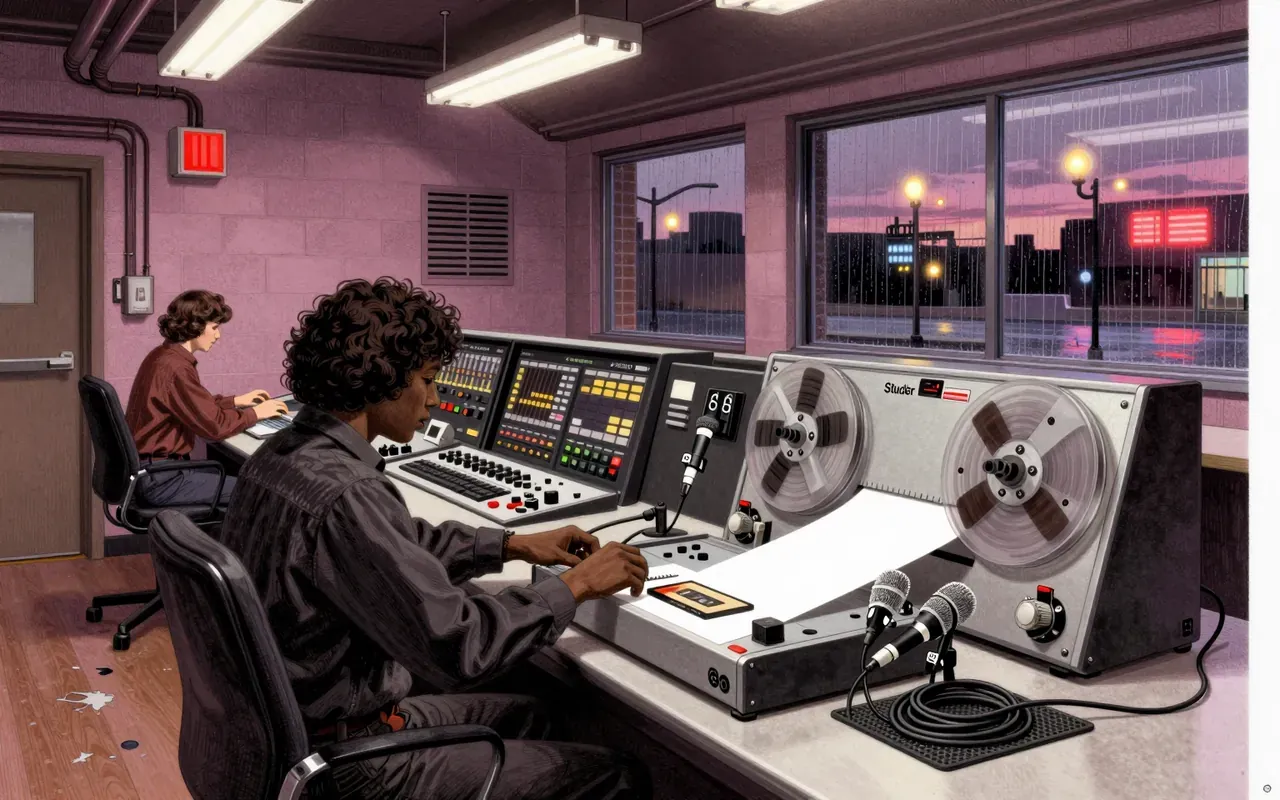
    Knuckles treated records as raw material: he cut, looped, and extended them long before digital tools existed.

  3. 4:08
    Machine + Voice

    A drum machine bought from Derrick May in 1983 fused with disco vocals to create the first house template.

  4. 5:39
    From Residency to Record

    His departure from the Warehouse in November 1982 marked the moment house music left the club and entered the studio.

Worth your time?

Yes. Study the whole thing.

4.5/ 5
What works
  • as a case study in how subcultural infrastructure (a club, a residency, a shared tool) enables genre formation
  • as evidence that innovation in music often happens in the edit suite, not the studio
  • as a corrective to lone-genius myths in electronic music history
What does not
  • invented house music
  • worked alone
  • defined the genre after 1985
  • was primarily a producer rather than a DJ-editor
Study it if
  • Black and queer Chicago clubgoers in the late 1970s
  • Detroit DJs making the trip to see him
  • producers mimicking his sound by 1985
Skip it if
  • mainstream radio listeners in 1982
  • record label executives before 1985
  • anyone expecting polished studio productions
The written brief1 min read

What the thing is

Frankie Knuckles was a DJ whose live edits, drum machine integration, and residency at the Warehouse defined the operational grammar of early house music.

Where it came from

It came from Chicago’s late-1970s disco crisis, the Warehouse nightclub (1977–1982), and the cross-city exchange with Detroit DJs like Derrick May—whose drum machine Knuckles bought around 1983.

What it gets right

It treats DJing as production. Knuckles did not just play records—he re-cut them, extended them, beat-stitched them, and layered machines over disco. This was studio work done live, in real time, for dancers who demanded continuity and surprise in equal measure.

What it gets wrong

It misattributes origin. The sources say Knuckles developed and popularized house music—not invented it. He built on existing club culture, disco fatigue, and peer experimentation (e.g., Ron Hardy at the Music Box). To call him the sole architect erases the collective, competitive, and unrecorded labour of Chicago’s underground.

Why it matters now

Because the techniques Knuckles pioneered—re-editing, beat-layering, treating the club as a lab—are now default in electronic music production, yet their origins in Black, queer, underground Chicago spaces remain under-credited in mainstream narratives.

Is it worth your time

Yes—if you want to understand how a club night became a genre, and how technical constraint (a drum machine bought second-hand from Detroit) became a sonic signature.
Same beat · Movements & scenes4 of 139
9:24
Adbusters1989Adbusters is a Canadian anti-capitalist activist foundation founded in 1989 in Vancouver by Kalle Lasn and Bill Schmalz. It uses culture jamming—especially subvertisements and campaigns like Buy Nothing Day and Occupy Wall Street—to challenge consumerism and corporate control of information flows. It publishes the reader-supported, advertising-free Adbusters magazine. Its founding premise is that citizens lack equal access to information flows compared to corporations.
8:14
Crypto-anarchyCrypto-anarchy is a movement, not a prophecy. It uses cryptography to enable anonymity, free speech and trade. It emerged from Timothy C. May’s 1988 manifesto and the 1992 cypherpunk founding. It gets right that code can constrain power—but wrong that it will collapse the state. A 2022 study confirms its political irrelevance—yet its architecture remains vital for Internet-native dissent.
8:35
Culture jammingCulture jamming is anti-consumerist protest that uses détournement to subvert corporate media forms. It began in the 1950s, was named in 1984 by Don Joyce of Negativland, and draws directly from the Letterist and Situationist Internationals. It correctly identifies media as a tool of perception-shaping and conformity-enforcement. But it wrongly assumes irony alone can resist power—and ignores how quickly its tactics are absorbed into branding. It matters now because corporate language has colonised every channel of attention, yet its methods remain stuck in the logic of the 1980s media landscape. It is worth your time if you want to understand why resistance so often looks like the thing it opposes.
8:55
Free software movementThe free software movement is a precise, principled refusal of proprietary control over software. It began in 1983 with GNU and institutionalised in 1985 with the FSF. It gets right that software freedom must be guaranteed—not merely permitted. It gets wrong that licence compliance alone secures user agency. Its relevance has grown as software becomes infrastructural—but its methods remain rooted in individual refusal and collective development.
Up next in Culture

Frantz Fanon

· 9:09

Fanon diagnosed colonialism as a mental illness — and prescribed revolution as therapy.

9:09