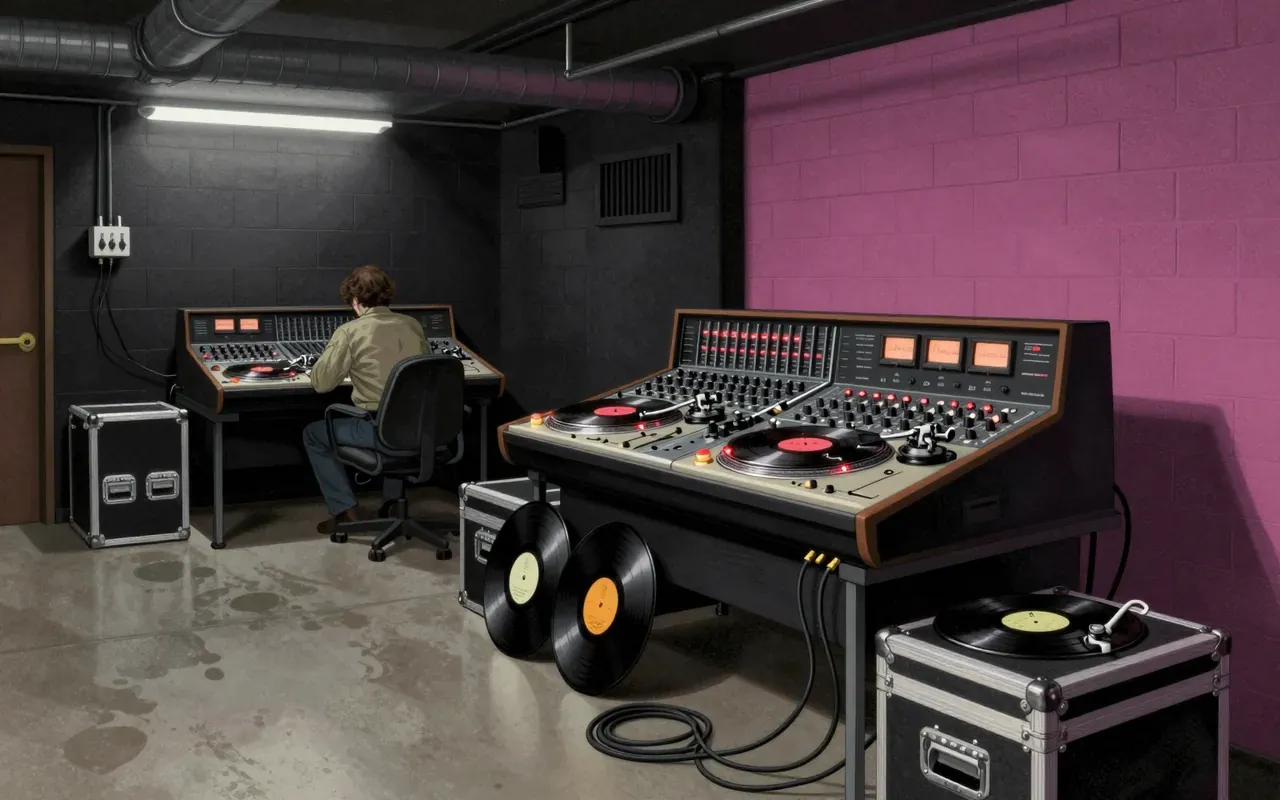
The phrase 'DJ Culture' was coined to compare sampling attitudes to sampling beats.
1:50
Sampling Attitudes
It treats political postures and social attitudes as interchangeable, disposable audio fragments.
3:06
Radio Messages
The Orphée sample embeds a layer of mediated, poetic transmission—radio as conduit for coded meaning.
4:07
Echo as Reference
Tessa Niles’ echo recalls Bowie’s 'Absolute Beginners', linking pop self-awareness across eras.
5:24
Four Formats
The group read the UK chart’s four-format rule as institutional resistance to dance music’s form and function.
Worth your time?
Yes. Study the whole thing.
4/ 5
What works
DJ Culture (1991)
What does not
celebrity
nostalgia
rave
Study it if
listeners who track how language gets repurposed
critics of political performance
producers attentive to referential craft
Skip it if
those seeking emotional catharsis
fans of euphoric dance anthems
historians without access to primary source material
The written brief1 min read
What the thing is
‘DJ Culture’ is a 1991 Pet Shop Boys single. It uses DJ sampling as a metaphor for the glib reuse of historical political postures.
Where it came from
It emerged from Neil Tennant’s observation in early 1991 that public responses to the First Gulf War felt inauthentic—like people ‘sampling attitudes from the past’.
What it gets right
It identifies how political rhetoric is sampled like beats: unreflectively, out of context, for effect.
What it gets wrong
It assumes listeners will recognise the Orphée sample and its coded radio motif as relevant to Gulf War media—without establishing that connection in the song itself.
Why it matters now
It prefigures how digital platforms would normalise the decontextualised reuse of ideology—without the friction of authorship or consequence.
Is it worth your time
Yes—if you want a precise, unsentimental critique of political recycling disguised as pop music.